
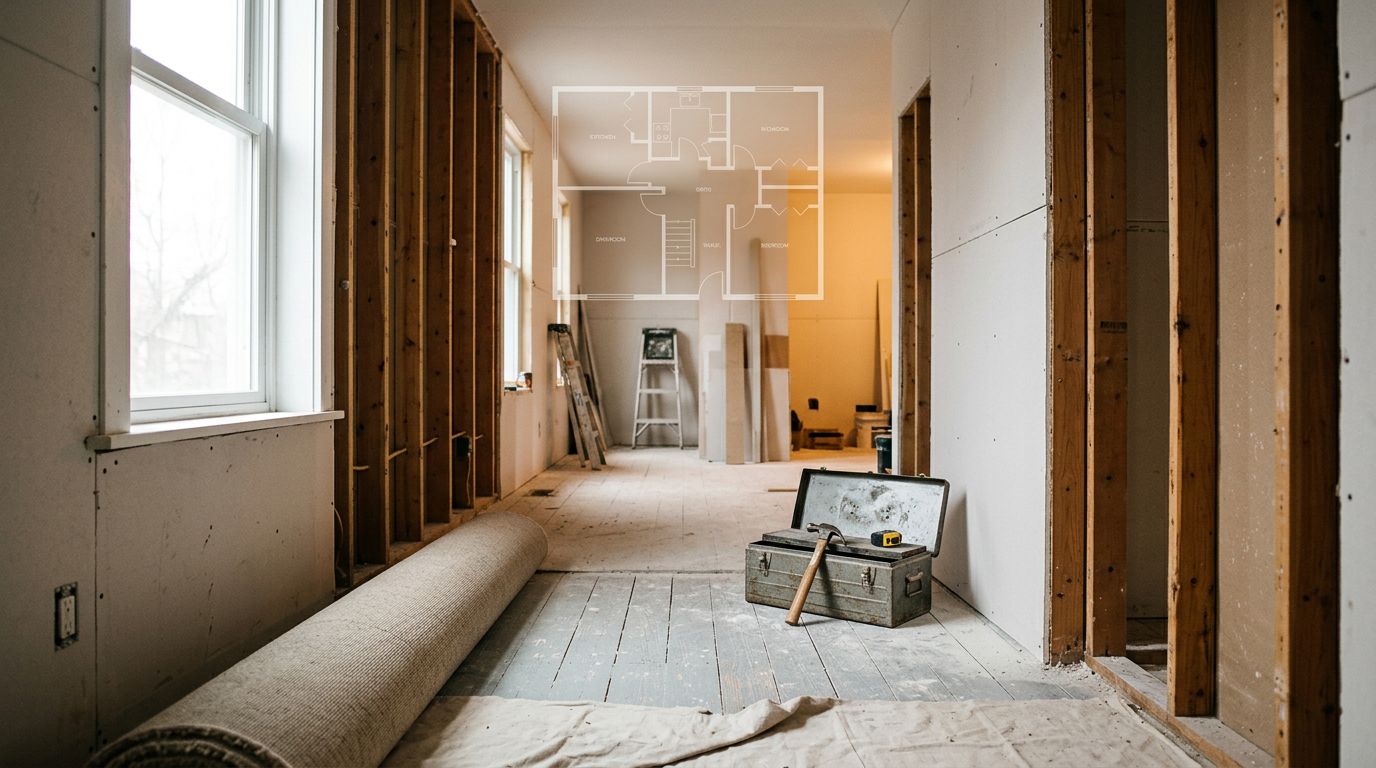
The best way to remodel several rooms is to start with planning, permits, and product choices, then move to exterior repairs, structural work, and rough plumbing or wiring before any finishes go in. That home remodel order keeps dust, demo, and repairs away from new flooring, paint, and trim. For Denton TX homes, weather, inspections, and older building conditions can make the sequence even more important.
Homeowners looking into home remodeling Denton TX often find that the hard part is not picking materials. The hard part is deciding what should happen first, so the work stays on schedule and finished spaces do not get torn up again.
Why does the remodel order matter so much?
A multi-room remodel works like a chain of dominoes. When the first few moves are wrong, the rest of the job gets slower and more expensive.
For example, if flooring goes in before cabinets, the floor may get scratched. If paint goes up before electrical changes are finished, walls may need patching. When a bathroom is fully tiled before the next-door plumbing issue is found, the crew may have to backtrack.
That is why the order matters more than many homeowners expect. A smart sequence protects labor, materials, and time. It also makes the house easier to live in during construction.
Most projects run better when the rough, dusty, noisy work happens first. Finish work belongs near the end. That simple rule applies whether the project covers two rooms or an entire house.
If a room might still need wall cuts, ceiling access, or heavy traffic, it is not ready for final finishes.
This is also where costs stay under control. Rework is expensive because it charges twice for the same space. One wrong move can turn a clean job into patchwork. A clear order avoids that.
What should happen before any room is opened up?
Before demo starts, the project needs a full plan. That means the scope, budget, permit needs, lead times, and living arrangements should all be clear. Homeowners also need major selections made early, including cabinets, tile, plumbing fixtures, flooring, and windows.

In Denton and North Texas, that planning step matters even more because weather can interrupt exterior work. A sudden storm is a bad time to discover that old windows, roof leaks, or damaged framing should have been handled first.
If the house needs exterior repairs, those items should move to the front of the line. Roofing, flashing, siding repairs, and major window work often come before interior finishes. Water always wins, so the house needs to stay dry before new drywall, cabinetry, or paint go in.
A good plan also settles one practical question early: will the owners live in the house during the job? If they will, the contractor may phase the work so one bathroom stays usable, a temporary kitchen remains open, or bedrooms stay isolated from dust.
For multi-room projects, this pre-construction step often saves the most money. It is far cheaper to solve sequencing issues on paper than after a crew starts tearing into walls.
What is the best order for remodeling multiple rooms?
For most homes, the right home remodel order follows a simple path. The messy work comes first, the finish work comes last, and wet areas need extra coordination.
This quick table shows the typical sequence.
| Phase | What happens | Why it comes first |
|---|---|---|
| Planning and permits | Scope, pricing, drawings, permits, selections | Keeps the job from stopping later |
| Exterior protection | Roof, windows, weatherproofing, framing repairs | Protects new interior work |
| Demolition and structural changes | Wall removal, reframing, layout changes | Opens access before trades arrive |
| Rough mechanical work | Plumbing, electrical, HVAC | Hidden systems must go in before walls close |
| Drywall and base paint | Insulation, drywall, texture, primer | Creates a clean shell for finishes |
| Cabinets, tile, and fixed items | Kitchens, bathrooms, built-ins | Larger finish items set the room layout |
| Final finishes and punch list | Flooring touch-ups, trim, paint, fixtures | Prevents damage to completed work |
The big takeaway is simple: each phase should prepare the next one.
- Start with the shell of the house. If the roof leaks, the windows fail, or framing needs repair, those issues go first. There is no point in finishing rooms that may face water or structural problems later.
- Move next to demolition and structural changes. Opening walls early gives plumbers, electricians, and HVAC crews room to work. It also reveals hidden issues while there is still time to adjust the budget.
- Then handle rough-ins. Plumbing lines, wiring, duct changes, venting, and inspections belong in this stage. Once those systems pass inspection, walls can close.
- After that, repair the surfaces. Drywall, texture, primer, and basic trim prep create the blank canvas. At this point, the job starts to look cleaner, but it is still not ready for delicate finish materials.
- Install cabinets, tile, and built-ins before final paint and flooring touch-ups. This order helps crews protect floors and avoid damaging new walls.
- Finish with trim, paint, fixtures, hardware, and punch-list work. The final walkthrough should happen only after every trade has completed its corrections.
Bathrooms and kitchens often sit near the center of the schedule because they depend on plumbing, electrical, tile, and cabinets. Bedrooms, living rooms, and hallways often finish later because they rely more on paint, flooring, and trim.
How do bathrooms, windows, patios, and roofing fit into the schedule?
Wet rooms usually need the most discipline. A bathroom may look small, but it packs a lot of steps into one space. That is why bathroom remodeling Denton TX projects usually happen after rough plumbing and electrical are set, but before final flooring and paint in nearby rooms. Tile work, waterproofing, shower glass, and fixture timing all need room to breathe.
Windows are different. If the project includes opening changes, trim changes, or damaged framing, window replacement Denton TX work often belongs early in the schedule. New windows can tighten the house, improve comfort during the job, and protect new drywall and trim from future leaks or drafts.
Roofing should also stay near the front when the house shows signs of leaks or storm wear. North Texas weather can move fast, and interior remodel work should not start under a questionable roof.
Outdoor projects need their own timing. Patio covers Denton TX installations usually work best after the main interior traffic slows down. However, if the patio cover ties into the roofline or needs electrical planning, it may need to be designed earlier even if the build happens later.
This is where one team can make a real difference. Homeowners juggling several trades often turn to professional home renovation services so the schedule, materials, and inspections stay under one plan. The JBN Group is known across Denton County for that kind of end-to-end coordination.
How can Denton homeowners keep the project moving?
The best schedule can still slip if decisions come too late. Cabinets, specialty tile, custom glass, and windows may have longer lead times than expected. When those choices drag, the whole sequence shifts with them.
A general contractor Denton TX homeowners trust can help lock in those decisions before demo day. That matters because plumbers, electricians, drywall crews, tile installers, and painters all depend on each other. If one trade stalls, the next trade often cannot start.
It also helps to stage the house in zones. Crews can finish one cluster of rooms while another stays closed off. That setup reduces dust and keeps the project more predictable for families living at home.
Clear communication matters as much as workmanship. Owners should know when inspections are scheduled, when materials arrive, and which rooms will be off-limits each week. In older Denton homes, hidden issues may still appear, but a good schedule leaves room for that.
The goal is not speed at any cost. The goal is steady progress with fewer do-overs.
Final Thoughts
The smartest remodel sequence starts with the house itself, then moves through rough work, then closes with finishes. When that order is right, crews protect new materials instead of damaging them, and homeowners get cleaner progress from room to room.
For multi-room projects, the schedule is as important as the design. A clear remodel order gives every trade a better chance to do the job once, do it well, and leave finished spaces finished.