
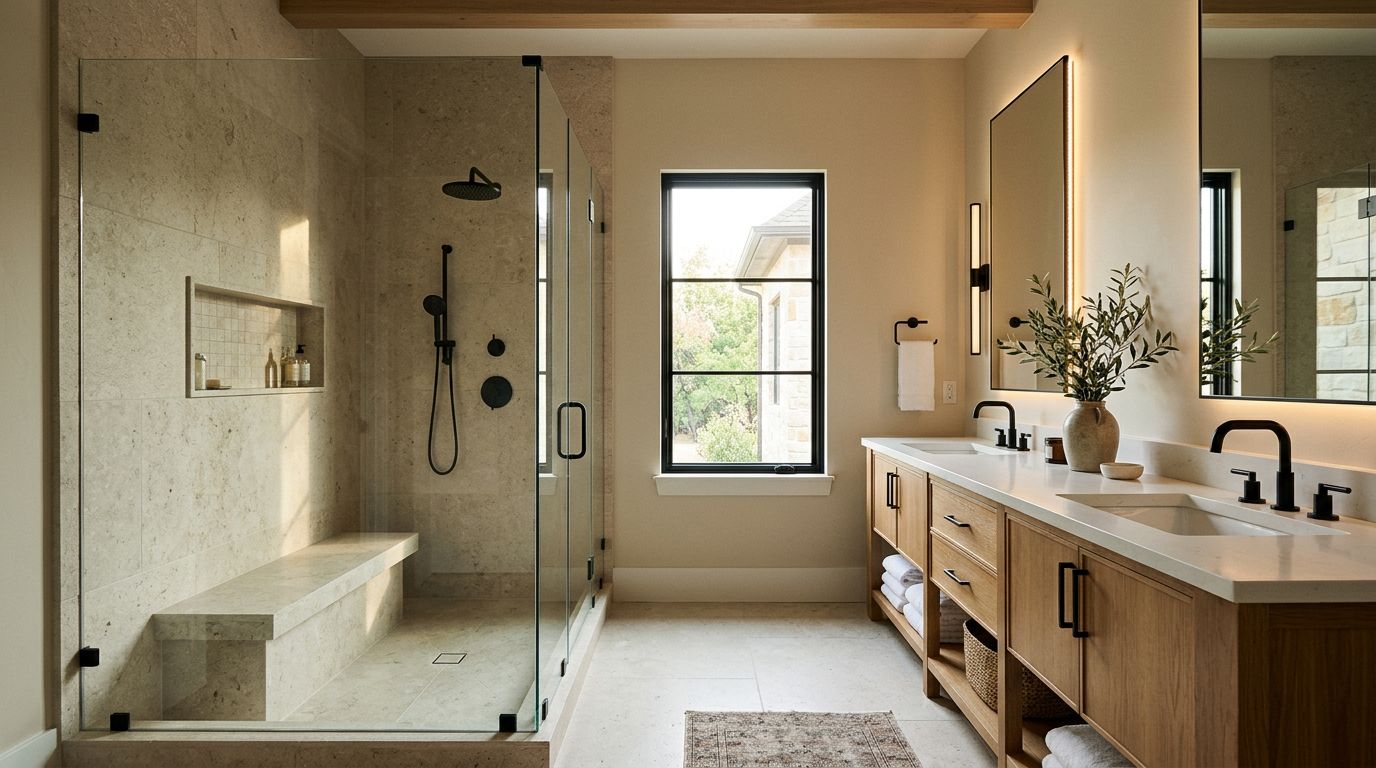
Your bathroom has to handle busy mornings, long showers, humidity, hard water, and daily wear without becoming difficult to maintain. A good bathroom design makes the room easier to use while supporting your home’s style and value.
In North Texas, the right choices also depend on your home’s age, floor plan, ventilation, and construction. Before you choose tile or fixtures, plan the layout, moisture control, materials, project scope, and contractor.
Bathroom Design Starts with the Layout
A successful remodel begins with measurements, not a tile sample. Measure the room, door swing, windows, plumbing locations, ceiling height, and available wall space. Then decide how you want the room to function.
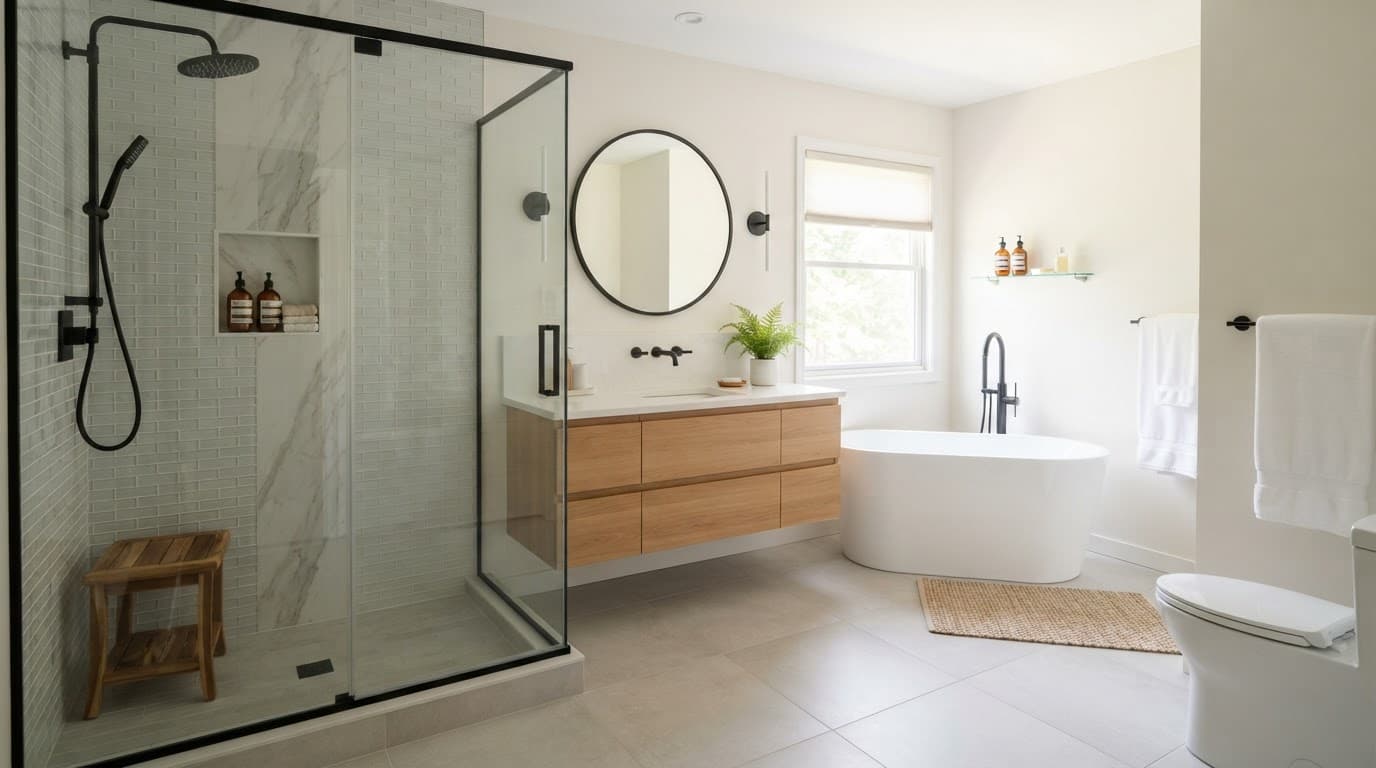
A primary bathroom may need two sinks, better storage, and a large shower. A hall bathroom may need a tub for children or guests. In a smaller bathroom, a wall-mounted vanity, recessed medicine cabinet, or frameless shower enclosure can create more usable space without changing the room’s footprint.
Keep plumbing and movement practical
Moving plumbing can increase labor, demolition, and repair needs. Keeping the toilet, sink, or shower near existing supply and drain lines often protects your budget. However, moving a fixture may still make sense if the current layout creates poor traffic flow or wastes storage space.
Leave comfortable clearance around the toilet and vanity. Your shower door also needs room to open safely. If you are replacing a tub with a shower, verify that the new base fits the existing space before ordering tile or glass.
Older homes in Denton County may have previous repairs, uneven floors, or outdated plumbing connections. A site inspection can identify those conditions before they affect your schedule.
Plan storage and lighting together
Storage should fit the way you use the bathroom. Deep drawers work well for hair tools and toiletries, while tall cabinets can hold towels without taking over the vanity wall. Recessed niches keep shampoo bottles off the shower floor, but they need proper waterproofing.
Layered lighting helps you see clearly without making the room harsh. Use general ceiling lighting, task lighting near the mirror, and a softer fixture for evening use. Keep wet-area fixtures rated for damp or wet locations, according to where they are installed.
Choose Materials for North Texas Moisture and Heat
North Texas weather brings hot summers, sudden temperature changes, and periods of high humidity. Those conditions make ventilation and moisture-resistant materials important in every bathroom remodeling project.
Many local homes also deal with mineral buildup from hard water. That buildup can affect shower glass, faucets, grout, and fixtures. Select finishes that you can clean without abrasive products.
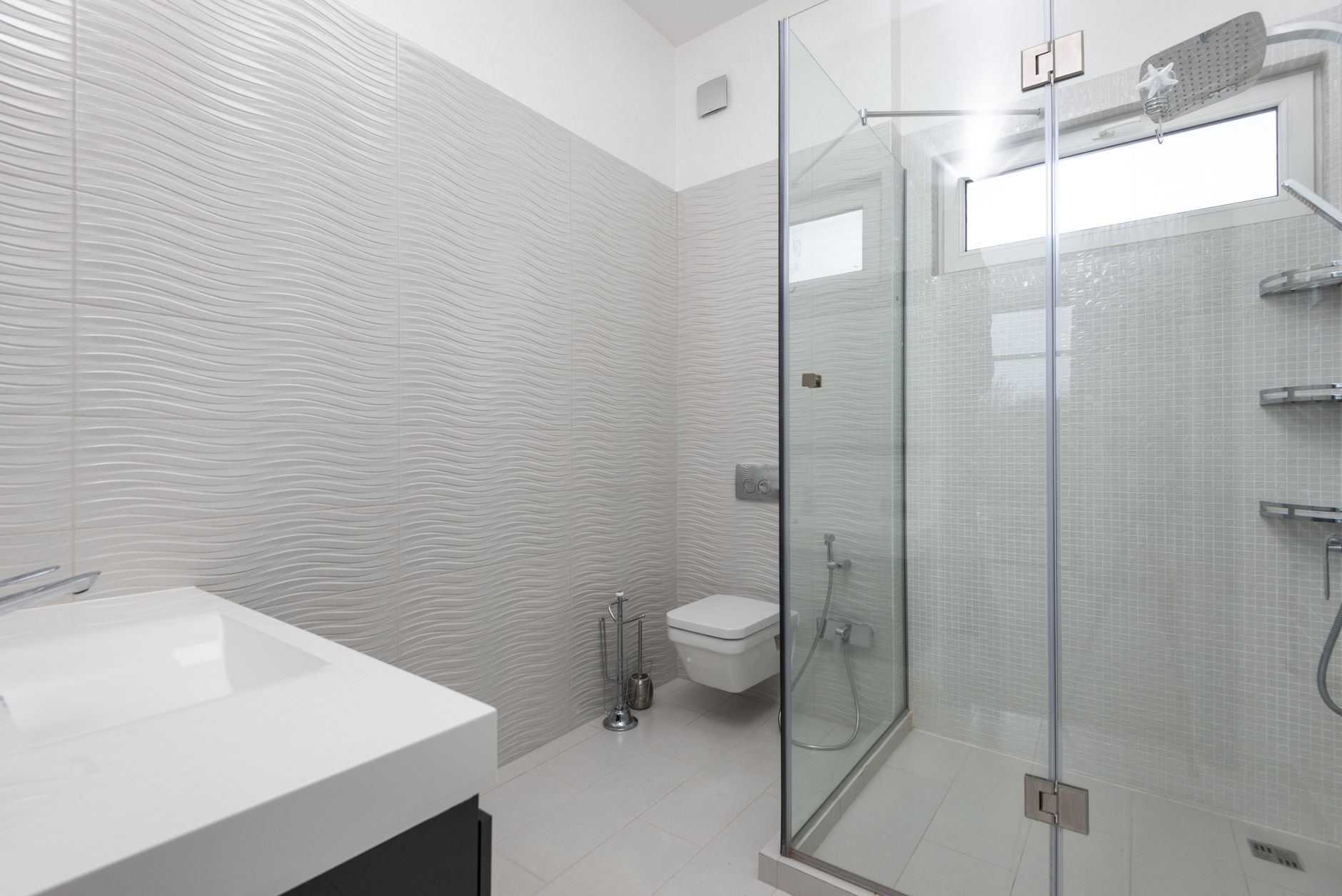
Photo by Max Vakhtbovych
Use tile where water reaches
Porcelain tile is a common choice for bathroom floors and shower walls because it resists water and handles regular cleaning. Ceramic tile can also work well, especially on walls. Your installer should confirm that the selected product suits the location and receives the correct underlayment.
Large-format tile creates fewer grout joints, which may reduce cleaning work. Smaller tile can provide more grout lines and flexibility on a sloped shower floor. The best option depends on the room’s size, drainage design, and the look you want.
Professional flooring installation matters because a flat, stable base affects the finished surface. Your contractor should address soft subfloor areas, transitions between materials, and the direction of tile before installation begins.
Choose floors and fixtures for daily use
Bathroom flooring needs traction when wet. Textured porcelain, smaller mosaic tile, and other slip-conscious surfaces can work better than highly polished products. Ask how the surface cleans before making a final selection.
Matte black, brushed nickel, chrome, and brass each require different cleaning habits. A finish that looks attractive in a showroom may show water spots or fingerprints more easily at home. Test samples under your bathroom lighting when possible.
Run the exhaust fan during showers and for 20 to 30 minutes afterward. Inspect caulk and grout twice a year, then repair small gaps before water reaches the wall or subfloor.
Build a Clear Scope Before Work Begins
Bathroom remodeling can look simple until demolition reveals old wiring, damaged framing, or moisture behind the walls. A written scope gives you a better understanding of what the project includes before materials arrive.
Your home renovation plan should identify the layout, fixtures, tile, paint, cabinetry, lighting, plumbing, ventilation, demolition, cleanup, and finish details. It should also explain who handles material delivery and trade coordination.
Check permits and hidden conditions
Permit requirements vary by city and by the work involved. Plumbing relocation, electrical changes, structural work, and certain ventilation modifications may require permits or inspections. Ask your remodeling contractor to explain which approvals apply to your project.
Waterproofing deserves special attention. A shower needs more than tile and grout. The walls, corners, curb, niche, and drain area need a compatible waterproofing system installed according to the manufacturer’s instructions.
If demolition reveals mold, damaged subflooring, or deteriorated framing, stop and document the condition. Your contractor should explain the repair, its cost, and its effect on the schedule before continuing.
Protect your budget with decisions made early
Set your priorities before choosing finishes. You may care most about a larger shower, better storage, heated floors, or improved lighting. Clear priorities help you decide where to spend and where to choose a simpler product.
Material lead times can affect the schedule, especially for custom glass, cabinets, specialty tile, and plumbing fixtures. Confirm availability before demolition starts. Professional installation also depends on having the correct products, trim pieces, valves, and accessories on site.
A reliable scope includes payment terms, change-order procedures, expected timing, cleanup responsibilities, and the process for addressing concerns. These details reduce confusion when conditions change.
Choose One Accountable Local Remodeling Team
A home improvement contractor should do more than send different trades to your house. You should know who manages the schedule, answers questions, checks the work, and completes the final walkthrough.
When comparing a home remodeling company with a smaller renovation company, ask who will supervise your bathroom project each day. A trusted contractor explains the scope in plain language, carries the appropriate insurance, communicates schedule changes, and documents decisions.
The JBN Group is a Denton-based full-service contractor that manages projects through consultation, design, permitting, material sourcing, trade coordination, and final walkthrough. If you want one point of contact for residential remodeling, you can Contact The JBN Group to discuss your plans.
Look for local experience and clear communication
A North Texas contractor should understand how heat, humidity, hard water, and slab construction can affect remodeling work. A Denton County contractor may work on older homes, newer developments, ranch-style houses, and two-story homes with different access challenges.
A Denton TX contractor may see different conditions than an Argyle TX contractor. The same applies when you compare a Flower Mound contractor with a Corinth contractor. Ask how the company handles inspections, material changes, punch-list items, and warranty questions.
Homeowners in Denton, Argyle, Corinth, Flower Mound, Highland Village, and Lewisville often hire contractors for more than one project. Local service areas also include Northlake, Bartonville, Double Oak, Copper Canyon, Trophy Club, Roanoke, Southlake, Grapevine, Keller, Frisco, Little Elm, and Carrollton.
Match each project with the right JBN service
JBN Bathroom Remodeling is the direct fit for a bathroom renovation. If your project includes other areas, JBN Windows can address replacement windows, while JBN Flooring can handle flooring installation. JBN Patio Covers is the appropriate choice for cedar patio covers and pergolas that extend your outdoor living spaces.
A family owned contractor can also be a good fit when you value direct communication and long-term customer satisfaction. Regardless of company size, look for quality craftsmanship, written details, and accountability for each phase of the work.
Bathroom Remodeling FAQ
How long does a bathroom remodel take?
The schedule depends on the room’s size, layout changes, material availability, inspections, and hidden repairs. A contractor should provide a project schedule after reviewing the space and scope.
Should you keep the existing bathroom layout?
Keeping the layout can reduce plumbing work and cost. Changing it may be worthwhile when the current arrangement blocks storage, creates poor movement, or prevents a safer shower.
Is a walk-in shower better than a bathtub?
A walk-in shower can improve access and make a primary bathroom feel more open. A bathtub may still be useful in a family bathroom, especially if children use the space.
What flooring works best in a bathroom?
Porcelain and ceramic tile are common choices. Select a surface with suitable traction, confirm that the subfloor is sound, and use a qualified installer for proper slope and transitions.
Do you need waterproofing behind shower tile?
Yes. Tile and grout alone don’t stop water from reaching the wall assembly. Your contractor should install a compatible waterproofing system before setting tile.
Should the bathroom have an exhaust fan?
A properly vented exhaust fan helps remove moisture after showers. The fan should discharge outdoors, not into an attic or enclosed ceiling space.
Can you remodel a small bathroom without expanding it?
Yes. Better storage, a smaller vanity, a clear-glass shower enclosure, lighter finishes, and improved lighting can make a small room feel more functional.
What should your remodeling contract include?
Look for the work scope, selected materials, schedule, payment terms, change-order process, cleanup expectations, and contact information for the project manager.
How can you protect new grout and caulk?
Use the cleaning products recommended for your materials. Wipe standing water from problem areas, keep the exhaust fan running after showers, and repair failed caulk before moisture spreads.
Can one contractor manage related home projects?
Yes, some full-service contractors coordinate several trades under one project plan. This can help when your bathroom work connects to flooring, windows, roofing, or larger home improvement services.
What is the first step toward bathroom remodeling?
Start with an in-home consultation. Bring your goals, preferred style, storage concerns, and budget range so the contractor can measure the space and develop a realistic scope.
Create a Bathroom That Works Every Day
The strongest bathroom design decisions support safe movement, proper ventilation, durable materials, useful storage, and easy maintenance. Your layout and waterproofing matter as much as the tile color.
If you are planning bathroom remodeling in Denton County or the surrounding North Texas area, Request Your Free Consultation with a team that can explain the work clearly. For a direct conversation, Call The JBN Group Today at 469-312-0990.