
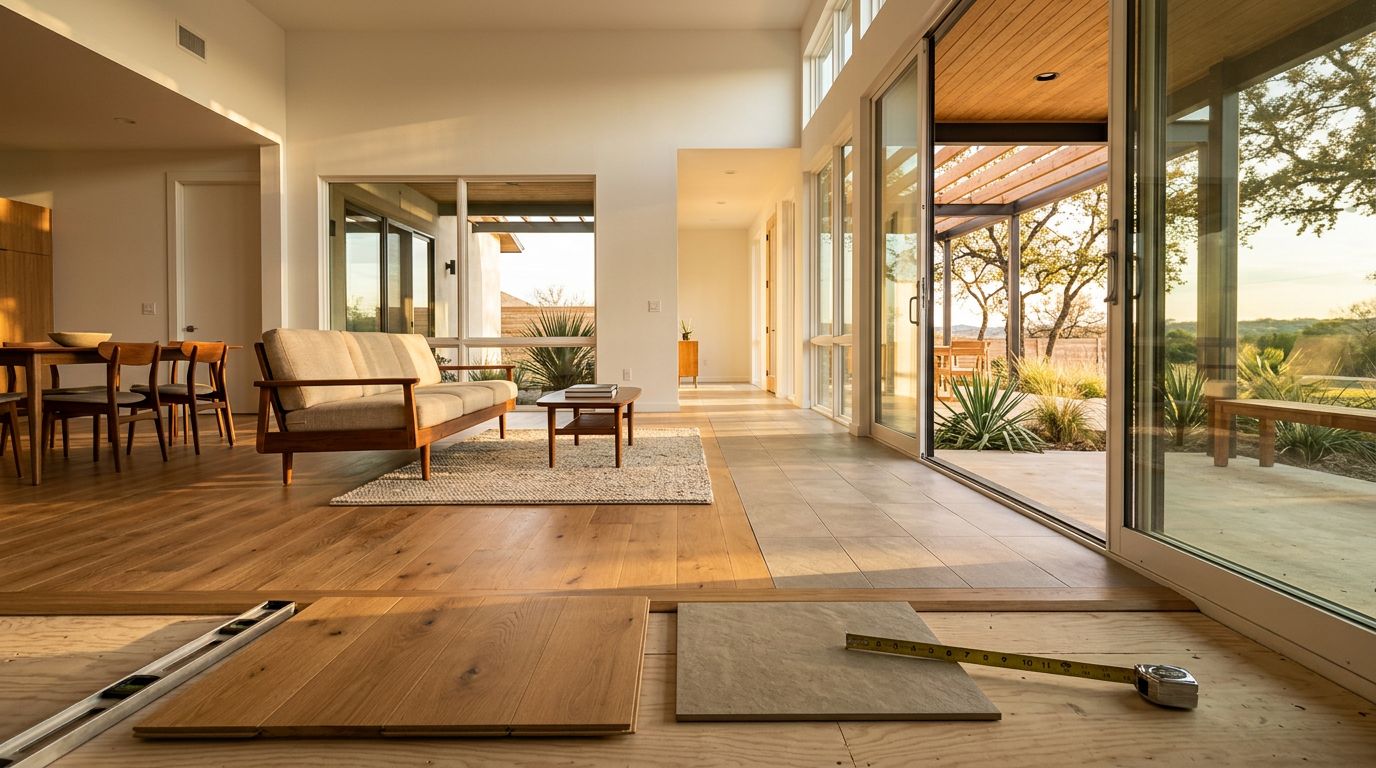
Your floor takes daily abuse from shoes, pets, spills, furniture, and North Texas dust. The right flooring can handle that traffic while making your home feel more comfortable and finished.
Choosing a material is only part of the decision. You also need the right subfloor preparation, layout, moisture control, installation method, and maintenance plan. Whether you live in Denton, Argyle, Flower Mound, or another DFW community, local conditions should guide your choice.
Flooring Materials That Fit North Texas Homes
North Texas homes commonly have concrete slabs, open floor plans, large windows, and active indoor-outdoor living areas. Those features affect how each flooring material performs.
Hardwood and engineered wood
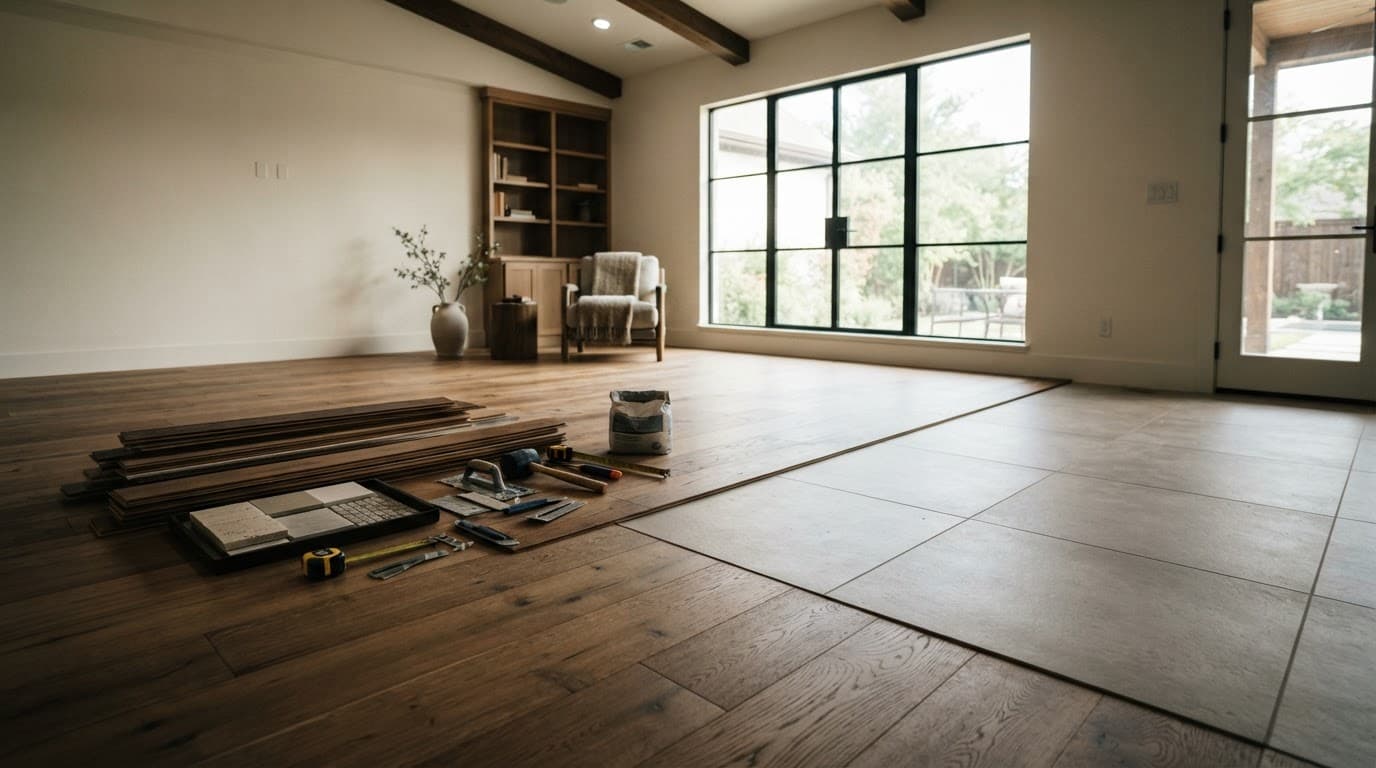
Hardwood adds warmth and can work well in living rooms, dining areas, studies, and bedrooms. Solid hardwood offers a classic appearance, but engineered hardwood often fits North Texas construction better because its layered structure handles changes in humidity more effectively.
You still need proper moisture testing before installation. Concrete slabs can hold moisture, even when the surface looks dry. Some engineered products can go over concrete when the installer tests the slab, prepares the subfloor, and follows the manufacturer’s requirements. This hardwood flooring guide for Fort Worth and Southlake covers those installation concerns in more detail.
Hardwood needs reasonable care around exterior doors and wet areas. Use entry mats, wipe spills quickly, and avoid installing it in bathrooms unless the product and installation system are designed for that setting.
Luxury vinyl plank and laminate
Luxury vinyl plank, often called LVP, is a practical choice for busy households. Quality LVP resists surface moisture, cleans easily, and comes in wood and stone looks. It works well in family rooms, hallways, kitchens, laundry rooms, and many bathrooms.
However, “waterproof” usually describes the plank itself. It doesn’t mean water can remain under the floor without causing problems. A plumbing leak, poorly sealed toilet, or damp slab can still damage the subfloor and surrounding materials.
Laminate flooring can offer a wood appearance at a lower material cost. It performs best in dry rooms with careful spill control. You should follow the product’s rules for slab moisture, underlayment, and cleaning. A Dallas laminate flooring guide can help you compare laminate construction and installation requirements.
Tile, carpet, and specialty options
Porcelain and ceramic tile are strong choices for entryways, kitchens, bathrooms, mudrooms, and high-traffic areas. Porcelain has low water absorption and handles heavy use, but tile installation depends on a flat, stable base. Cracks in the slab or movement in the subfloor can transfer into the tile.
Carpet adds softness and helps reduce noise in bedrooms, offices, and media rooms. It may not be the first choice for households with frequent spills, pets, or heavy outdoor traffic. Carpet tiles can be useful in offices because you can replace individual sections when damage occurs.
| Material | Strong fit | Main concern |
|---|---|---|
| Engineered hardwood | Living areas and bedrooms | Moisture and scratches |
| Luxury vinyl plank | Busy rooms and wet-adjacent spaces | Subfloor preparation |
| Porcelain tile | Bathrooms, entries, and kitchens | Cold feel and slab movement |
| Laminate | Dry rooms with moderate traffic | Standing water |
| Carpet | Bedrooms and quiet areas | Stains and wear |
The best material depends on how you use each room, not only on the sample you like at the showroom.
How to Match Flooring to Each Room
A consistent look throughout your home can make the layout feel larger. Still, using one material everywhere isn’t always practical. Room conditions matter more than a trend.
Living rooms, hallways, and open areas
Open-concept homes in Denton County often connect the kitchen, dining area, living room, and entryway. LVP, engineered hardwood, and large-format tile can create a continuous appearance across these spaces.
Wider planks can make a room feel more open, while longer boards reduce visual breaks. If you choose wood-look products, compare samples in both daylight and warm interior light. North Texas homes often receive strong sunlight through south- and west-facing windows, which can change how colors appear.
Hallways need a material that can handle repeated foot traffic. Choose a durable wear layer for LVP or a hard finish for wood. Plan transitions carefully where the hall meets carpet, tile, or a staircase.
Kitchens, laundry rooms, and bathrooms
Kitchens need a surface that tolerates dropped items, food spills, and frequent cleaning. Tile and LVP are common choices. If you choose wood or laminate, confirm that the product is approved for kitchen use and protect areas around the sink and dishwasher.
Bathrooms require extra attention to waterproofing. During bathroom remodeling, your contractor should inspect the subfloor, protect plumbing penetrations, and use the correct underlayment for tile or resilient flooring. A floor that looks attractive can still fail if water reaches the layers below.
Laundry rooms need similar planning. Keep the washing machine supply lines accessible, and consider a pan or leak-detection system where appropriate.
Bedrooms, offices, and stairs
Carpet remains comfortable in bedrooms and can reduce sound in upstairs rooms. Hardwood, engineered wood, and LVP offer easier cleaning for offices, playrooms, and bedrooms with pets.
Stairs need a secure surface and carefully fitted nosing. Smooth flooring can become hazardous when wet or dusty, so ask about traction, edge details, and the transition between the stair and upper hallway.
What Professional Flooring Installation Should Include
A good material can fail when the installation process skips basic preparation. The installer should inspect the existing floor before ordering materials or setting an installation date.

The process usually includes these steps:
- Your installer measures each room, checks wall angles, identifies transitions, and accounts for closets, cabinets, stairs, and doorways.
- The crew removes the old material when needed, then checks the slab or subfloor for cracks, uneven areas, loose sections, and moisture.
- The installer corrects problems before laying the new surface. That may involve patching, grinding, leveling, replacing damaged plywood, or installing an approved underlayment.
- Materials receive the required acclimation time when the manufacturer calls for it. The crew then follows the product’s layout, fastener, adhesive, spacing, and expansion requirements.
- After installation, your contractor checks transitions, baseboards, trim, doors, stair edges, and the finished surface during the final walkthrough.
Concrete slab homes deserve special care. Even a small high spot can create movement, noise, or joint separation. Moisture vapor can affect adhesives, wood products, and some resilient flooring. Testing methods vary by product, so your installer should use the test and limits required by the manufacturer.
Professional flooring installation also protects the rest of your home. Crews should control dust, protect cabinets and walls, remove debris, and keep adhesive, grout, and finish materials away from finished surfaces.
A Plano flooring installation guide also points out that care instructions differ between materials. That difference matters because the cleaning method for LVP won’t work for hardwood, laminate, or natural stone.
North Texas Conditions That Affect Your Floor
North Texas weather changes throughout the year. Summers bring high heat, strong sunlight, and air-conditioning use. Winter cold fronts can create quick temperature swings. Indoor humidity also changes, especially when your HVAC system runs for long periods.
Those conditions don’t rule out any single material, but they make installation details more important. Wood products need the correct acclimation and moisture balance. Adhesive systems need a suitable slab. Tile needs a stable base. LVP needs a clean, flat surface without excessive moisture.
Homes in Denton, Argyle, Corinth, and Northlake may have newer construction with open rooms and concrete foundations. Older homes in Lewisville, Carrollton, or parts of Denton may have previous repairs, multiple floor layers, or uneven subfloors. Your contractor should inspect the actual home instead of assuming every property has the same needs.
Sun exposure also affects finish selection. Replacement windows, window coverings, and furniture placement can change how much direct light reaches the floor. Ask whether the product has specific limits for ultraviolet exposure, especially if you install dark wood tones or materials in a room with large glass areas.
Local home styles vary across Highland Village, Bartonville, Double Oak, Copper Canyon, Trophy Club, Roanoke, Southlake, Grapevine, Keller, Frisco, and Little Elm. A modern LVP may suit a clean, open interior, while wide-plank wood or textured tile may better fit a traditional or ranch-style home.
Planning Your Budget and Choosing the Right Contractor
Flooring cost depends on more than the price per square foot. Your total project may include demolition, disposal, subfloor repairs, moisture testing, leveling, underlayment, trim, transitions, furniture moving, delivery, and labor.
Ask for a written estimate that separates those items. You should also confirm who handles material ordering, permits when required, scheduling, cleanup, and warranty documentation. A low initial price can change when the installer discovers slab repairs or multiple layers of old flooring.
A reliable home improvement contractor will explain those possible conditions before work begins. You should receive clear answers about the product, installation method, timeline, payment schedule, and change-order process.
The JBN Group manages larger home projects that may combine flooring with kitchen updates, room additions, replacement windows, roofing, or outdoor improvements. If your floor is part of a larger home renovation, using one project manager can reduce scheduling conflicts between trades.
That approach can help when you need a home remodeling company for several connected improvements. The same team may coordinate flooring with cabinets, doors, trim, plumbing, paint, or residential remodeling work.
When you compare a North Texas contractor, look for current licensing and insurance information, a clear contract, references for similar work, and evidence of quality craftsmanship. Ask who will supervise the crew and who will inspect the finished installation.
If you need a Denton County contractor, local familiarity can also help with access, scheduling, material delivery, and home styles. Search terms such as “Denton TX contractor,” “Argyle TX contractor,” “Flower Mound contractor,” and “Corinth contractor” may help you find nearby companies, but reviews alone shouldn’t make the decision.
A family owned contractor should still provide professional project documents and dependable communication. Family values matter, but your agreement should also state the scope, materials, labor warranty, and responsibilities of each party.
The JBN Group is a practical option when you want a trusted contractor for flooring and related home improvement services. You can Contact The JBN Group to discuss your rooms, material preferences, and project conditions before choosing a product.
Protecting Durability and Long-Term Value

Maintenance begins with the right cleaning routine. Use the manufacturer’s instructions instead of applying a universal floor cleaner. Some products can tolerate damp mopping, while others need a nearly dry method.
Place mats at exterior doors, but choose mats without rubber or latex backing unless the manufacturer approves them. Grit can scratch finishes, so vacuum or sweep entry areas often. Felt pads under furniture can reduce dents and scratches, although you should replace them when they collect dirt.
| Floor type | Routine care | Avoid |
|---|---|---|
| Hardwood | Sweep, vacuum with a floor setting, clean with approved products | Excess water and steam |
| LVP | Sweep and damp mop as directed | Abrasive pads and harsh chemicals |
| Laminate | Dry mop and use limited moisture | Soaking and wax |
| Tile | Sweep, mop, and clean grout as needed | Scrubbing that damages grout |
| Carpet | Vacuum and treat spills quickly | Delaying stain cleanup |
Repair small issues early. A loose transition, cracked grout joint, or lifted plank can allow more damage when ignored. Keep extra material after your project so a future repair has a better color match.
The floor should also support how you plan to use the home. Durable materials can help in entryways and gathering areas, while comfort may matter more in bedrooms. Good planning protects your budget because replacement becomes less frequent when the material matches the room.
Flooring FAQ for North Texas Homeowners
What flooring works best for a North Texas home?
There isn’t one answer for every room. LVP suits busy areas, tile handles moisture and heavy traffic, engineered hardwood adds warmth, and carpet provides comfort in bedrooms. Your slab, lifestyle, pets, and maintenance preferences should guide the decision.
Can you install hardwood over a concrete slab?
You can install some engineered hardwood products over concrete when moisture testing, subfloor preparation, and manufacturer requirements all support the installation. Solid hardwood usually requires a different installation approach.
Is luxury vinyl plank completely waterproof?
The plank may resist water, but the entire floor assembly isn’t automatically waterproof. Water can still reach seams, edges, walls, or the subfloor. Proper installation and quick leak cleanup remain important.
Is tile a good choice for bathrooms?
Yes. Porcelain and ceramic tile work well in bathrooms when the installer prepares the base correctly and protects the wet area. Grout, transitions, drains, and plumbing penetrations all need careful attention.
How long does flooring installation take?
The schedule depends on room size, material, demolition, furniture, subfloor repairs, and product availability. A single open room may take less time than a full home with stairs, closets, and extensive leveling.
Should you remove old flooring before installation?
Usually, the installer should decide after inspecting the existing layers. Removing old flooring may expose damage or improve the final result, but some approved materials can go over existing surfaces when the base is sound and flat.
Does every subfloor need leveling?
No. Your installer should measure the floor and compare it with the product’s tolerance. Local repairs may solve the problem, while widespread unevenness may require a larger leveling plan.
What flooring is best for pets?
LVP and tile are often practical for pets because they clean easily and resist many surface stains. Texture, color, scratch resistance, and seam quality also matter. No material is immune to claws, accidents, or neglected spills.
Can you use the same flooring throughout the house?
You can, and consistent flooring often helps connected rooms feel larger. Bathrooms, laundry rooms, stairs, and bedrooms may still need different materials for moisture control, comfort, or safety.
How do you protect a new floor during remodeling?
Use breathable floor protection approved for the material, seal off dusty work areas, and keep ladders and tools on protective pads. Your remodeling contractor should establish protection rules before other trades begin.
Can flooring be installed during a bathroom remodeling project?
Yes. Flooring often fits well into a bathroom project because the subfloor, waterproofing, fixtures, and trim can be coordinated. Installers should protect finished surfaces while plumbing and cabinetry work continues.
Can new flooring be coordinated with replacement windows?
Yes. If you replace windows and flooring during the same home project, schedule the window work before final floor installation when possible. That reduces the chance of damaging the new surface during trim and drywall work.
Choose Flooring With the Whole Project in Mind
A floor should match your room’s moisture exposure, traffic, sunlight, foundation, and maintenance needs. The material matters, but preparation and professional installation have just as much influence on the finished result.
The JBN Group can help you plan flooring as part of broader home improvement services, including bathroom remodeling, replacement windows, and outdoor projects such as cedar patio covers, pergolas, and other outdoor living spaces. If you want one renovation company to coordinate connected work, Request Your Free Consultation with your project details.
For direct scheduling, Call The JBN Group Today at 469-312-0990. A clear plan, suitable materials, and careful installation can give you a floor that looks good and performs well for years.