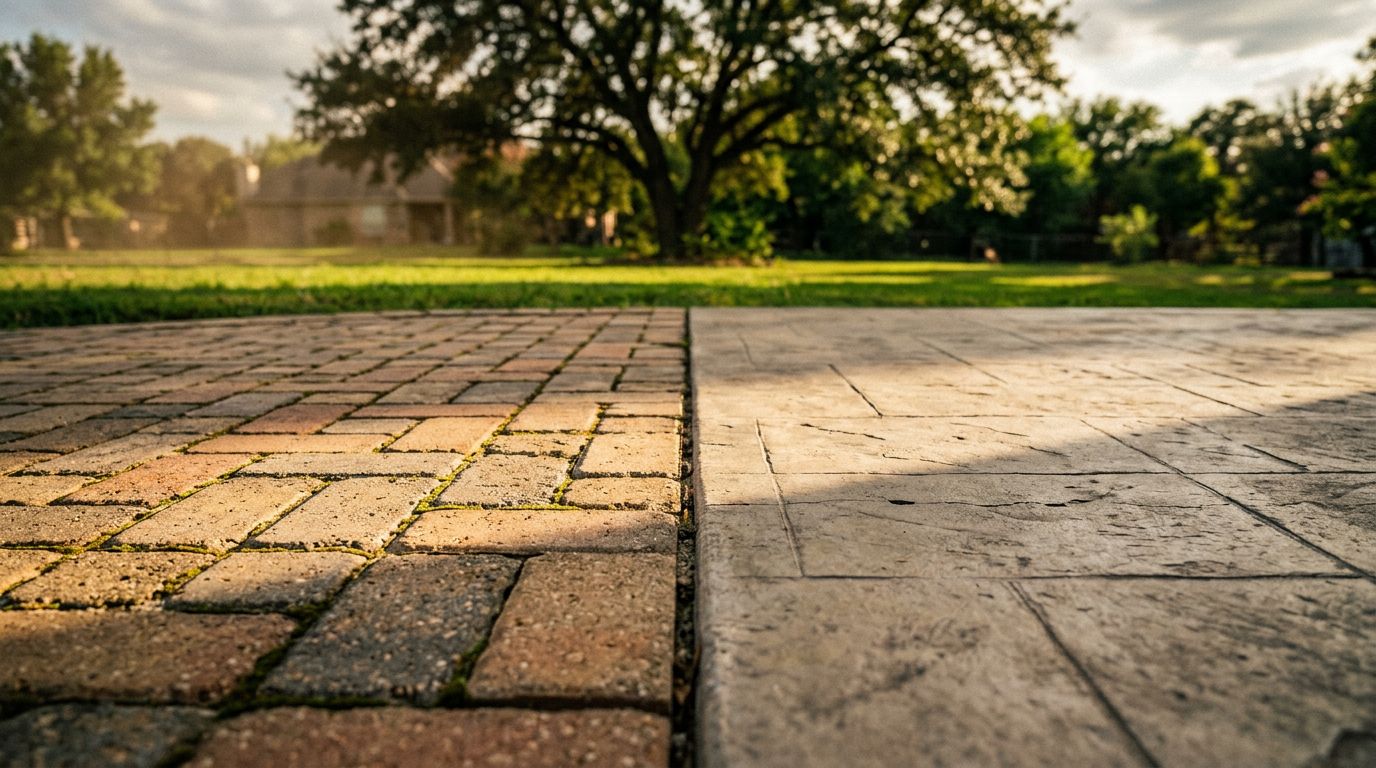
For most Denton patio projects, pavers are the better long-term choice. They handle North Texas heat and soil movement better, give better traction when wet, and are easier to repair. Stamped concrete usually costs less at the start and can look polished, but it is more likely to show cracks over time and harder to patch without visible repair lines.
For homeowners weighing this decision as part of a larger home remodeling Denton TX plan, the patio surface affects budget, drainage, and long-term upkeep.
Which patio material handles Denton weather better?
Denton patios deal with hard sun, sudden rain, and soil that shifts more than many owners expect. That climate matters because a patio is not only about color or pattern. It is a surface that has to stay level, safe, and usable through long summers and changing ground conditions.
Pavers usually perform better in that setting. Each piece can move a little without creating one long visible crack. Stamped concrete is one slab, so when the base moves or shrinks, the surface often tells on itself.
In Denton, the smarter patio choice often comes down to movement, not looks.
This quick comparison shows where each material tends to land:
| Factor | Stamped concrete | Pavers |
|---|---|---|
| Upfront cost | Usually lower | Usually higher |
| Soil movement | More crack risk | Handles movement better |
| Repairs | Harder to hide | Easier to replace section by section |
| Wet traction | Can get slick when sealed | Usually better grip |
| Maintenance | Needs resealing | Needs joint sand and weed control |
| Design feel | Can imitate stone or wood | More natural texture and depth |
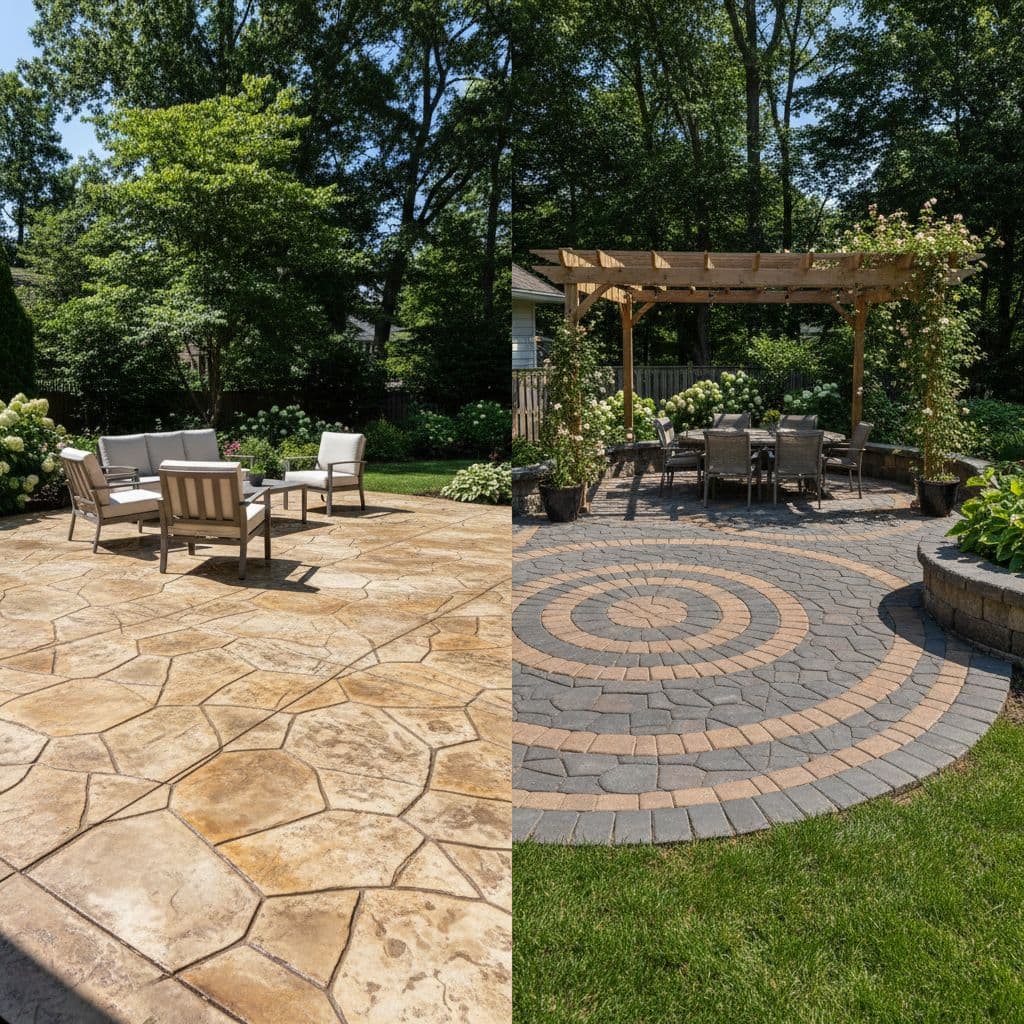
Heat matters, too. Dark surfaces of any type get hot, but stamped concrete can feel especially hard and bright in direct sun because it is one broad slab. Pavers still heat up, yet shade breaks the surface into joints and can make glare less harsh. Slip resistance also matters after a storm or after pool traffic, and pavers often have the edge there.
That does not make stamped concrete a bad product. A well-prepared base, control joints, and proper sealing can help it last and look sharp. Still, when the question is stamped concrete vs pavers for a Denton patio, North Texas weather pushes many homeowners toward pavers.
How do costs and repairs compare over time?
Stamped concrete usually wins the first-bid battle. It often takes less labor and fewer material components than a full paver system. A Texas-focused patio cost comparison reaches the same broad conclusion many Denton homeowners see in local estimates.
The harder part is the long-term math. If stamped concrete cracks, patching it rarely disappears into the original surface. Color can vary, the pattern may not line up perfectly, and a large repair can mean chasing a cosmetic fix that never fully matches.
Pavers cost more at the start because the base prep is more involved and the installation is more labor-heavy. That extra work is part of the value. If one area settles, crews can lift the affected section, fix the base, and reinstall the same pavers. The repair is smaller, cleaner, and often less disruptive.
Maintenance also shifts the real cost. Stamped concrete usually needs periodic resealing to protect color and surface wear. Pavers need fresh joint sand from time to time, and some owners stay on top of weeds between joints. Neither option is maintenance-free, but paver upkeep is usually more predictable.
For homeowners who plan to stay in the home for years, pavers often make better financial sense. For those who need the lowest upfront number and accept more repair risk, stamped concrete can still fit the budget.
Which option looks better with the house and yard?
Style is where stamped concrete closes the gap. It can mimic stone, brick, or even wood patterns at a lower price, so it appeals to homeowners who want a decorative surface without paying for individual units. On a clean, simple patio behind a newer home, stamped concrete can look sharp and intentional.
Pavers look more natural up close. They usually offer deeper texture, richer edges, and more believable color variation. That matters in backyards where the patio connects to planting beds, a grill area, or a pool deck. It also matters when the patio is meant to feel like part of the landscape instead of a separate slab.
Shade changes the look and comfort of either material. When a project also includes custom cedar patio covers, the design should consider where shadows fall, how rain drains, and how the patio ties into the back door. Homeowners who are also considering patio covers Denton TX often find that shade has almost as much impact on daily use as the surface underfoot.
This is where layout matters as much as material. Borders, curved edges, and changes in elevation are usually easier to handle with pavers. Large stamped areas can look clean, but complex shapes can push the price up and raise the chance of visual flaws. A general contractor Denton TX homeowners trust should review slope, threshold height, and runoff before the pattern is chosen.
What does installation and maintenance look like in real life?
Both materials demand good prep. A patio that sits on weak base material or ignores drainage will disappoint, no matter how good it looks on install day. In Denton and across North Texas, base work and patio cover permit requirements are not the place to cut corners.
Stamped concrete depends on timing. The pour, stamping, finishing, and curing all have to line up, and weather can affect that process. Pavers take more setup, but the work is more modular. Crews build the base, set the pattern, compact the field, and finish the joints.
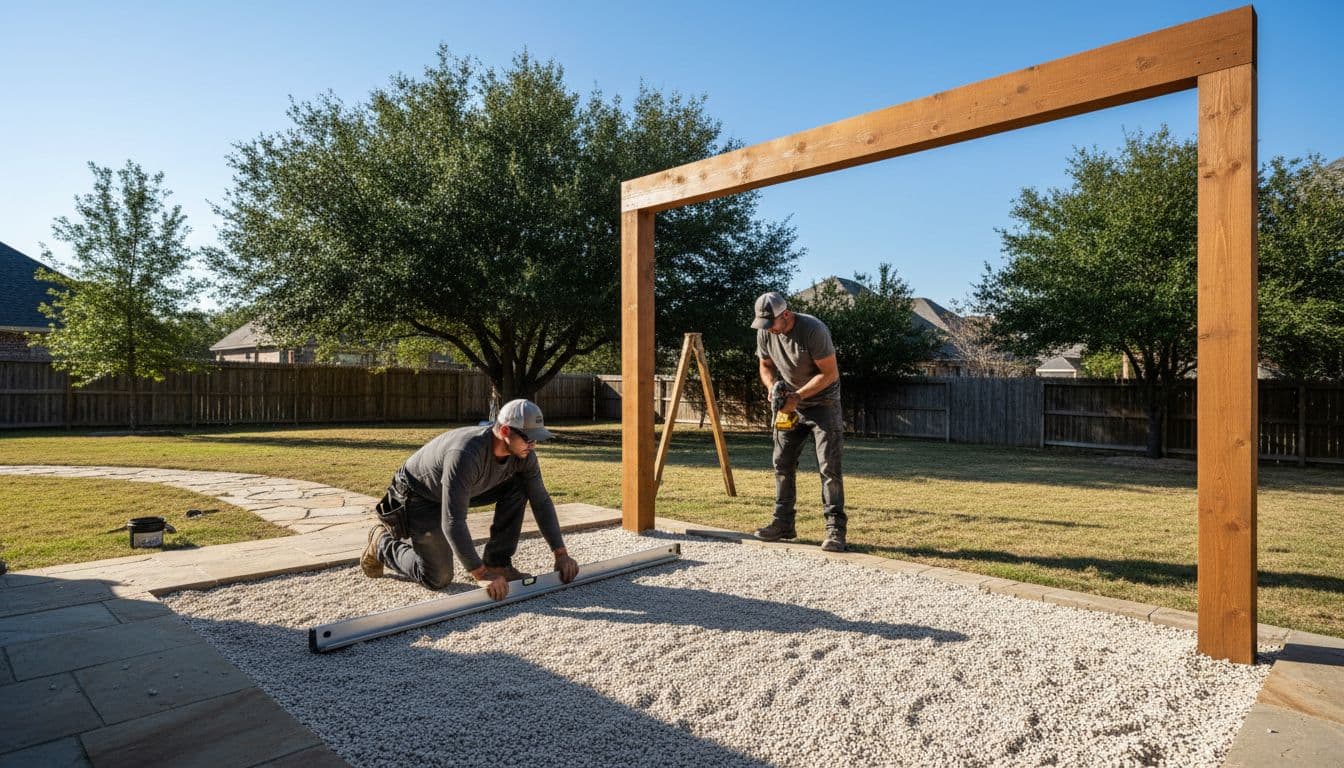
Once the patio is in place, maintenance looks different. Stamped concrete needs cleaning and resealing, and sealed surfaces can get slick if finish choices are not right. Pavers need joint attention, and some owners deal with shifting or weeds if maintenance is ignored. Still, the repair path favors pavers because one bad section does not force work across the whole patio.
Anecdotal homeowner feedback in this landscaping discussion about pavers and stamped concrete echoes the same pattern: concrete often costs less first, while pavers create fewer long-term headaches when repairs show up.
Water flow also changes the picture. Roof runoff, a future cover, or poor grading can wash out a base or stain a slab. That is why The JBN Group looks at outdoor projects as full systems, not isolated surfaces. The patio, cover, drainage path, and nearby doors all need to work together.
Which choice makes more sense for different Denton projects?
When stamped concrete is the better fit
Stamped concrete works best when budget leads the decision and the homeowner wants a decorative finish on a fairly simple layout. It also makes sense when the patio is large enough that paver pricing starts to climb fast. If the yard drains well and the owner is realistic about sealing and crack risk, stamped concrete can still be a solid choice.
It also pairs well with projects where the main goal is visual improvement without a full backyard rebuild. In that case, a clean stamped finish may free up budget for other upgrades.
When pavers are worth the extra cost
Pavers make more sense when long-term durability matters more than first price. They are a strong fit for yards with known movement, patios with curves or steps, and homes where future repair access matters. They also suit outdoor living spaces that will see heavy use, furniture drag, or regular foot traffic.
That same life-cycle thinking shows up in other remodeling decisions. Homeowners comparing window replacement Denton TX or bathroom remodeling Denton TX often face the same tradeoff: lower initial cost versus easier maintenance and better long-term performance. The same logic applies to choosing the best material for patio covers.
For many Denton homes, the best answer is not the cheapest one. It is the surface that fits the soil, the drainage, the shade plan, and how the family will use the space five years from now.
Final thoughts
For Denton patios, the main split is simple. Pavers usually hold up better, while stamped concrete usually costs less at the start. In North Texas, shifting soil and repair concerns often make pavers the safer long-term bet.
The strongest patio projects also look beyond the surface itself. Drainage, shade, and layout matter just as much as pattern and color.
Homeowners who want a local recommendation based on the yard, budget, and design goals can get a free home improvement estimate from The JBN Group.