
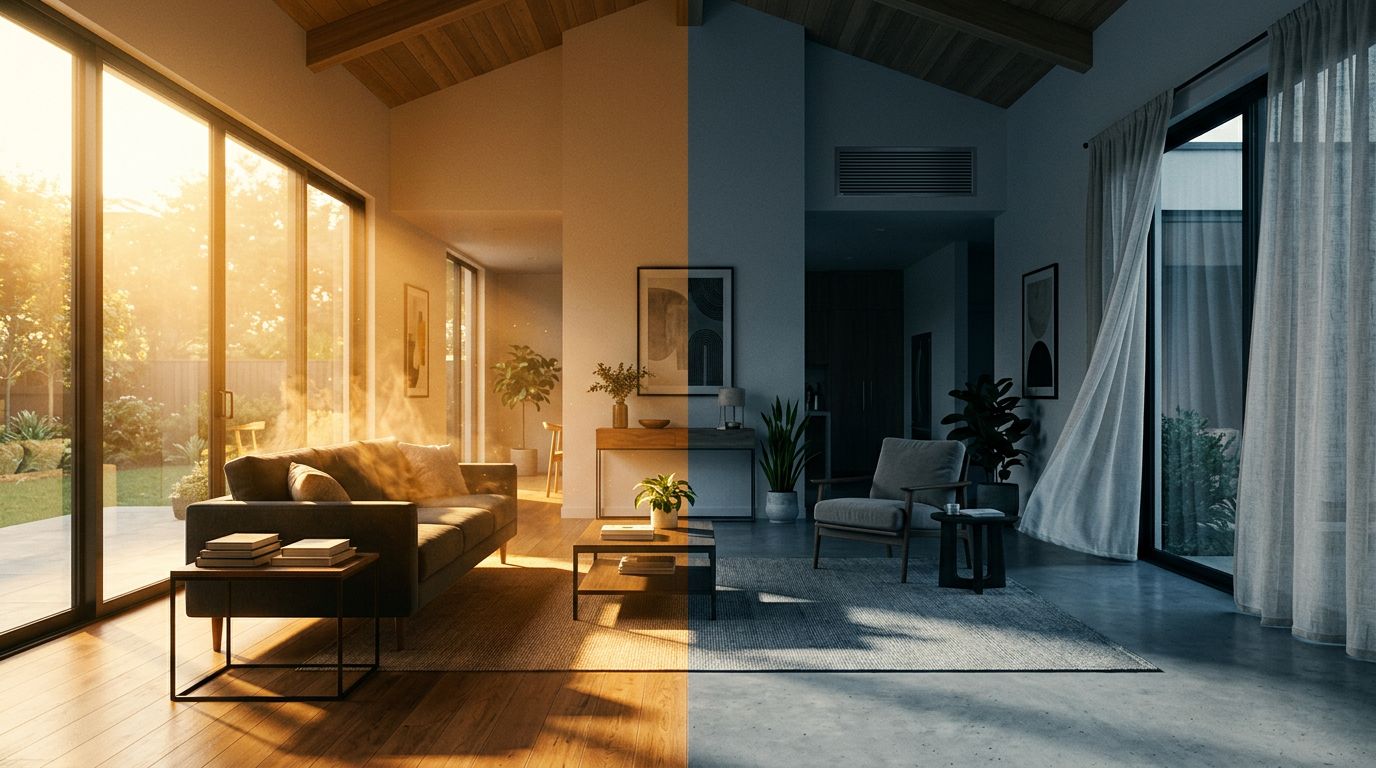
A hot room in the house usually points to uneven heat gain or weak airflow. The cause is often a mix of sun exposure, attic heat, leaky windows, thin insulation, blocked ducts, or an HVAC system that no longer balances the home well. In Denton and across North Texas, long cooling seasons make those weak spots harder to ignore.
When one room stays warm even with the AC running, comfort, sleep, and energy use all suffer. That is why many homeowners start with home remodeling Denton TX when the problem points to the room itself, not only the thermostat.
Why does one room get hotter than the rest?
One overheated room usually means the house is not cooling evenly. The room may take on more heat, receive less conditioned air, or lose cooled air faster than nearby spaces. The thermostat cannot feel all of that, because it only reads the air where it sits.
In many homes, the problem comes from two issues at once. A west-facing room might get hard afternoon sun, while a weak branch duct limits cool air. A room over the garage might have thin floor insulation and no good return path when the door is closed. Because heat and airflow interact, the warmest room is often the one with the fewest protections.
A quick comparison helps narrow it down.
| Common cause | What homeowners notice | Typical fix |
|---|---|---|
| West-facing windows | Room heats up late afternoon | Add shade, upgrade glass, seal gaps |
| Hot attic above the room | Ceiling feels warm, room stays hot all day | Improve insulation and attic ventilation |
| Weak supply or return duct | Low airflow at the vent | Repair, resize, or rebalance ducts |
| Air leaks at windows or doors | Drafts, dust, uneven temps | Weatherstrip and air-seal the room |
| Room over garage | Big swings between day and night | Insulate floor and seal the space |
The timing of the heat tells a story. If the room gets worse near sunset, sun and windows are likely part of the problem. If it stays warm from morning to night, attic heat, weak insulation, or airflow trouble are stronger suspects.
In many homes, the hottest room is where sun, attic heat, and weak airflow meet.
Closed interior doors can make the issue worse. Without a good return path, supply air has nowhere to go, so the room gets stuffy and the air movement drops. That is why one hot room rarely has a single, simple cause.
How do windows, attic heat, and room location make it worse in Denton?
North Texas weather makes this problem show up fast. Denton summers load south and west walls with hours of direct sun, and attic temperatures rise far above the indoor set point. A room tucked under the roofline, above a garage, or at the far end of the duct run often shows trouble first.

Old windows add to the load. If the glass feels hot, the frames leak air, or sunlight cuts across the floor every afternoon, the AC has to fight both heat gain and infiltration. That is why many homeowners look at window replacement Denton TX when one room stays warm even after normal HVAC service. Newer low-E glass, tighter frames, and better installation can reduce radiant heat and air leakage in the same step.
Blinds help with glare, but they rarely fix air leaks or hot glass. The same goes for small portable fans. They may improve comfort for a while, yet they do not stop heat from entering the room.
Outside shade matters too. A covered patio or roof extension can block direct sun before it hits the wall and glass. For rooms that bake beside a backyard slab or a west-facing patio, patio covers Denton TX can lower heat entering the home and make the adjoining room easier to cool.
Roofing and attic ventilation matter for the same reason. When heat builds overhead and cannot escape well, ceilings stay warmer and attic ducts run hotter. In older Denton homes, adding insulation, sealing attic gaps, or correcting venting often helps more than another fan in the bedroom.
When is the HVAC system the real culprit?
Air delivery can be the main issue, even when the AC unit still works. A room may have a duct that is too small, kinked, crushed, disconnected, or buried under attic insulation. In other cases, the supply vent is fine but the room lacks return air, so cooled air stalls behind a closed door.
Thermostat location adds another layer. If the thermostat sits in a shaded hallway near the center of the house, it may satisfy early. The system shuts off once that central area reaches the set point, even though the sunny room still needs more cooling. This happens often in two-story homes and in houses with additions or converted spaces.
Several clues point toward airflow trouble:
- The room’s vent blows much weaker than vents in nearby rooms.
- The room cools better when the door stays open.
- The room feels stuffy until the system starts running again.
- Dust marks, attic odors, or ceiling stains suggest a duct leak overhead.
Humidity can also fool the senses. A bathroom or laundry room may not read much hotter on a thermometer, yet it feels worse because damp air slows sweat evaporation. In that case, a bigger HVAC unit will not fix the real problem. Better exhaust, sealed windows, insulation, or layout changes often matter more.
The JBN Group sees many hot-room complaints tied to duct balance, missing returns, and heat gain around the room itself. So homeowners should be careful about replacing a full AC system before someone checks airflow, insulation, and air sealing first. A room-level problem can make the whole house seem under-cooled when the real fault sits in one section of the home.
Which fixes work, and when should a contractor step in?
Real fixes depend on what testing shows. A room with heavy sun and old windows needs a different plan than a room with weak duct flow. Still, the best results usually come from treating the room as part of the house, not as an isolated comfort complaint.
When the issue is in the building shell, targeted construction work pays off. Sealing trim gaps, insulating attic slopes, fixing disconnected ducts, and shading glass all cut the load on the AC. If the room is part of a larger update, The JBN Group can fold those fixes into one scope instead of patching symptoms every summer.
That matters during a remodel. A bathroom remodeling Denton TX project, for example, can correct more than tile and fixtures. It can add proper exhaust, replace a hot window, insulate exterior walls, and improve comfort in a room that always felt muggy. The same idea applies to a bedroom over the garage, a converted sunroom, or a den beside a west patio.
For many households, the next step is not more guesswork. It is a room-by-room inspection that checks surface temperatures, airflow, attic conditions, and window performance together. That is when a general contractor Denton TX homeowners trust is more helpful than another plug-in fan or smart thermostat.
Some short-term steps can reduce discomfort. Blackout shades, weatherstripping, a ceiling fan, and minor vent adjustments may help. However, those steps rarely solve a structural heat problem. If the room sits under a hot attic, beside aging glass, or next to an unshaded patio, construction changes usually bring the lasting improvement.
In Denton and across North Texas, one warm room often exposes a bigger weak spot in the house. Fix the source, and the whole home feels more even.
The hottest room is usually pointing to the real problem
One overheated room is rarely random. It usually points to uneven heat gain or airflow, and North Texas weather makes that mismatch show up fast.
When that room stays warm after filter changes and vent checks, the best next move is a full look at the room, the attic, the duct path, and the windows. Homeowners who want a clear answer can get a free home improvement estimate from The JBN Group and find out whether the fix belongs in the HVAC layout, the insulation, the windows, or the remodel itself.
That kind of diagnosis saves money and avoids fixing the wrong thing first.