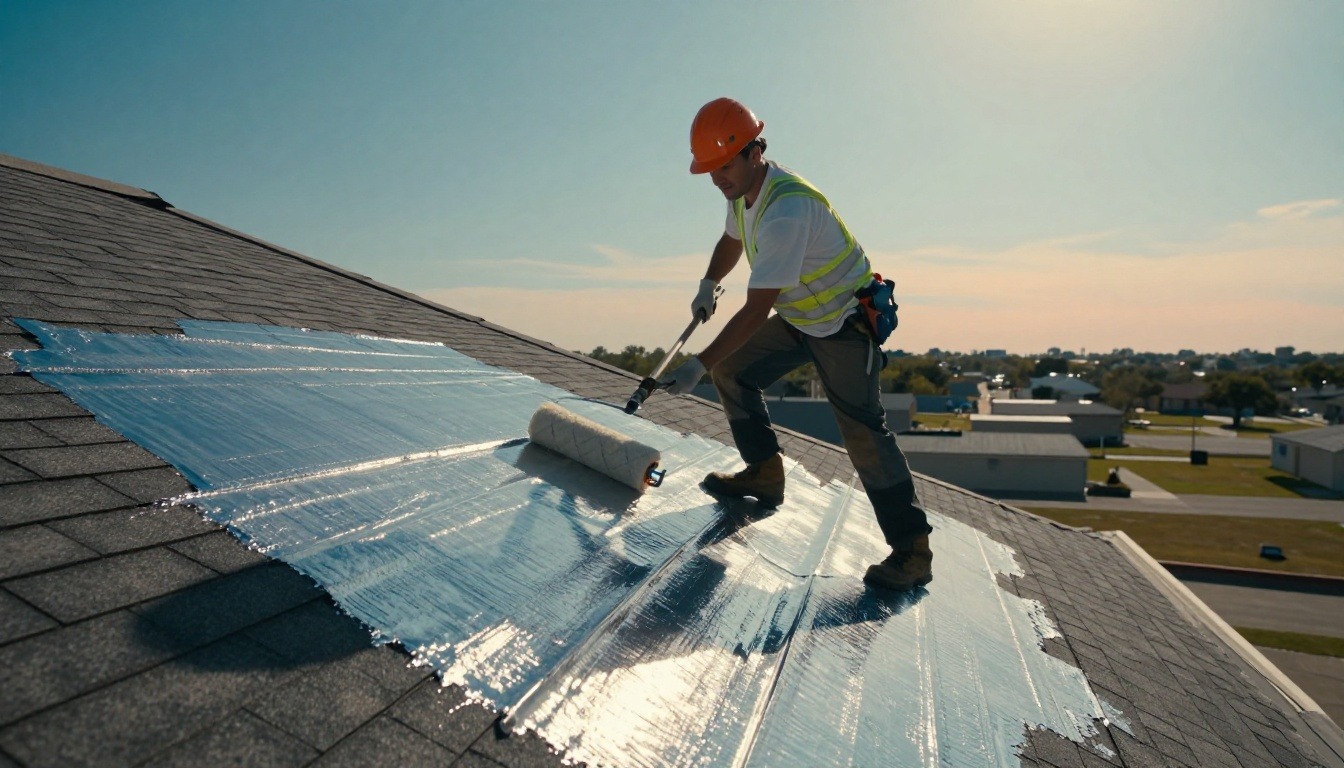
Roof Coating can protect and reflect heat from a sound, properly prepared roof. It can seal small surface flaws and help extend a serviceable roof’s useful life. However, it cannot repair major damage or replace a roof that has reached the end of its life. In North Texas, intense sun, hail, wind, heavy rain, and temperature changes make inspection and preparation especially important.
The JBN Group is an insured, family-owned general contractor based in Denton. Since 1996, it has served Denton County and nearby communities, including Argyle, Corinth, Flower Mound, Lewisville, and Northlake. If you’re considering a coating, Contact The JBN Group or Call The JBN Group Today before choosing a product.
Key Takeaways
- Roof coating works best on a sound, dry, repairable roof.
- Coating cannot solve rotten decking, major leaks, failed membranes, or poor drainage.
- Silicone, acrylic, polyurethane, and asphaltic systems fit different roof conditions.
- North Texas heat and UV exposure favor reflective products, but coatings don’t prevent hail damage.
- A written scope should cover repairs, preparation, product, application, curing, and maintenance.
Roof Coating: Is It Right for Your North Texas Roof?
A roof coating is a fluid-applied layer that bonds to an existing roof surface. Once cured, it creates a protective membrane over compatible roofing materials. Some products reflect sunlight, while others provide flexibility, waterproofing, or extra resistance to abrasion.
You may consider a coating when your roof is aging but still stable. It can help seal small cracks, protect exposed materials, reduce surface heat, and extend useful service life. That value depends on the roof underneath. Coating over a failing roof only hides the problem for a short time.
A contractor should address active leaks, rotten decking, severe hail damage, major membrane failure, loose materials, and drainage problems first. Standing water can weaken many systems, and trapped moisture can cause blistering or early separation.
| Factor | Roof coating | Roof replacement |
|---|---|---|
| Roof condition | Sound and repairable | Severely damaged or at the end of its life |
| Typical purpose | Protect and extend useful service | Install a new roofing system |
| Disruption | Usually less tear-off and site disruption | More material removal and construction activity |
| Expected value | May postpone replacement when conditions support it | Resets the roof system when repairs no longer make sense |
The right choice requires an on-site assessment. Review The JBN Group roofing services and ask for a clear explanation of repair, coating, and replacement options.
### What Your Roof Inspection Should Check First
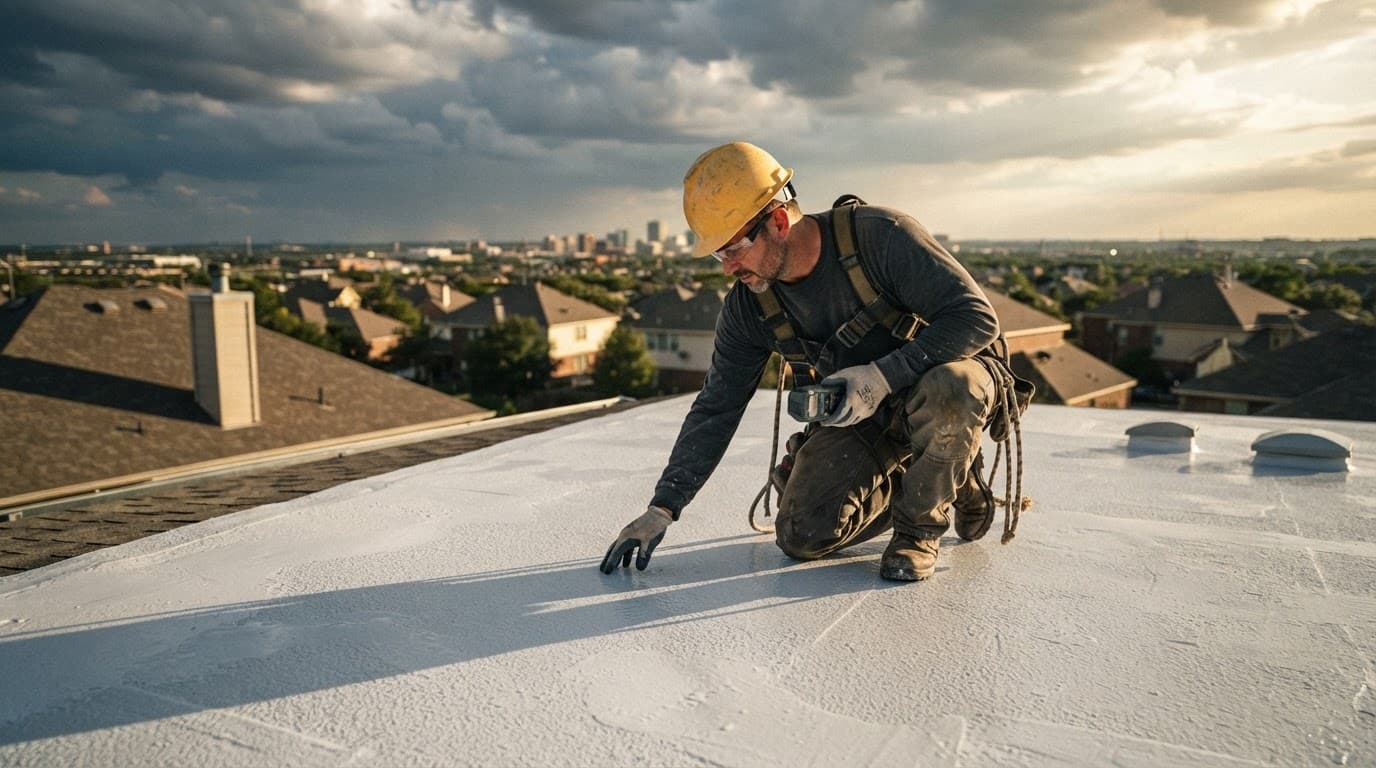
Before coating, a qualified contractor should review the roof’s age, substrate, seams, flashing, fasteners, penetrations, blisters, cracks, and past repairs. The inspection should also check roof edges, vents, skylights, wall transitions, and pipe penetrations because small details often cause larger leaks.
Drainage deserves special attention after North Texas storms. The contractor should look for ponding water, blocked drains, sagging areas, and moisture below the surface. A moisture meter or other testing method may help locate hidden wet areas.
The roof must be clean, dry, stable, and compatible with the selected coating. Ask these practical questions before work begins:
- What cleaning method and repairs are included?
- Does the system need a primer?
- What dry-film thickness and number of coats will you apply?
- How long must the coating cure before rain or foot traffic?
- What maintenance and future inspections should you plan?
- Which repairs or replacement conditions are excluded from the scope?
How North Texas Weather Changes the Decision
Denton County roofs face long periods of strong sun and ultraviolet exposure. Summer heat also causes roof materials to expand, while cooler nights make them contract. That movement can stress seams, fasteners, flashing, and older repairs.
Hail and high winds create a different concern. A reflective coating may reduce roof surface heat and some heat gain, but it doesn’t provide hail protection or wind resistance. A coating also won’t correct damage from a recent storm. Schedule a storm inspection when you see dents, punctures, missing materials, or new leaks.
Sudden heavy rain can expose poor drainage. Humidity and moisture can also interfere with adhesion if the roof isn’t fully dry. Application requires a suitable weather window that meets the product manufacturer’s temperature, surface, and rain requirements.
A bright coating may lower roof temperature, but it cannot turn a damaged roof into a storm-resistant roof.
Which Roof Coating Works Best for Your Roof Type?
The roof material, slope, drainage, repairs, foot traffic, and manufacturer requirements matter more than selecting a product by brand name. A coating that works well on a low-slope membrane may be unsuitable for asphalt shingles or a heavily walked commercial roof.
| Coating type | Often fits | Main strength | Key limitation |
|---|---|---|---|
| Silicone | Flat or low-slope roofs with recurring ponding | Water and UV resistance | May attract dirt and needs careful preparation |
| Acrylic | Well-drained roofs with strong sun exposure | Reflectivity and cost control | Performs poorly where water regularly stands |
| Polyurethane or hybrid | Areas with abrasion or foot traffic | Tougher surface and impact resistance | May require a specific multi-part system |
| Asphaltic | Some older asphalt-based roofs | Compatibility with select asphalt systems | Has narrower compatibility than general-purpose coatings |
Silicone is often considered for flat or low-slope roofs where ponding occurs after storms. It can offer strong UV and water resistance, but the surface must be clean and properly prepared.
Acrylic coatings provide reflective performance on roofs that drain well. They can make sense when sunlight and heat are the main concerns, but regular standing water can shorten their performance.
Polyurethane and related hybrid systems can handle more abrasion and foot traffic. They may cost more or require a specific primer and topcoat, so you shouldn’t treat them as universal solutions.
Asphaltic products fit some metal, built-up, or asphalt-based roofs. Their narrower compatibility makes substrate testing and manufacturer guidance especially important.
Reflective Roof Coatings and Energy Savings
A reflective roof surface sends more solar energy away from the building than a dark, heat-absorbing surface. That may reduce roof temperatures and cooling demand, but it doesn’t guarantee a specific utility bill reduction.
Your result also depends on insulation, attic ventilation, roof color, building layout, sun exposure, and HVAC condition. For a better energy assessment, compare the coating’s technical data sheet with guidance from ENERGY STAR.
Treat reflectivity as one part of your home’s energy plan. It shouldn’t replace attic improvements, air sealing, HVAC maintenance, or proper roof repairs.
## How to Plan, Price, and Maintain a Roof Coating Project
Start with an inspection, then identify repairs and confirm that the roof is a good candidate. After that, select a compatible system and review preparation, thickness, application, curing, and maintenance requirements.
Project cost depends on roof size, access, height, substrate, cleaning, repairs, primer, labor, coating thickness, and the number of coats. A reliable contractor should inspect the property before giving you a firm scope. Avoid decisions based on a low square-foot price that excludes repairs or preparation.
Plan the work around a dry-weather window. After installation, keep foot traffic off the surface until it cures. Schedule inspections after major storms and follow the contractor’s maintenance guidance.
If you want a property-specific review, Request Your Free Consultation. The JBN Group meets homeowners at their properties, so you don’t need to visit a showroom.
What a Professional Roof Coating Process Looks Like
- The contractor inspects the roof, substrate, seams, flashing, edges, and penetrations.
- The team reviews moisture, drainage, ponding, and areas beneath past repairs.
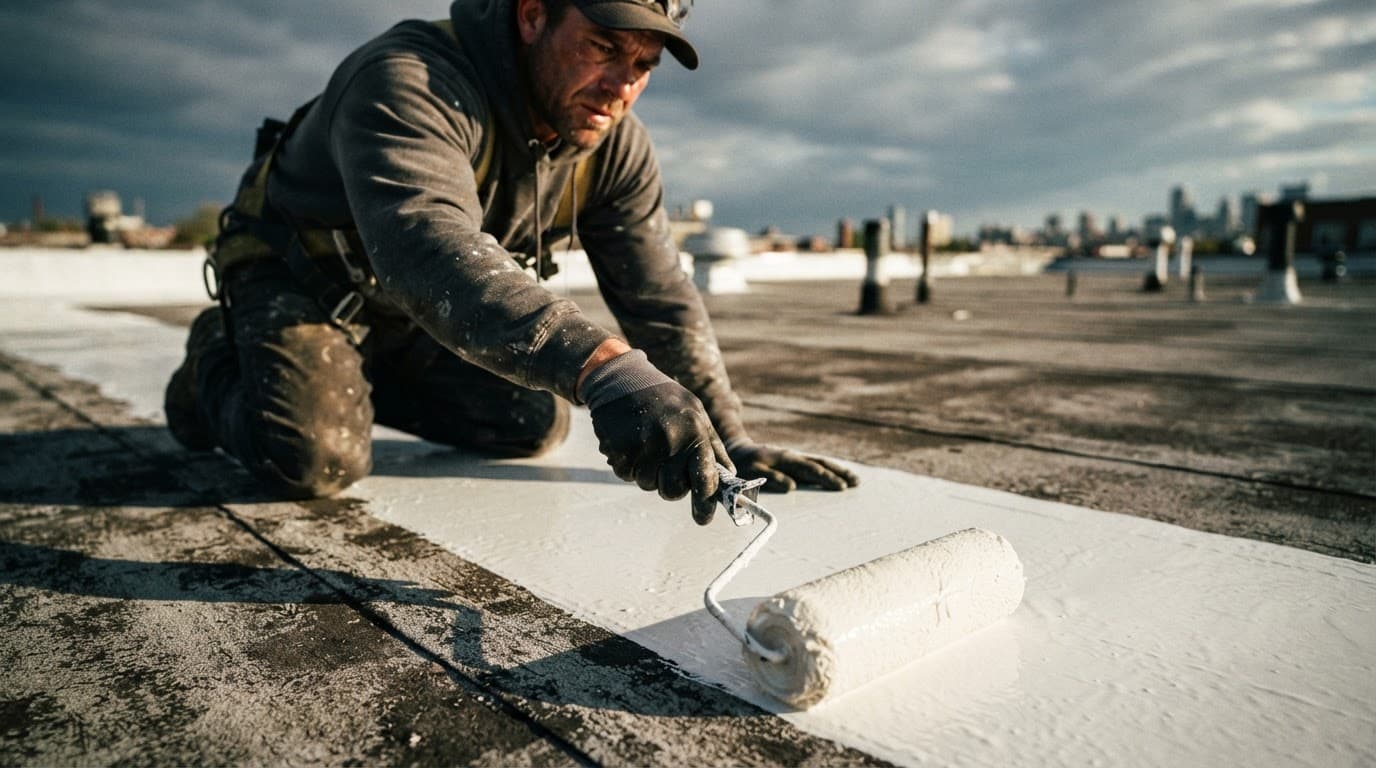
- Workers clean the surface and remove dirt, loose material, oils, and failed coating.
- The contractor repairs leaks, cracks, seams, fasteners, flashing, and damaged sections.
- Crews protect walls, windows, equipment, landscaping, and other surfaces.
- The system receives primer where the product or substrate requires it.
- Workers apply the coating at the specified thickness and cover overlooked transition areas.
- The surface cures under the manufacturer’s temperature and weather requirements.
- The contractor completes a final inspection and provides maintenance guidance.
Coating over dirt, trapped moisture, loose material, or unresolved leaks can lead to early failure. Roof edges, skylights, vents, pipe penetrations, and wall transitions deserve a close final check.
Common Roof Coating Mistakes to Avoid
Don’t use coating to hide major damage or ignore ponding water. Also avoid mixing incompatible products, skipping surface preparation, applying material during unsuitable weather, or walking on the roof before it cures.
Choosing a product only because it’s cheap can create added repair costs later. A storm inspection still matters after coating, especially when hail or wind affects Denton, Frisco, Little Elm, Carrollton, Trophy Club, or nearby communities.
Request the scope in writing. It should identify the product type, preparation steps, repairs, exclusions, application conditions, curing time, maintenance expectations, and who handles future inspections.
How The JBN Group Helps You Evaluate the Whole Project
The JBN Group can review your roof condition and discuss whether repair, coating, or replacement makes sense. You can learn more about The JBN Group and its family-owned contractor background before scheduling an assessment.
A clear scope should separate roof work from optional improvements. If your project reveals other home needs, related options may include replacement window services, professional flooring services, custom cedar patio covers, or bathroom remodeling services. Those services aren’t part of every coating project, but one contractor may help you coordinate broader exterior or interior work.
Frequently Asked Questions
Can you apply roof coating over shingles?
Some coatings are designed for specific asphalt-based materials, but many shingle roofs aren’t suitable candidates. You need a roof inspection and product compatibility review before application.
Will coating stop a roof leak?
Coating may seal minor surface flaws after proper repairs. It won’t reliably stop leaks caused by damaged decking, failed flashing, major membrane failure, or poor drainage.
How soon after a storm should you inspect the roof?
Inspect your roof as soon as conditions are safe after hail or high winds. Early documentation can help you identify new damage before it becomes a larger leak.
Can you coat a metal roof?
Many metal roofs can receive a compatible coating after rust treatment, fastener repairs, seam work, and thorough cleaning. The contractor must confirm adhesion and manufacturer requirements first.
Does a white roof coating prevent attic heat?
It may reduce roof surface temperature, but attic heat also depends on insulation, ventilation, air sealing, and the home’s layout. Coating alone won’t correct an underinsulated attic.
Can you walk on a coated roof?
Only walk on it after the coating cures according to the product instructions. Repeated traffic can damage some systems, so use designated paths where regular access is necessary.
How often should you inspect a coated roof?
Inspect it at least after significant storms and during your normal roof maintenance schedule. Look for cracks, peeling, exposed areas, ponding, and damage around penetrations.
Can coating fix ponding water?
A water-resistant coating may tolerate some ponding better than another product, but it doesn’t correct structural slope or blocked drainage. You must address the cause first.
Does roof coating replace a storm-resistant roof?
No. Coating doesn’t replace damaged roofing materials or add the wind and impact rating of a new roofing system. Storm damage still requires a professional inspection.
Should you coat a roof before selling your home?
Only after confirming that the roof is sound and documenting the work. A coating shouldn’t hide known damage from buyers or replace needed repairs.
Conclusion
Roof Coating can help when your existing roof is sound, dry, repairable, and matched with the right system. North Texas heat, UV exposure, hail, wind, and heavy rain make inspection and preparation especially important.
Coating isn’t a substitute for major repairs or drainage corrections. For a property-specific recommendation in Denton County or nearby North Texas communities, Contact The JBN Group or Call The JBN Group Today to request a free consultation.