
The short answer
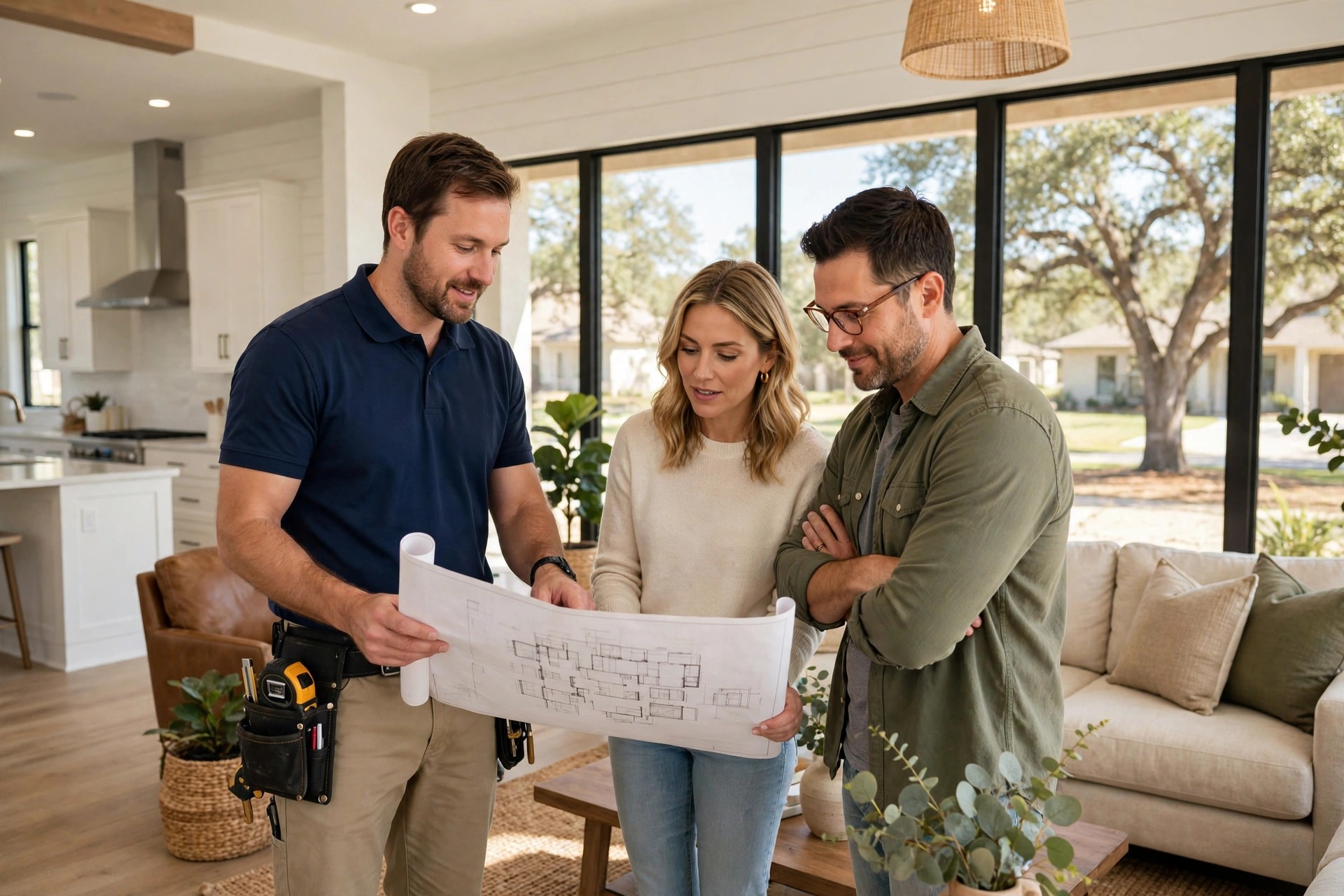
Choosing a general contractor in Denton TX comes down to five checks: Denton registration and insurance, proven local experience, strong reviews and references, a detailed written bid, and clear communication. Get those five right and the rest of your project gets easier. Get them wrong and even a simple remodel can turn into a headache.
Here is something most homeowners do not know going in: Texas does not license general contractors. Not at the state level. At all. That means the safety net you might assume exists simply is not there, and your own vetting has to do the heavy lifting. Here is how to do it.
What Denton actually requires (and what it does not)
The City of Denton requires contractors to hold an annual contractor registration, which runs $66 for general contractors per the city’s published fee schedule, along with proof of insurance and a list of authorized personnel. Registration and permits run through the city’s eTRAKiT online portal. If a contractor tells you they are registered in Denton, ask for the registration and verify it with the Development Services office at 401 N. Elm St, or call Building Safety at (940) 349-8360. It takes a few minutes and it weeds out the people who are bluffing.
What is not required at the state level? A general contractor license. Period. The Texas Department of Licensing and Regulation (TDLR) licenses electricians, plumbers, HVAC technicians, and a handful of other trades, but the person coordinating the whole project, your GC, falls outside that system. Your GC’s subcontractors should hold active TDLR licenses where the trade requires it, and you can verify those at tdlr.texas.gov. But for the GC themselves, there is no state license number to look up. Your vetting process has to be more rigorous because of it.
One more thing worth knowing: Denton has adopted the 2021 International Building Codes, with local amendments. A contractor who has worked here for more than a couple of years should reference current code in their documentation without being asked.
Check their insurance like you mean it
Ask for a current certificate of general liability insurance and confirm it is active. A legitimate contractor hands this over without hesitation. If someone dodges the request, move on.
When you review the certificate, check three things. First, the policy limits should reflect the size of your project, with $1 million per occurrence as the common baseline for residential work. Second, ask to be listed as an additional insured on the policy, not just named as the certificate holder. Those are different things, and only one actually extends protection to you. Third, the expiration date should cover your full project timeline plus a buffer. If your build runs into spring and their policy lapses in February, you are exposed during the highest-risk phase.
Then ask about workers’ compensation. Texas is one of the few states where workers’ comp is optional for employers. A contractor can legally operate without it, but if an uninsured worker is hurt on your property, the financial fallout can land on you. Ask directly whether they carry it. The answer tells you a lot about how they run their business.
The bid process: what a good one looks like in this market
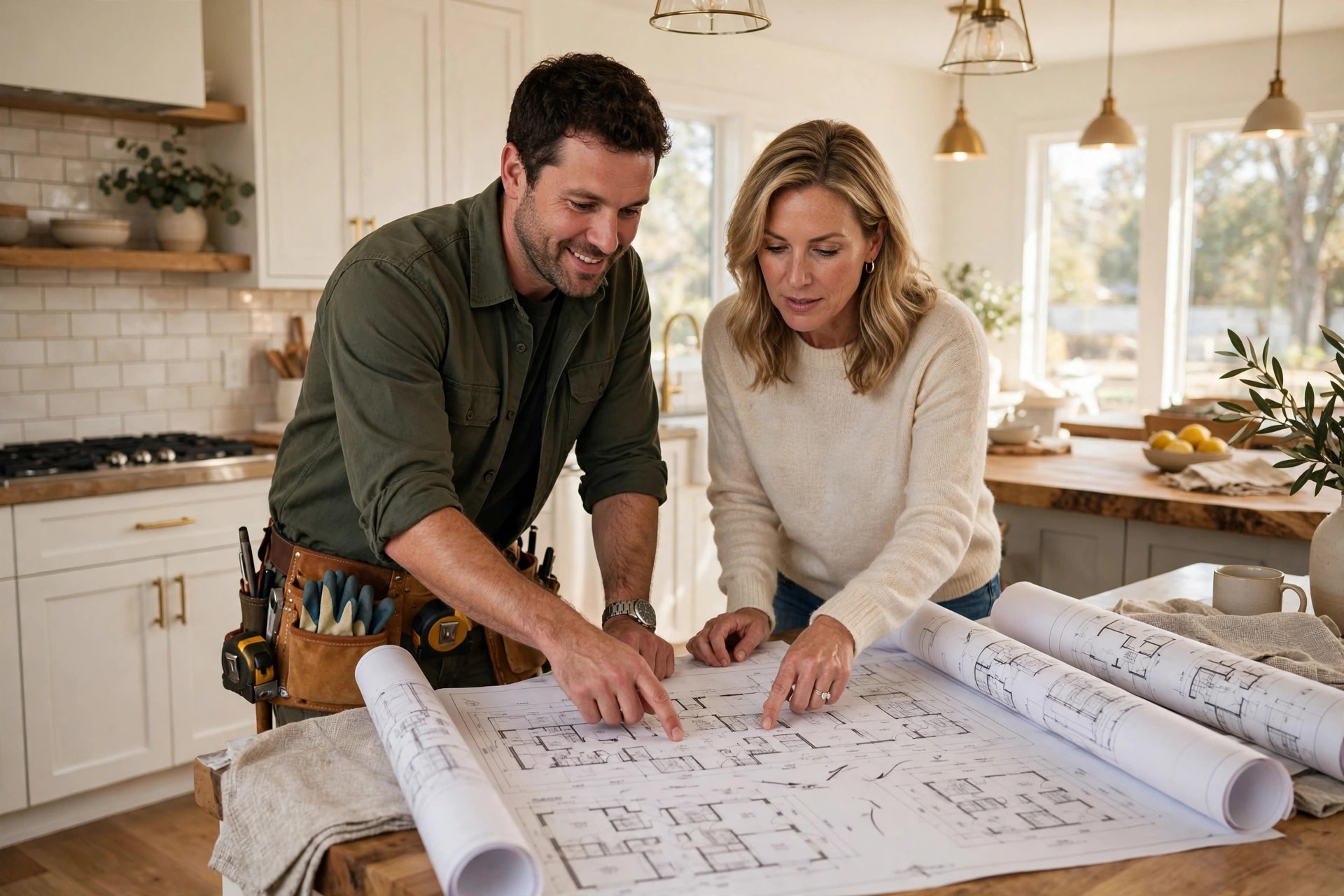
A legitimate bid for a mid-size remodel should be a detailed multi-page document with a line-item breakdown, not a single page with a lump sum and “TBD” next to the timeline. Here is what to look for:
| Component | What to look for |
|---|---|
| Line-item costs | Labor, materials, permits, and overhead broken out separately. A lump sum with no detail is a red flag. |
| Permit and inspection schedule | Specific reference to eTRAKiT, the permit type, and who pulls it. |
| Payment schedule tied to milestones | Payments tied to completed phases, not “half upfront” or vague monthly draws. |
| Subcontractor list | Named trades with active TDLR license numbers where the trade requires one. |
| Change order process | Defined in writing before work starts. Vague is bad. |
| Warranty | Workmanship warranty terms in writing, plus manufacturer warranties passed through on materials. |
On pricing, Denton-area cost guides give a useful reality check. According to local 2026 guides, a cosmetic kitchen refresh in the Denton area typically runs $15,000 to $30,000, a mid-range remodel with quality materials and layout changes lands between $40,000 and $75,000, and full custom work goes higher. Our own Denton kitchen cost guide breaks down what drives those numbers. For labor context, Texas trade rates run roughly $35 to $150 per hour depending on specialization, and general contractor management fees typically run 10 to 20 percent of total project cost. If a bid comes in far below every other number you have seen, ask the bidder to walk you through how they get there. The gap is usually in materials, scope, or code compliance.
Visit the work. Actually go.
Ask for two or three completed projects in the Denton area, call the homeowners, and if you can, drive by the property. Do not rely on the glossy photos on a website. Call the homeowner and ask two questions: did they show up on the days they said they would, and when something went wrong, and something always goes wrong, how was it handled?
The second question matters more than the first. Every project has a moment where the drywall crew finds something the framing crew missed, or an inspector flags an issue that was not in the original plans. What homeowners remember months later is how the GC handled that moment. Did they explain it in plain English? Did they fix it and document it? Did the change order arrive the same day or three weeks later?
If a contractor cannot produce local references, or the references are vague, walk away. A contractor who has done real volume in Denton can give you names and numbers without hesitation.

The clay soil question nobody asks until it is too late
Denton sits on expansive clay soils, and that changes foundation strategy. Expansive clay swells when wet and shrinks when dry, and that movement is what lifts slabs and cracks foundations over time.
The practical implication depends on your home. Many Denton homes built from the 1970s onward sit on slab foundations, while older homes, particularly in the neighborhoods around the historic Square and the university area, are often pier-and-beam. An addition on a slab home needs proper isolation detailing where new concrete meets old. Work on a pier-and-beam home, especially anything adding significant load like a second story, deserves a structural engineer’s review before concrete is poured.
A GC who has worked Denton ground for years brings this up without being asked. If they do not, that is useful information.
Neighborhood-specific considerations
Denton is not one uniform market, and a contractor should know the differences:
- Historic areas near the Square: Older homes with more pier-and-beam construction, and in some districts, additional design review before exterior changes. This adds time to the schedule. A GC who has not worked these streets will underestimate it.
- HOA-governed neighborhoods: Many of Denton’s newer communities have architectural review boards with their own approval process for exterior work. Get plans approved before signing a construction contract, not after, or you may pay for a crew sitting idle.
- University-adjacent areas: Around UNT and TWU you find higher density, older housing stock, and rental properties where coordination with property managers adds overhead. Permitting is the same, but the logistics are heavier.
- Newer subdivisions along I-35 and University Drive: Mostly slab construction on newer infrastructure, generally faster permits since the homes were built to recent code. Simpler from a regulatory standpoint, though the soil is just as expansive.
The contract: non-negotiables
Do not sign a contract that is missing any of these:
- Scope of work as an attached exhibit. Drawings, material specs, and a clear definition of done. “All work per plans” is too vague when the plans are a single floor sketch.
- Change orders in writing, signed by both parties, before the work begins. Not after. This is where most residential budget overruns originate.
- A termination clause for both parties. Typically with written notice. If a GC resists giving you a walk-away clause, ask why.
- A remedy for schedule delays. A daily rate for delays past the agreed completion date protects you if the timeline slips past a move date or lease expiration.
- Dispute resolution before litigation. Mediation first is faster and cheaper than a lawsuit for both sides.
For larger projects, having a construction attorney review the contract before you sign is inexpensive insurance.

Where to verify, before you hire
- City of Denton contractor registration: Confirm the $66 annual registration is current through the Development Services office, 401 N. Elm St, or call Building Safety at (940) 349-8360.
- TDLR license search: Verify every subcontracted trade that requires one, electrical, plumbing, HVAC, at tdlr.texas.gov.
- Texas Attorney General: Search for prior consumer complaints against the contractor.
- Denton County Clerk lien search: Before final payment, run a lien search through the county’s real property records. A subcontractor who has not been paid can file a mechanic’s lien against your home even if you paid your GC in full. Twenty minutes of checking before the last check is cheap protection.
Red flags that should end the conversation
- They will not show proof of Denton registration or insurance.
- They want a large deposit before any work begins. A modest deposit tied to mobilization is normal; half upfront is not.
- They have never pulled a permit in Denton. “It is just cosmetic” does not cover structural, electrical, or plumbing changes.
- They cannot name the subcontractors they will use.
- A listed phone number or address does not trace to a real local presence.
- They agree to everything on the first visit, every request, every timeline, without a single “let me check on that.” In our experience, the contractor who says yes to everything in meeting one is the one sending surprise change orders in week three.
Frequently asked questions
Does Texas require a general contractor license?
No. Texas has no state-level general contractor license. TDLR licenses specific trades such as electrical, plumbing, and HVAC, but the coordinating GC is not among them. The City of Denton requires a $66 annual contractor registration, which is the closest thing to a license at the municipal level.
How much does contractor registration cost in Denton?
$66 per year for general contractors, per the city’s published fee schedule. It is handled through the eTRAKiT portal and requires proof of insurance.
What building codes does Denton follow?
Denton has adopted the 2021 International Building Codes with local amendments. Your GC should reference current code in bids and permit submittals.
Do I need a permit for a kitchen remodel in Denton?
It depends on scope. Electrical and plumbing changes require permits. Structural modifications, moving a load-bearing wall or altering the roof, require a building permit through eTRAKiT. Purely cosmetic changes typically do not. When in doubt, call Building Safety at (940) 349-8360 before work starts.
What should I do before making the final payment?
Run a lien search through the Denton County Clerk’s real property records. Confirm all subcontractors have been paid so no mechanic’s lien can land on your home after you have paid in full.
The bottom line
The right general contractor in Denton is not necessarily the cheapest bid or the friendliest voice on the phone. It is the one who is registered with the city, insured properly, reviewed well by local homeowners, detailed in writing, and fluent in Denton’s codes, soils, and neighborhoods, from the historic streets near the Square to the new subdivisions along I-35.
Do the week of due diligence now. The alternative takes a year.
Planning a project in the Denton area? The JBN Group has served North Texas families since 1996 with whole-home remodeling, kitchen renovations, and home additions. Call us at 469-312-0990 or tap the quote button and tell us about your project. We will give you a detailed written bid, proof of registration and insurance, and local references you can actually call.