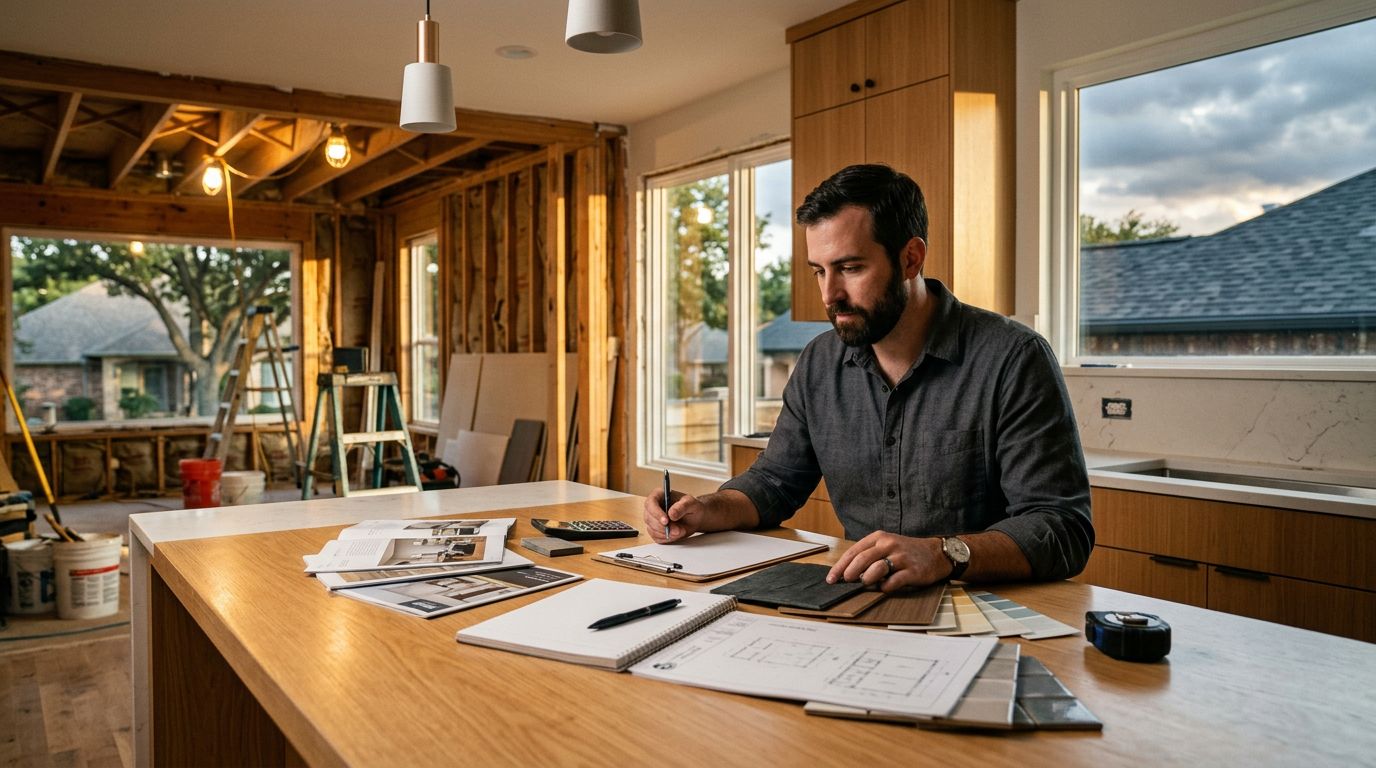
Building a successful home improvement budget is the most important step in ensuring your project stays on track from start to finish. When you start with a clear vision, you avoid the common pitfalls that lead to an uncomfortable bill. A well-structured renovation budget or remodeling budget acts as a roadmap, helping you account for the work itself, materials, permits, design choices, cleanup, and those inevitable surprises hidden behind walls or floors. By planning carefully, you also ensure that your efforts contribute positively to your long-term home value.
North Texas homes face unique challenges, including intense summer heat, frequent hail, heavy storms, shifting clay soil, and fast-changing material prices. A realistic plan provides the financial breathing room you need to make smart choices without cutting corners. To succeed, start by defining your exact scope, pricing out each phase of the project, and choosing a contractor who communicates clearly throughout the process.
Key Takeaways
- Define your project priorities early to create a realistic renovation budget before requesting bids.
- Include labor costs, materials and supplies, permits, waste disposal, and potential living expenses in your financial plan.
- Keep 10% to 20% of your total budget available for unexpected expenses that may arise during construction.
- Carefully evaluate contractor quotes by comparing their insurance coverage, project timelines, and warranty terms.
- Choose a local contractor who can manage the entire renovation budget and project scope from initial planning through the final inspection.
Start With a Clear Project Scope
Before you set a dollar limit, you must define a clear project scope to determine exactly what you want the project to accomplish. Whether you are planning a bathroom remodel, a kitchen remodel, a whole-home renovation, a window replacement, or an outdoor living upgrade, each project requires unique planning steps and budget allocations.
Write down the specific problems you want to solve. You may need more storage, better energy performance, safer flooring, improved drainage, or a more useful patio. Then, separate your essential needs from the premium features you would enjoy if funds allow.
For example, a bathroom remodel might require a new shower, updated plumbing, waterproofing, flooring, light fixtures, and ventilation. Decorative tile or heated floors can come later if the core work uses most of your funds.
Your home’s age and style also affect the plan. Many Denton County properties include brick ranch homes, 1990s subdivisions, and newer open-concept houses. Older homes may need electrical updates, plumbing repairs, or framing changes before you install new finishes.
Review Fidelity’s renovation budgeting guidance, which discusses a common guideline of keeping renovation spending below 30% of your home’s value. Treat that figure as a planning reference to ensure your renovation supports a positive return on investment, rather than a guarantee of increased home value. Your home’s location, condition, and the overall quality of the work will ultimately dictate your financial outcome.
Build a Detailed Home Improvement Budget
A contractor’s base price is only one part of your total project cost. Always ask for itemized bids that separate labor costs, materials and supplies, cabinetry and hardware, light fixtures, permits, demolition, disposal, and cleanup.
Material allowances deserve close attention. A quote may include a basic flooring allowance, while your preferred hardwood, tile, or luxury vinyl costs more. The same issue can affect countertops, plumbing fixtures, windows, exterior paint, and lighting.
Include these costs in your budget spreadsheet:
- Architectural fees or design services
- Building permits and required inspections
- Demolition and debris removal
- Material delivery and storage
- Temporary kitchen, bathroom, or housing needs
- Repairs discovered after demolition
- Final cleaning and touch-ups
It is wise to set aside a contingency fund to manage unexpected expenses. We recommend following the 10-15 percent rule, adjusting your reserve based on the home’s age and the extent of the demolition. A newer room with accessible systems may require less of a buffer than an older bathroom where you might uncover hidden plumbing issues.

When comparing estimates, check exactly what each contractor includes. One bid may appear cheaper because it excludes building permits, trim, paint, or waste disposal. A detailed proposal makes those differences easier to spot before you sign a contract.
Account for North Texas Conditions
North Texas weather can significantly change how you plan and price a renovation. Summer heat affects exterior work, the proper storage of materials and supplies, worker schedules, and indoor cooling requirements. Spring storms and hail can also cause unavoidable delays for roofing, window, and patio projects.
If you are planning replacement windows, ask about frame types, glass packages, installation methods, and warranty coverage. Professional installation is essential because a quality window can still leak or perform poorly if the opening is measured or sealed incorrectly.
Outdoor projects need their own cost review. Cedar patio covers, pergolas, outdoor kitchens, and other outdoor living spaces may require structural plans, electrical work, gas lines, drainage changes, and city permits. Wind exposure and roof attachment details deserve special attention in open areas around Northlake, Bartonville, Argyle, and Trophy Club.
Foundation movement is a common factor in many parts of North Texas. Expansive clay soil can contribute to seasonal shifting, so you must address drainage, grading, and visible structural issues before adding heavy finishes or enclosing a patio. Failing to address these, or ignoring potential hidden water damage, can lead to costly repairs later. A reliable home improvement contractor should point out these conditions that need separate evaluation instead of simply covering them with new materials.
Plan your project calendar around weather patterns and site access. Exterior work may take longer during the stormy season, while interior remodeling can generally continue with careful dust control and temporary protection.
Compare Contractors on Value, Not Price Alone
A low estimate can quickly jeopardize your remodeling budget when the proposal lacks necessary details or the project relies on multiple uncoordinated trade professionals. When you review various contractor quotes, compare each candidate based on their specific project scope, expected schedule, payment terms, insurance coverage, warranty, and their established process for handling changes.
Ask exactly who will manage permits, order materials, schedule the trade professional teams, protect your home, and complete the final walkthrough. You should always know exactly who to contact when a question arises during the project.
The JBN Group is a local home renovation and remodeling team that manages planning, material coordination, trade scheduling, and project completion. For a single room job, a specialist may be enough. For connected work, one accountable home remodeling company can reduce scheduling conflicts and keep your project on track.
Match the JBN company to your project when the scope is focused. JBN Windows is the right fit for replacement windows, JBN Flooring handles professional flooring installation, JBN Patio Covers focuses on cedar patio covers and pergolas, and JBN Bathroom Remodeling serves bathroom specific projects. The JBN Group can help coordinate broader home improvement services to ensure your project scope is handled efficiently.
Whether you search for a North Texas contractor, Denton County contractor, Denton TX contractor, Argyle TX contractor, Flower Mound contractor, or Corinth contractor, verify that the company has suitable insurance and a clear written agreement. A trusted contractor will explain exclusions, allowances, change orders, and payment milestones before work begins.
You can find The JBN Group serving homeowners in Denton, Highland Village, Lewisville, Northlake, Bartonville, Double Oak, Copper Canyon, Trophy Club, Roanoke, Southlake, Grapevine, Keller, Frisco, Little Elm, Carrollton, and surrounding communities. Look for a family owned contractor that values clear communication, quality craftsmanship, and long term customer satisfaction.
Decide Whether to Phase the Work
You do not need to complete every improvement at once. Phasing your project is one of the most effective budget-friendly ideas, as it protects your cash flow and helps you avoid scope creep when your home requires several updates.
Start with work that prevents damage or improves safety. Roof leaks, failed windows, electrical concerns, plumbing leaks, drainage problems, and structural repairs should always take priority over decorative upgrades. Next, address projects that affect one another. Ensure your trade professional completes all necessary electrical or plumbing changes before closing walls, then move on to installing flooring and finish work.
A practical sequence may include:
- Repairs, inspections, and permitting
- Demolition and rough plumbing or electrical work
- Insulation, drywall, waterproofing, and exterior protection
- Cabinets, flooring, fixtures, paint, and trim
- Final inspections, cleaning, and warranty documentation
To stay organized, keep a simple project ledger that tracks your contract amount, approved changes, payments, material upgrades, and remaining contingency. Maintaining this detailed home improvement budget is essential for transparency. When developing your overall renovation budget, homeowner discussions, such as these real-world budget examples, show why final costs can vary widely. Use those discussions to generate questions for your contractor, rather than using them as a substitute for a local written estimate.
Home Improvement Budget FAQ
How much should you save before starting a renovation?
Save enough to cover the initial deposit, early material purchases, and a 10% to 20% contingency fund. It is best to keep your regular household expenses separate from your renovation budget to ensure you have a financial cushion throughout the process.
Should you get more than one estimate?
Yes. Comparing two or three detailed contractor quotes can reveal missing work, unusual allowances, or large differences in material quality. Be sure to compare the overall scope of work rather than simply choosing the lowest number.
What should a remodeling contract include?
Your remodeling budget should be supported by a contract that includes the project scope, materials, allowances, schedule, payment milestones, change order processes, insurance information, warranty terms, and responsibility for permits and site cleanup.
Do permits belong in the project budget?
Yes. Building permits are essential, though requirements vary by city and project type. Ask your contractor which permits and inspections apply to your specific project before construction begins.
How do material allowances affect the final price?
An allowance is a budget placeholder. If you choose products that cost more than that allowance, you are responsible for paying the difference. Whenever possible, select your major materials early to avoid these fluctuations.
Should you finance a home improvement project?
Financing may help when the work is necessary or long-term, but be sure to compare interest rates, fees, loan terms, and your monthly payment before committing to a plan.
Is it cheaper to remodel several rooms together?
It can be, because shared demolition, site delivery, and trade scheduling may reduce duplicated costs. For example, grouping a kitchen remodel with a bathroom remodel can improve efficiency, provided the total project still maintains a clear scope and sufficient contingency.
What projects add energy value in North Texas?
Well-installed replacement windows, attic improvements, air sealing, insulation, and efficient HVAC work may improve comfort and energy use. Have the home’s specific problems evaluated by a professional first.
How long should you keep renovation records?
Keep contracts, invoices, permits, product information, warranties, and before-and-after photos for as long as you own the home. These documents can assist with future maintenance, insurance claims, and potential home sales.
When should you contact a contractor?
Contact a contractor after you define your goals and rough budget, but before you finalize materials or structural plans. Early input can help identify potential permit, sequencing, and cost issues.
Make Your Budget Work Before Construction Begins
A reliable home improvement budget ensures that every dollar in your project has a specific purpose. By defining the scope of your project, separating essential repairs from aesthetic upgrades, and pricing the entire plan, you create a financial roadmap for success. It is also vital to reserve a contingency fund for unforeseen conditions that often hide behind walls.
When you work with a trusted renovation company, they will help you develop a comprehensive remodeling budget that accounts for all project variables without unnecessary pressure. Whether you are planning residential remodeling, a professional installation, or a full-scale home renovation, clear financial planning supports better decisions and ensures lasting results.
For help planning your project, Contact The JBN Group or Request Your Free Consultation. You can also Call The JBN Group Today at 469-312-0990. A careful, well-structured budget is the first step toward quality work that fits both your home and your finances.