
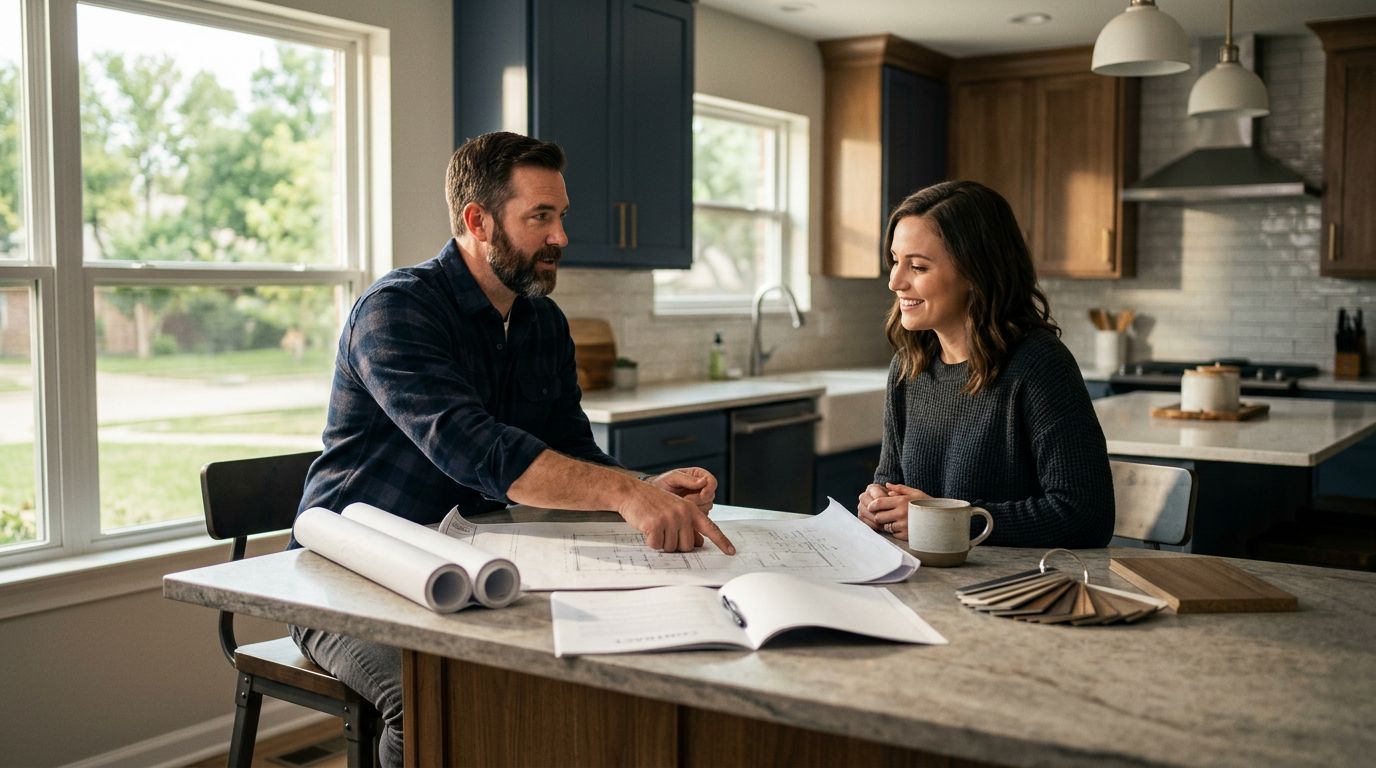
Hiring a contractor can feel exciting at first. Then you start comparing estimates, reviewing materials, and wondering who will be responsible when plans change. The right questions help you find a trusted contractor who communicates clearly and respects your home, budget, and schedule.
Before you sign an agreement, ask about experience, insurance, permits, project supervision, payment terms, and warranty coverage. These answers will help you compare a home improvement contractor on more than price alone.
Key Takeaways
- Ask who will manage your project each day and how updates will reach you.
- Review the written scope, payment schedule, allowances, and change-order process.
- Confirm insurance, permits, subcontractor oversight, cleanup, and warranty terms.
- Choose experience that matches your exact project and North Texas home.
- A clear consultation can prevent costly misunderstandings later.
Questions to Ask Before Hiring a Contractor
1. How much experience do you have with my type of project?
A contractor may have years in construction but limited experience with your specific work. Ask about similar projects involving replacement windows, flooring installation, bathroom remodeling, room additions, roofing, or outdoor living spaces.
For example, a bathroom remodeling project requires waterproofing, ventilation, plumbing coordination, tile installation, and careful moisture control. A patio project has different concerns, including drainage, foundation conditions, wind, sun exposure, and connection points at the house.
Ask to see recent projects that resemble yours. You can also request references from homeowners who completed similar work. A useful list of questions appears in this home remodeling contractor guide.
The JBN Group manages a range of home improvement services, including residential remodeling, windows, flooring, bathrooms, roofing, additions, and patio projects. Ask which team member has direct experience with your scope.
2. Who will manage the work each day?
The person who gives you an estimate may not be the person supervising your project. Ask for the project manager’s name, how often you’ll receive updates, and who will answer questions when the crew is not on site.
You should also ask:
- Who coordinates subcontractors and inspections?
- How will you approve design or material changes?
- What happens if the project manager is unavailable?
- Who checks the work before the final walkthrough?
Clear responsibility matters when several trades work on the same home. A general remodeling contractor should coordinate the schedule instead of leaving you to manage plumbers, electricians, flooring crews, and installers yourself.
Homeowners often mention communication and change orders when discussing contractor experiences, including in this homeowner contractor discussion. Ask these questions before work begins, not after a problem appears.

3. Are you insured, and will you handle permits?
Ask for proof of current general liability insurance and workers’ compensation coverage where applicable. Also ask whether the contractor will manage required permits and inspections for your project.
Permit needs vary by project and location. Structural changes, electrical work, plumbing changes, additions, and some exterior improvements may require review by the city or county. Your contractor should explain which permits apply and who pays the related fees.
Never assume a permit is unnecessary because a contractor says the job is small. Ask for a written explanation if no permit is planned. You can also contact your city building department to verify the process.
This question matters throughout Denton County. A Denton TX contractor working in Denton, Argyle, Corinth, Flower Mound, Highland Village, Lewisville, or Northlake may work under different local review procedures than a contractor working in Frisco, Little Elm, or Southlake.
4. What does the written estimate include?
A low estimate may leave out demolition, disposal, surface preparation, trim, permits, delivery, or final cleanup. Ask for a detailed proposal that describes the work, materials, quantities, labor, exclusions, and payment schedule.
For a flooring project, the estimate should address removal of existing flooring, subfloor repairs, transitions, baseboards, furniture handling, and waste disposal. For replacement windows, ask about measurements, installation method, flashing, interior trim, exterior caulking, and disposal of old units.
You should also ask how material allowances work. An allowance is a budget placeholder, not always the final price. If you select tile, plumbing fixtures, flooring, or windows above the allowance, you may owe the difference.
Before signing, compare proposals line by line. The lowest total may not provide the same materials or preparation work as a higher bid.
5. How do you handle changes and unexpected repairs?
Renovation work can uncover damaged framing, outdated wiring, plumbing leaks, or moisture problems. Ask how the contractor documents unexpected work and obtains your approval.
A proper change order should describe the added work, material cost, labor cost, schedule effect, and revised total. You should approve it in writing before the work proceeds, except when an immediate action is needed to prevent damage.
Ask whether verbal approvals count. They shouldn’t replace written records. Keep your proposal, selections, invoices, change orders, inspection records, and warranty documents in one file.
North Texas weather can expose problems during exterior projects. Heavy rain may reveal drainage issues, while intense summer heat can affect scheduling and material handling. A reliable contractor will explain how weather delays affect the calendar without hiding the impact on cost.
Does the Contractor Fit Your Home and Location?
Local experience is useful when it connects to real project conditions. A North Texas contractor should understand hot summers, sudden storms, hail exposure, clay soils, drainage concerns, and the construction styles common across the Dallas-Fort Worth area.
Ask whether the company has worked on homes in your neighborhood or nearby communities such as Bartonville, Double Oak, Copper Canyon, Trophy Club, Roanoke, Grapevine, Keller, Carrollton, and surrounding areas. Older homes may need different preparation than newer construction in Argyle or Northlake.
Your home’s style also affects recommendations. Brick ranch homes, newer farmhouse-style homes, Craftsman houses, and large suburban properties each have different trim, roofline, window, and exterior design details.
The JBN Group is a family owned contractor based in Denton, Texas. For a larger home renovation, ask how the company manages design decisions, material sourcing, trade scheduling, permits, and the final walkthrough. One accountable partner can reduce confusion when your project includes several types of work.
For service-specific planning, ask about the correct JBN division. JBN Windows can address replacement windows, JBN Flooring can discuss flooring installation, JBN Bathroom Remodeling can help with bathroom remodeling, and JBN Patio Covers can review cedar patio covers, pergolas, and other outdoor living spaces.
What Should You Ask About Materials and Workmanship?
Ask which products the contractor recommends and why. You should receive product names, model numbers, finish options, installation requirements, and warranty information before making final selections.
Quality materials still need professional installation. Improper window flashing can allow water into the wall. Poor floor preparation can cause uneven seams or movement. In a bathroom, weak waterproofing can create damage behind tile that stays hidden for months.
Ask who installs the work and whether subcontractors follow the same quality standards. The contractor should explain how it checks measurements, surface preparation, fasteners, sealants, drainage, and finish details.
You should also ask about cleanup and protection. Will workers cover nearby floors? How will they control dust? Where will debris go? Who protects landscaping, furniture, cabinets, and finished surfaces?
Quality craftsmanship includes the details you may not notice during construction. Ask how the company handles punch-list items and whether you can inspect the work before the final payment.
How Will You Know the Contract Is Fair?
Read the contract before paying a deposit. It should identify the legal business name, address, scope of work, start and estimated completion dates, payment schedule, materials, warranty terms, insurance information, and cancellation provisions.
Be cautious when a contractor asks for a large cash payment before ordering materials or setting a start date. A reasonable schedule often connects payments to completed stages, deliveries, or inspections. Your contract should state when each payment is due.
Ask how long the estimate remains valid. Material prices and availability can change, but the contractor should explain the terms instead of leaving you with an open-ended price.
You should also ask what happens if you pause the project, need to change selections, or sell the home. A clear contract protects both sides and gives you a practical way to resolve disagreements.
Red Flags to Watch Before You Sign
Pay attention to how a contractor behaves during the sales process. Pressure, vague answers, missing paperwork, and a refusal to provide a written scope are serious warnings.
You should pause if the contractor:
- Offers a price far below comparable estimates without explaining why.
- Demands full payment before work starts.
- Refuses to identify the project manager.
- Avoids questions about insurance or permits.
- Wants you to pull permits for work they are completing.
- Uses a contract with blank spaces or unclear allowances.
- Promises an exact completion date without reviewing the project details.
A professional home remodeling company won’t have every answer instantly. However, it should explain how it will find the answer and document the decision.
FAQ: Questions Homeowners Ask About Contractors
Should you get more than one estimate?
Yes. Two or three detailed estimates can help you compare scope, materials, schedule, and communication. Compare matching work rather than totals alone.
What should you bring to a contractor consultation?
Bring photos, measurements if available, inspiration images, must-have features, budget limits, and questions about timing. You don’t need a finished design.
Should you hire a general contractor or separate trades?
A general contractor can coordinate multiple trades and manage the schedule. Separate trades may work for a small, clearly defined repair.
Who buys the materials?
Ask before signing. Some contractors purchase everything, while others have you select or buy certain items. The contract should identify responsibility for delivery and defects.
What is a change order?
A change order is written approval for work or materials outside the original contract. It should show the price and schedule effect.
How much should you pay upfront?
The amount varies by project and contract. Ask what the deposit covers and avoid paying the entire project cost before work begins.
How can you verify a contractor’s references?
Call recent references and ask about communication, cleanup, schedule changes, workmanship, and how the contractor handled problems.
Does every remodeling project need a permit?
No. Requirements depend on the work and location. Ask your contractor and local building department before construction starts.
What warranty should you receive?
Ask for written warranty terms covering labor and manufacturer products. Confirm the length, exclusions, and process for requesting service.
Should you stay in the home during remodeling?
That depends on dust, noise, utilities, access, and the size of the project. Bathroom and whole-home work may require temporary changes to your routine.
How do North Texas storms affect projects?
Rain, hail, wind, and extreme heat can delay exterior work. Ask how weather delays affect material protection, scheduling, and communication.
What makes a contractor trustworthy?
A trusted contractor provides a clear scope, proof of insurance, realistic scheduling, written changes, professional installation, and consistent communication.
Conclusion
The best questions before hiring a contractor focus on accountability. You need to know who manages the work, what the contract includes, how changes are priced, and how the finished project is protected.
The JBN Group can help you review your goals for flooring, windows, bathrooms, patios, additions, and broader home improvement services. Contact The JBN Group to discuss your project, or Request Your Free Consultation before comparing proposals.
Start With Clear Answers
A successful project begins with a detailed conversation and a written plan. When you’re ready to review your home renovation needs in Denton County or the wider North Texas area, Call The JBN Group Today at 469-312-0990.