Commercial Roof Inspection: What to Expect, Why It Matters, and When to Schedule One
A commercial roof inspection is one of the simplest ways to reduce leak surprises, protect tenants and equipment, and extend the useful life of your roof system. Whether you manage a retail center, office building, church, warehouse, or multi-tenant facility, a professional inspection helps you find small issues early—before they turn into expensive repairs or operational downtime.
Commercial Roof Inspection: Protect Your Building Before Problems Escalate
A professional inspection helps identify leaks, membrane damage, drainage issues, and safety risks early—so you can plan repairs, protect tenants, and extend roof life.

Commercial roofs are engineered systems. Even when the field of the roof looks “fine” from the ground, problem areas often develop at edges, penetrations, transitions, and drainage points. Over time, UV exposure, thermal movement, foot traffic, and storms can open seams, degrade sealants, and create pathways for moisture.
Inspections are about more than finding active leaks. A good inspection identifies risk: where water is likely to enter next, where components are loosening, and where the assembly may be retaining moisture. That’s what lets you schedule targeted repairs and prevent disruption.
Practical rule: If your roof is protecting inventory, tenants, sensitive equipment, or finished interiors, an inspection is not a “nice to have.” It’s a low-cost step that reduces high-cost outcomes.
Key takeaway
Roof failures rarely happen all at once. They build from small weaknesses—especially around penetrations and drainage. A routine inspection turns those hidden weaknesses into a clear, prioritized plan.
Schedule Your Commercial Roof Inspection
Want a documented snapshot of your roof’s current condition and a clear plan to reduce surprise repair costs? We can help you schedule an inspection quickly and walk you through next steps after the findings are reviewed.
When you reach out, it helps to share the building address, roof type (if known), access details, and any symptoms like stains, drips, or ponding water.
Why Commercial Roof Inspections Matter (Cost, Safety, and Liability)
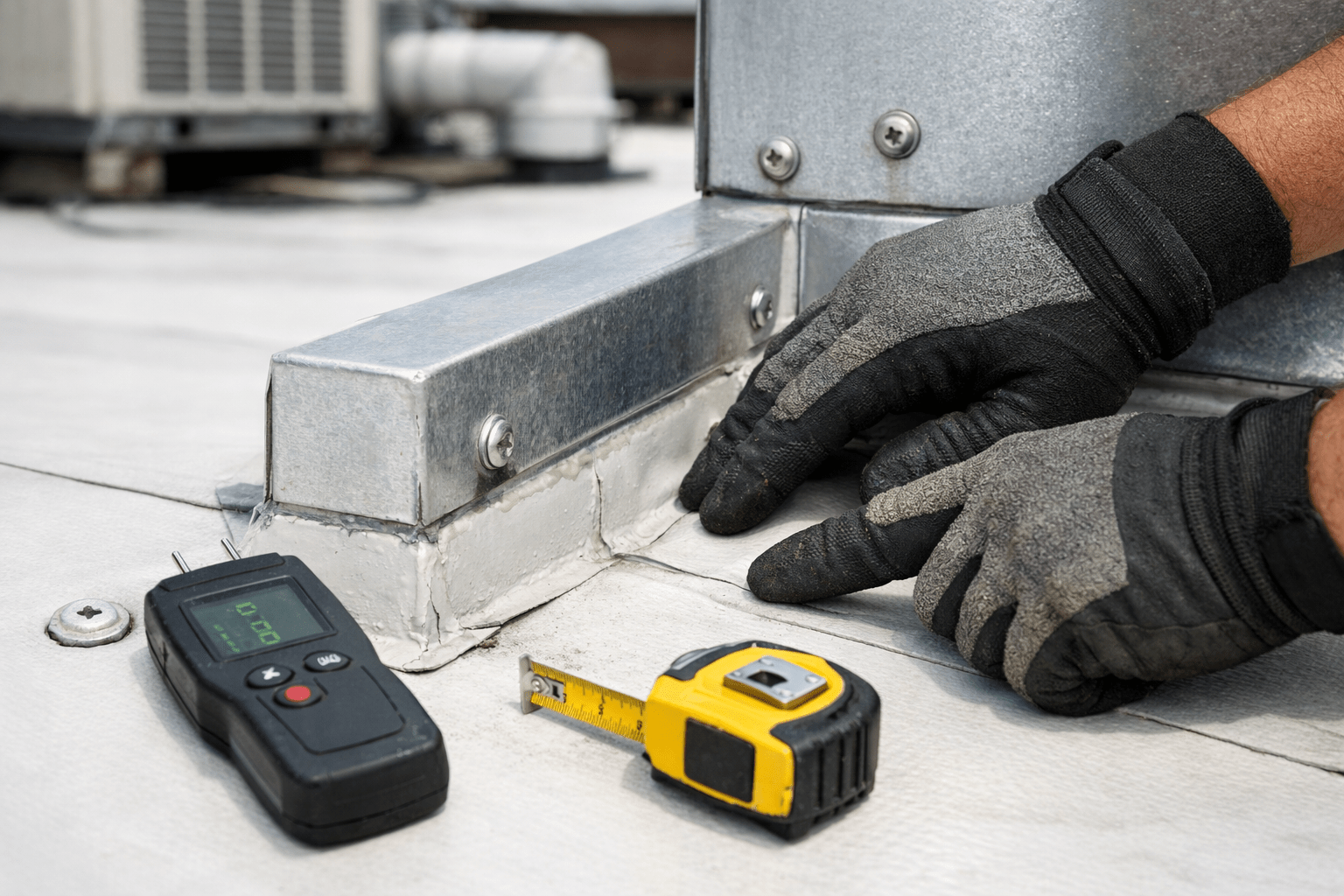
Commercial roofing decisions affect budgets, tenant satisfaction, and long-term asset value. Inspections provide the evidence you need to make those decisions with confidence. Here’s what a consistent inspection program does for your building.
1) Lower total cost of ownership (not just repair costs)
Most roof spending happens in two ways: planned maintenance and unplanned emergencies. An inspection shifts you toward planned work—where you control timing, pricing, access, and scope. Instead of reacting to leaks, you’re fixing the root causes (open seams, failing sealant, deteriorated flashing) before they saturate insulation or damage interiors.
Even a small issue can cascade. Once water gets into the assembly, you may be dealing with wet insulation, reduced R-value, interior staining, and in some cases microbial growth risk. That’s why catching problems at the surface level—when repairs are smaller—can have an outsized impact on long-term cost.
2) Better safety outcomes for staff, tenants, and vendors
Rooftops are work environments. HVAC techs, telecom crews, and maintenance teams may access the roof regularly. Inspections can identify safety hazards like loose materials, deteriorated walk pads, unstable coping, or compromised areas that could fail under foot traffic.
Additionally, drainage problems like ponding water increase slip risk and can worsen structural loading concerns during heavy rainfall. A documented plan reduces both physical hazard and operational risk.
3) Documentation for capital planning, stakeholders, and warranties
A clear condition report makes budgeting easier. Instead of “the roof might be a problem,” you can present photo-backed findings and recommendations: what needs immediate repair, what should be monitored, and what can be planned for later.
Consistent documentation can also support warranty compliance. Many commercial roof warranties require routine maintenance and prompt repairs. If a warranty claim ever becomes necessary, a strong inspection history can strengthen your position when coordinating with manufacturers and service providers.
Key takeaway
A commercial roof inspection is both a technical review and a management tool. It reduces emergency calls, improves budgeting, and creates a defensible record of roof condition over time.
If you manage mixed-use or industrial facilities, you may also find this helpful: Industrial roofing services (what to expect, how projects are approached, and what matters most for operational continuity).
What a Commercial Roof Inspection Includes: Key Areas Pros Evaluate
Not all inspections are equal. A thorough commercial roof inspection looks beyond “is it leaking today?” and evaluates the full roof system—field membrane, edges, penetrations, drainage, and interior clues. Below is a practical breakdown of what professionals evaluate and why each area matters.
Commercial roof inspection checklist (high-level)
- Roof field: membrane condition, cracks, punctures, blistering, shrinkage, UV degradation, granule loss (for modified bitumen or cap sheets).
- Seams and laps: separation, fishmouths, adhesive failure, heat-weld integrity (for TPO/PVC), and signs of movement.
- Flashings and edges: base flashings, termination bars, counterflashings, coping caps, parapet conditions.
- Penetrations and curbs: vents, pipes, conduits, skylights, RTU/HVAC curbs—frequent leak sources.
- Drainage: drains, strainers, scuppers, gutters, downspouts, low spots, and debris patterns.
- Rooftop equipment areas: damage from service traffic, missing walk pads, displaced components.
- Interior review: stains, wet ceiling tiles, odors, mold risk indicators, and leak pathway correlation.
- Documentation: photos, roof map (as needed), prioritized recommendations, and repair/maintenance options.
Roof surface conditions (the “field”)
The field area is the largest portion of the roof and shows how the system is aging. Inspectors look for punctures, splits, alligatoring (in some systems), exposed reinforcement, blistering, ridges/wrinkles, and any sign the membrane is becoming brittle. They’ll also note surface contaminants or coatings and whether protective layers remain intact.
Details: flashings, penetrations, skylights, and transitions
Most commercial leaks originate at details—not in the open field. Penetrations and transitions move differently than the roof deck as temperatures change. Sealants can crack, fasteners can back out, and metal components can shift. A professional inspection checks:
- Flashing adhesion and termination points
- Sealant condition (cracking, shrinkage, gaps)
- Corner details (common stress points)
- Skylight curbs and frame integrity
- Equipment curbs and pitch pans (if present)
Drainage performance (where small clogs create big problems)
Drainage issues are among the most common—and most preventable—causes of accelerated roof wear. Standing water can stress seams, increase UV/heat impact, and worsen small openings until they become active leaks. During the inspection, pros evaluate drains, scuppers, gutters, downspouts, debris buildup patterns, and low areas where water sits after rainfall.
Why drainage matters
Even when a roof is “waterproof,” ponding water increases exposure time at seams and details—raising leak risk and shortening roof life.
What gets checked
Strainers, clogs, soft spots near drains, slope/deflection concerns, and signs that water regularly overflows certain paths.
Interior review (connecting symptoms to causes)
Many commercial leaks travel. Water can enter at one location and show up elsewhere—especially on larger roofs with multiple penetrations and long seams. Inspectors may review interior areas (as appropriate) to identify staining, damp insulation signs, or ceiling tile damage and correlate those symptoms to rooftop conditions.
Tip for property managers: If you can share the exact locations of interior stains (suite numbers, gridline references, photos), the inspection can be faster and more accurate—because the roofer can trace likely pathways.
Documentation and prioritization
A useful inspection doesn’t stop at “here are issues.” It should translate findings into prioritized actions: what’s urgent, what’s recommended soon, and what should be monitored. In practical terms, that helps you decide whether to complete immediate repairs, schedule maintenance work, or begin replacement planning.
For broader context on repair vs. replacement decision-making, you may also like: Roofing solutions for homes & businesses in Denton, TX: repair, replacement & maintenance.
How Often Should You Schedule a Commercial Roof Inspection?
For most facilities, the best baseline is two inspections per year—often in spring and fall. That cadence helps you address damage from seasonal storms and prepare for temperature swings that stress roof assemblies.
Recommended inspection frequency (practical guidance)
- Twice per year (minimum best practice): Spring and fall inspections catch winter damage, pre-summer thermal stress issues, and post-summer UV expansion effects.
- After major weather events: Hail, high winds, heavy rain, or severe temperature swings can loosen edges, damage flashings, or create punctures from windborne debris.
- Higher-traffic roofs: If HVAC service, telecom work, solar maintenance, or frequent access is common, more frequent inspections help catch punctures and displaced components early.
- Older roofs / end-of-life roofs: More frequent inspections help you decide whether continued repairs are still cost-effective and when replacement planning should start.
Key takeaway
Scheduling matters: planned inspections let you fix issues on your timeline. Waiting until the leak shows up inside often means the problem has already grown.
When you should schedule an inspection sooner (warning signals)
- Recurring leaks in the same general area
- New interior staining, odors, or bubbling paint/drywall
- Ponding water visible 48 hours after rain
- Loose edge metal, coping movement, or visible gaps at terminations
- Increased rooftop traffic or new equipment installations
- Noticeable energy-cost increases that may indicate wet insulation or air leakage pathways
Request an Inspection Report and Repair Plan
If you’re seeing stains, repeat leaks, or ponding water, a professional report gives you photo documentation and a prioritized plan—so you can compare options, approve repairs confidently, and minimize business disruption.
Tell us what roof system you have (TPO, PVC, modified bitumen, metal, etc.) if you know it—and whether access is via hatch, ladder, or exterior stair.
Common Problems Found During Commercial Roof Inspections (and What They Mean)
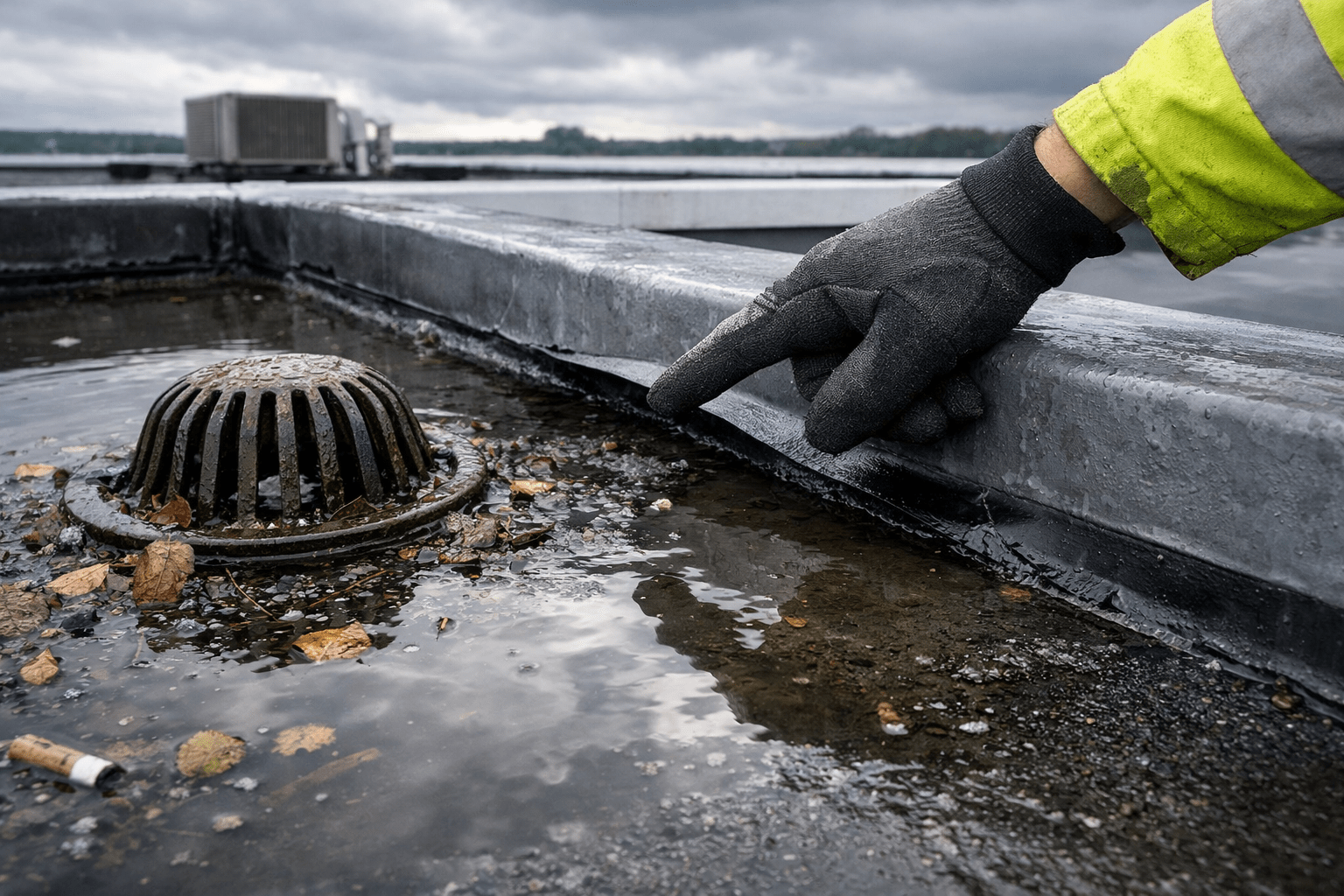
Knowing what inspectors commonly find helps you understand the “why” behind recommendations. Below are frequent commercial roof issues, what they typically indicate, and why they matter to your building.
Ponding water
Ponding is one of the most common inspection findings on low-slope systems. It often indicates clogged drains, inadequate slope, deck deflection, or localized low areas near rooftop equipment. While some membranes tolerate standing water better than others, ponding generally increases wear at seams and details and can expose minor weaknesses for longer periods.
- What it can lead to: accelerated membrane aging, seam stress, algae/debris buildup, higher leak likelihood.
- Typical corrective actions: drain cleaning, adding tapered insulation/crickets, localized re-sloping, addressing deflection where feasible.
Damaged flashing or failing sealant at penetrations
Penetrations move, and sealants age. Even when the roof field is intact, water can enter around pipes, conduits, skylights, and HVAC curbs if flashing details are cracked, loose, or pulling away. Inspectors look for separation lines, brittle sealant, missing fasteners, and weak corners.
This is one reason “the roof looks okay” can be misleading—details fail first.
Membrane punctures and open seams
Punctures can be caused by foot traffic, dropped tools, windborne debris, or brittle aging materials. Seams can open due to thermal cycling, adhesive fatigue, or installation defects that worsen over time. The risk is not only the hole itself; it’s what happens next if moisture enters and saturates insulation.
In many cases, prompt repairs at this stage are relatively contained compared to the cost and disruption of addressing wet insulation later.
Blisters, ridges, and wrinkles
These can indicate trapped moisture, air pockets, or movement within the system. Some irregularities may remain stable, while others worsen under heat and UV exposure until they split. An inspector can help determine whether a condition is cosmetic/monitorable or a risk requiring action.
Wet insulation or saturated assemblies
When insulation becomes wet, performance drops and the roof system can deteriorate from within. The building may also see increased HVAC load (and higher energy costs). Depending on the extent and location, solutions may range from localized removal/replacement to broader system rehabilitation.
Key takeaway
Many “small” roof problems are only small while they remain at the surface. Once moisture enters the assembly, costs and disruption typically increase.
If your building also has steep-slope areas or shingle components (common on mixed-use facilities), you may find this useful: 30-year architectural shingle roofing: benefits, costs, lifespan, and key considerations.
How to Prepare for a Commercial Roof Inspection (So It’s Faster and More Accurate)
A little preparation can shorten inspection time and improve the quality of the final report. The goal is to give the inspector the context they need: roof history, access logistics, and what symptoms you’re seeing inside.
Bring your roof “paper trail”
- Warranty documents (manufacturer and/or contractor warranty)
- Past repair invoices and proposals
- Any prior inspection reports or photos
- Roof plans, drain maps, or equipment layout drawings (if available)
- Leak history notes: when it happens, where it shows up, and weather conditions at the time
Confirm access and safety requirements
Access affects both scheduling and safety planning. Before the inspection, it helps to confirm:
- Roof hatch, ladder, or stair access locations
- Lockbox codes, keys, or escort requirements
- Site rules: check-in procedures, PPE requirements, restricted areas
- Any rooftop hazards (skylights, fragile areas, active construction zones)
Share known issues and interior symptoms
If you’ve seen interior staining, document it with photos and locations. If leaks occur only during wind-driven rain, mention directionality (e.g., “leaks happen when storms blow from the north”). These details help inspectors connect inside symptoms to rooftop entry points—especially in multi-tenant spaces.
Note rooftop obstructions and traffic patterns
Solar arrays, telecom equipment, dense HVAC layouts, and frequent service visits all influence where damage occurs and how the roof should be protected. A good inspector will consider traffic patterns and may recommend walk pads or routing changes to reduce punctures and seam stress.
Fast win: If you can identify who last serviced rooftop equipment (HVAC, telecom, solar), it can help narrow down when damage may have occurred and reduce repeat issues.
Conclusion: Make Roof Inspections a Simple, Repeatable Part of Building Management
A commercial roof inspection is one of the highest-leverage maintenance steps you can take. It catches common failure points early (seams, flashings, penetrations, and drainage), reduces emergency repairs, and gives you documentation for budgeting, stakeholders, and warranty compliance.
To recap:
- Plan for two inspections per year in most cases—plus post-storm inspections when needed.
- Expect a professional to evaluate roof surface condition, details, drainage, and interior symptoms.
- Use the report to prioritize repairs and build a predictable maintenance plan.
Schedule Your Commercial Roof Inspection Today
Protect your property, reduce downtime, and plan confidently with a documented roof condition assessment. Call 469-340-0990 or use the contact form to get started.
Next step: send your building address, roof access details, and any known problem areas. We’ll help you move from uncertainty to a clear repair/maintenance path.
Related reading: If your facility work involves broader building planning, you may also benefit from how to choose the right general contractor in Denton, TX—a practical guide to evaluating qualifications, process, and accountability.