
Roofing Solutions for Homes & Businesses in Denton, TX: Repair, Replacement & Maintenance
A reliable roof in Denton isn’t just about curb appeal—it’s your first line of defense against hail, high winds, intense Texas sun, and the sudden storm swings North Texas is known for. Whether you’re dealing with an active leak, weighing a full replacement, or trying to build a maintenance plan that prevents expensive surprises, the best outcomes start with a clear assessment and the right solution for your property type.
Top CTA: Get a Denton Roofing Inspection or Quote
If you have a leak, suspect storm damage, or want a realistic replacement timeline, don’t wait for minor issues to turn into interior repairs. A professional inspection looks beyond the obvious wet spot and checks shingles or membranes, flashing, vents, gutters, and attic/roof-deck indicators.
Prompt scheduling can help prevent hidden moisture from spreading into insulation, drywall, or framing.
What Denton, TX Roofs Need: Weather, Wear, and Local Building Realities
Denton roofs work hard. Between seasonal hailstorms, high straight-line winds, UV exposure, and temperature swings, roofing systems here can age faster than homeowners expect—especially if small installation or ventilation issues compound over time. The key is understanding what typically fails first and what early warning signs look like so you can address problems while they’re still manageable.
How North Texas weather accelerates roof damage
In Denton, storm events don’t always create dramatic, obvious failures. Often, damage begins as small weak points:
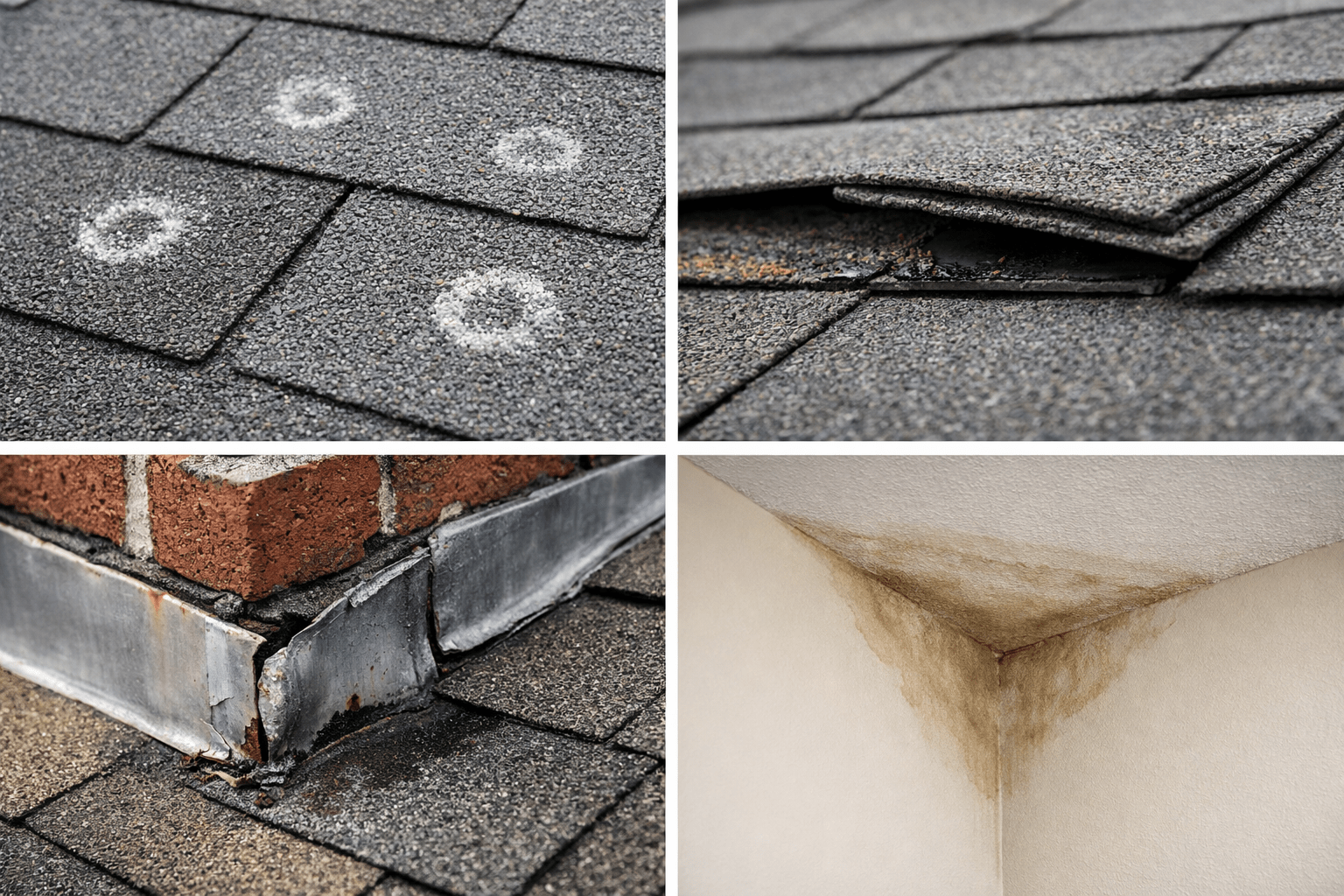
- Hail impact and granule loss on asphalt shingles can shorten lifespan and expose the shingle mat to UV breakdown.
- Wind uplift can break shingle seals or lift corners, which then makes the next storm more likely to peel sections back.
- Thermal expansion and contraction stresses flashing transitions (chimneys, skylights, walls) and can open tiny gaps that become leak pathways.
- Sun and heat exposure can dry out sealants and accelerate aging at pipe boots, vent seals, and ridge components.
Common signs your roof is under stress
If you notice any of the following, it’s worth scheduling an inspection—especially if a storm hit recently:
- Lifted, curled, or missing shingles (even a few can allow wind-driven rain underneath).
- Exposed nails or nail pops that create direct water entry points.
- Cracked or deteriorated pipe boots around plumbing vents—one of the most common leak sources.
- Ceiling stains, bubbling paint, or damp spots in corners (leaks can travel; the stain isn’t always under the breach).
- Overflowing or sagging gutters that can cause water to back up at the roof edge and rot fascia/trim.
Important: The first visible interior stain is often a late-stage symptom. By the time drywall shows discoloration, moisture may already be affecting insulation, decking, or framing.
Commercial roofs: extra stress points most owners don’t see from the ground
Commercial buildings in Denton frequently use flat or low-slope systems that perform very well when installed and maintained correctly—but they face different risks than steep-slope residential roofs:
- Foot traffic from HVAC servicing can scuff membranes and weaken seams.
- Penetrations (curbs, pipes, conduit) increase flashing detail complexity and potential leak points.
- Ponding water can accelerate deterioration and heighten the chance of slow leaks.
- Seam wear and edge details are common areas for early failure without routine inspection.
Why code, ventilation, and insulation details matter in Denton
Roofing isn’t only the top layer you see. In Denton’s climate, a roof system’s long-term performance depends heavily on airflow and moisture management. Balanced attic ventilation helps reduce heat buildup and can improve energy efficiency, while proper insulation and air sealing help prevent condensation-related issues. When these elements are off—even with brand-new shingles—homes can see premature shingle aging, uneven temperatures, and moisture problems.
Key takeaway
Denton roofs don’t fail all at once; they often fail at transitions and penetrations first. Catching small problems early can save you from replacing decking, insulation, or interior finishes later.
Residential Roofing Solutions: Repairs, Replacements, and Materials That Fit Your Home
For Denton homeowners, the right roofing solution depends on two things: the scope of damage and the remaining service life of the system. Sometimes a focused repair is the smart move. Other times, replacement is the most economical option when you consider repeat service calls, ongoing leaks, and the risk of hidden deterioration.
Targeted repairs that solve the real leak source
A quality repair plan starts with diagnosis. A leak might show up near a window or in a bedroom corner, but the entry point is often higher up-slope. Common repair work includes:
- Replacing missing, creased, or punctured shingles and restoring the surrounding seal pattern.
- Resealing or replacing flashing at chimneys, walls, skylights, and roof-to-wall transitions.
- Repairing roof vents and replacing cracked pipe boots and collars.
- Addressing valleys where water volume is highest and debris can concentrate.
- Fixing edge and gutter-adjacent issues that cause water backup and wood rot.
When done correctly, repairs should restore watertight integrity without creating a patchwork look. The goal is to match materials and keep water shedding properly—especially around flashings and valleys.
When replacement is the smarter long-term choice
Replacement isn’t only for roofs that “look old.” It’s often the best decision when the roof can’t reliably protect your home anymore. Consider replacement if you’re seeing:
- Widespread hail damage across multiple slopes, not just one isolated impact zone.
- Recurring leaks after repairs—often a sign of broader system fatigue or multiple weak points.
- Significant granule loss leading to accelerated shingle deterioration.
- An aging roof near end-of-life where investing in repairs simply delays the inevitable.
In those scenarios, putting money into repeat repairs can be more expensive than a controlled replacement plan that includes updated underlayment, improved ventilation, and corrected flashing details.
Material options popular with Denton homeowners
Most Denton-area homes use asphalt shingle systems, and today’s options allow you to prioritize budget, performance, and storm resistance:
- Architectural shingles for a thicker profile, improved aesthetics, and better wind performance than older 3-tab styles.
- Impact-resistant shingles to improve resilience in hail-prone conditions (especially valuable if your neighborhood sees frequent storms).
- Upgraded underlayment systems that add redundancy when wind-driven rain or ice events occur.
If you’re weighing shingle types, you may find this helpful: 30-Year Architectural Shingle Roofing: Benefits, Costs, Lifespan, and What Homeowners Should Know.
Workmanship details that matter most (and why)
Two roofs can use the same shingle brand and still perform very differently based on installation quality. The details that most often separate a long-lasting roof from a problem roof include:
- Decking evaluation (replacing compromised sections, not covering problems).
- Correct underlayment placement at vulnerable areas and transitions.
- Clean, properly layered flashing lines that move water outward, not inward.
- Balanced intake and exhaust ventilation to manage heat and moisture in the attic.
Key takeaway
A “roof replacement” isn’t just shingles—it’s a system. If you improve the details you don’t see (underlayment, flashing, ventilation), you often improve performance you do feel: fewer leaks, fewer hot/cold rooms, and fewer surprises after storms.
Planning more than one home project? It can help to coordinate timelines and contractors. This guide is a useful companion: How to Choose the Right General Contractor in Denton, TX.
Commercial Roofing Solutions in Denton: Durable Systems for Flat and Low-Slope Roofs
Commercial roofing decisions carry higher stakes: interior inventory, tenant spaces, office buildouts, and operations can all be impacted by a leak. The best commercial roof strategies in Denton balance performance, documentation, and disruption control—so you can protect the building without derailing the business.

Common commercial repairs and restoration approaches
For many flat and low-slope roofs, targeted work can restore watertight performance without requiring a full tear-off—depending on condition. Common service categories include:
- Membrane repairs where punctures, blisters, or surface damage appear.
- Seam reinforcement to address wear at laps and transitions.
- Flashing corrections around penetrations and perimeter edges.
- Selective replacement of compromised sections to eliminate recurring trouble spots.
Drainage: the simplest way to prevent premature deterioration
Standing water is one of the fastest ways to shorten the life of a low-slope system. During inspection, focus on:
- Areas where water remains after 48 hours (weather permitting)
- Clogged drains, scuppers, or downspouts
- Low points created by settling insulation or deck deflection
- HVAC zones where service work may have disrupted membrane integrity
Fixing drainage isn’t only about preventing leaks—it also helps protect roof coatings/membranes and reduces the chance of moisture migrating into insulation layers.
Minimizing disruption: scheduling, phasing, and jobsite discipline
Commercial roofing in Denton often needs to happen while business continues. A professional approach prioritizes:
- Phased repairs so critical areas are addressed first
- Clear safety practices around access points and work zones
- Daily cleanup to reduce debris risks near customer/employee pathways
- Communication around noise, odor (if adhesives/coatings are used), and access to rooftop equipment
Documentation and maintenance planning for facility managers
For property managers and owners, the most cost-effective commercial roofing plan is the one you can budget for. That usually means keeping consistent records of inspection findings, repairs performed, and any areas that should be monitored. With that information, you can make proactive decisions—often extending roof life and preventing “emergency replacement” scenarios.
Key takeaway
Commercial roofs last longer when you treat seams, flashings, and drainage as routine maintenance priorities—not only as emergency repair items.
Middle CTA: Storm Damage, Leaks, and Fast Response for Denton Properties
If you suspect hail or wind damage, scheduling a professional evaluation quickly can reduce the chance of hidden moisture spreading. Leak tracing often involves flashing, penetrations, valleys, and ventilation components—not just the spot where water shows up inside.
If active leaking threatens interiors, ask about urgent steps such as temporary protection and priority repairs.
Preventative Maintenance: The Most Cost-Effective Roofing Strategy
If repairs and replacements feel expensive, preventative maintenance is the practical middle ground that can help you avoid both. In Denton, where storms can roll through quickly and heat stress builds all summer, small issues tend to become big ones when they’re ignored for a season or two.
How often should Denton roofs be inspected?
A good rule of thumb is to schedule routine inspections:
- Once per year as a baseline
- After major storms involving hail or high winds
- Before selling (or buying) a property to reduce last-minute surprises
This doesn’t mean you need constant repairs; it means you’re making informed decisions. If an inspection finds no issues, you gain peace of mind and a documented condition snapshot.
High-impact maintenance tasks that protect roof life
The most effective roofing maintenance items are often simple and low-cost compared to water damage repairs:
- Clear debris from valleys, roof edges, and around drains/scuppers on commercial buildings.
- Keep gutters flowing so water is carried away efficiently instead of backing up at the eaves.
- Check and reseal vulnerable penetrations like pipe boots, vents, and flashing transitions.
- Watch for minor movement in shingles or membrane details after temperature swings and storms.
Gutters deserve special attention because “roof problems” are sometimes drainage problems. If you’re seeing overflow or water pooling near foundations, explore Gutter Services to keep the whole exterior water-management system working together.
Why maintenance saves money for both homeowners and businesses
Routine maintenance reduces the odds of surprise costs—especially the hidden ones. For homeowners, that could mean avoiding drywall repairs, insulation replacement, or mold remediation. For businesses, it can prevent downtime and protect tenant improvements, equipment, and inventory. Even catching one small flashing issue early can save a significant interior repair later.
Think of roof maintenance like changing the oil in a vehicle: the goal isn’t to “fix a problem,” it’s to avoid the problem that would have cost 10× more.
A simple annual plan you can actually follow
If you want roofing care to be predictable rather than reactive, use a simple cadence:
- Spring: check for storm-season damage, clean gutters, and confirm ventilation components are intact.
- Late summer: look for heat-related sealant wear at penetrations and any granule loss or surface deterioration.
- After major storms: document issues with photos and notes (date, direction of impacts, rooms affected).
Key takeaway
If your roof is currently performing well, maintenance is the best way to keep it that way. If your roof is already showing problems, inspections help you decide whether targeted repairs or replacement is the most cost-effective next step.
Interlinking Suggestions: Helpful Pages for Denton Homeowners and Businesses
If you’re comparing options and want to explore the most relevant services first, these pages can help you narrow down the right path:
Explore services and confirm the best fit
- Roofing Services in Denton, TX — a full overview of solutions and what to expect.
- Residential Roofing — repairs, replacements, and options tailored to homeowners.
- Commercial Roofing — systems, repair strategies, and planning for facility needs.
- Storm Damage & Roof Repair — guidance for hail/wind events and leak concerns.
- Gutter Services — drainage support to protect roof edges and foundations.
- Service Areas — confirm coverage around Denton and nearby communities.
- About The JBN Group — learn more about the team and approach.
Related reads (for planning your broader home budget)
If roofing is part of a larger home improvement plan, these guides can help you set expectations and prioritize:
- Home Remodeling Costs in Denton TX: 2026 Price Guide
- Window Replacement Cost Denton TX
- Residential roofing Argyle TX (helpful if you’re nearby or comparing local roof considerations)
Conclusion: Build the Right Roofing Plan for Denton Weather
Denton’s weather can be tough on roofing systems, but the right strategy keeps your property protected and your costs under control. Start with a thorough inspection, then choose the solution that matches your roof’s condition and your goals:
- Repairs make sense when damage is localized and the roof still has meaningful life left.
- Replacement is often smarter when you’re facing widespread storm damage, recurring leaks, or end-of-life aging.
- Preventative maintenance is the most cost-effective approach for extending roof life and avoiding interior damage.
Bottom CTA: Get Your Denton Roofing Plan Started Today
Request an inspection, ask about repair vs. replacement, and get a clear next step for your home or business. If you’re dealing with storm concerns or an active leak, faster action helps reduce avoidable damage.
Next step suggestion: take 5 minutes to note any visible issues (missing shingles, stains, gutter overflow) so your inspection can focus on the most likely trouble spots.