Industrial Roofing Services in North Texas: What Building Owners Need to Know
Industrial roofing services cover the big flat and low slope roofs over warehouses, plants, and retail centers, and those roofs protect everything the business owns, yet they usually get attention only after a leak shows up inside. This guide explains the main systems, the warning signs worth watching, and how a sound repair, restoration, or replacement gets planned and priced.
What Counts as Industrial Roofing?
Industrial roofing is commercial roofing built for size and load, covering buildings so wide that the mostly flat surface carries vents, pipes, curbs, and heavy rooftop equipment.
A house roof sheds water fast because it is steep, but a warehouse roof moves water slowly, across long runs, toward drains that have to stay clear, and that one fact drives every design choice the roofer makes.
It also drives the stakes. One leak over a home is a stain on a ceiling, while one leak over a production line or a stockroom can stop work, ruin goods, and shut a business down for repairs.
Under the surface sits the deck, and decks vary with the age and type of the building: steel on most modern warehouses, concrete on heavier industrial structures, and wood on older shops and additions. The deck decides how a new system gets attached and how much tear off work a replacement really involves.
The Roof Systems We See Across North Texas
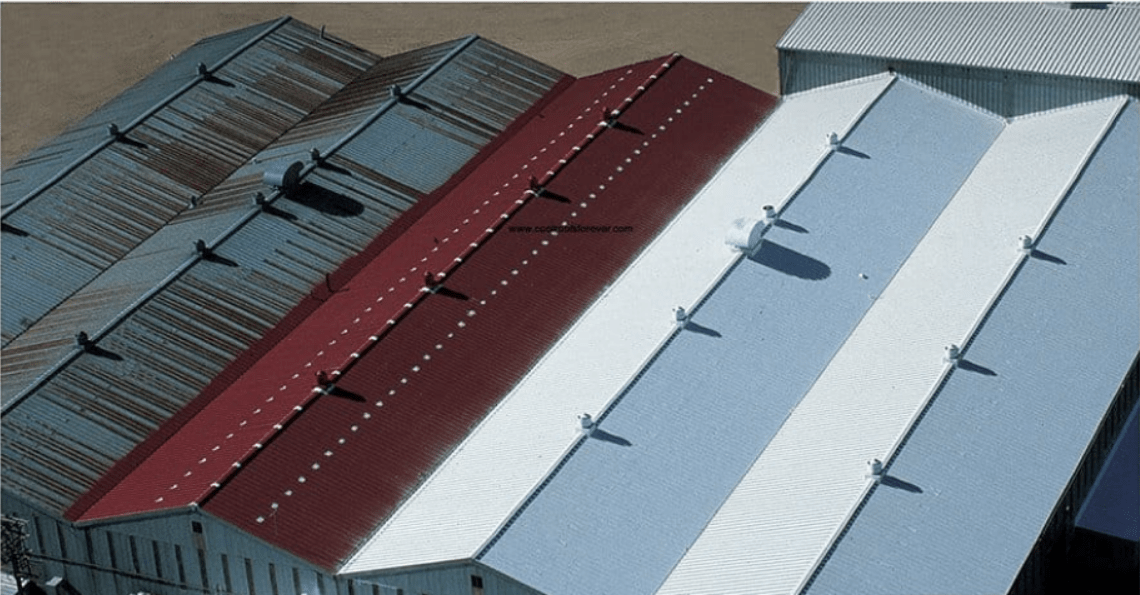
Most industrial roofs in this part of Texas use one of five systems. Each has a place. The right pick depends on the building, the budget, and what sits under the roof.
TPO and PVC single ply membranes
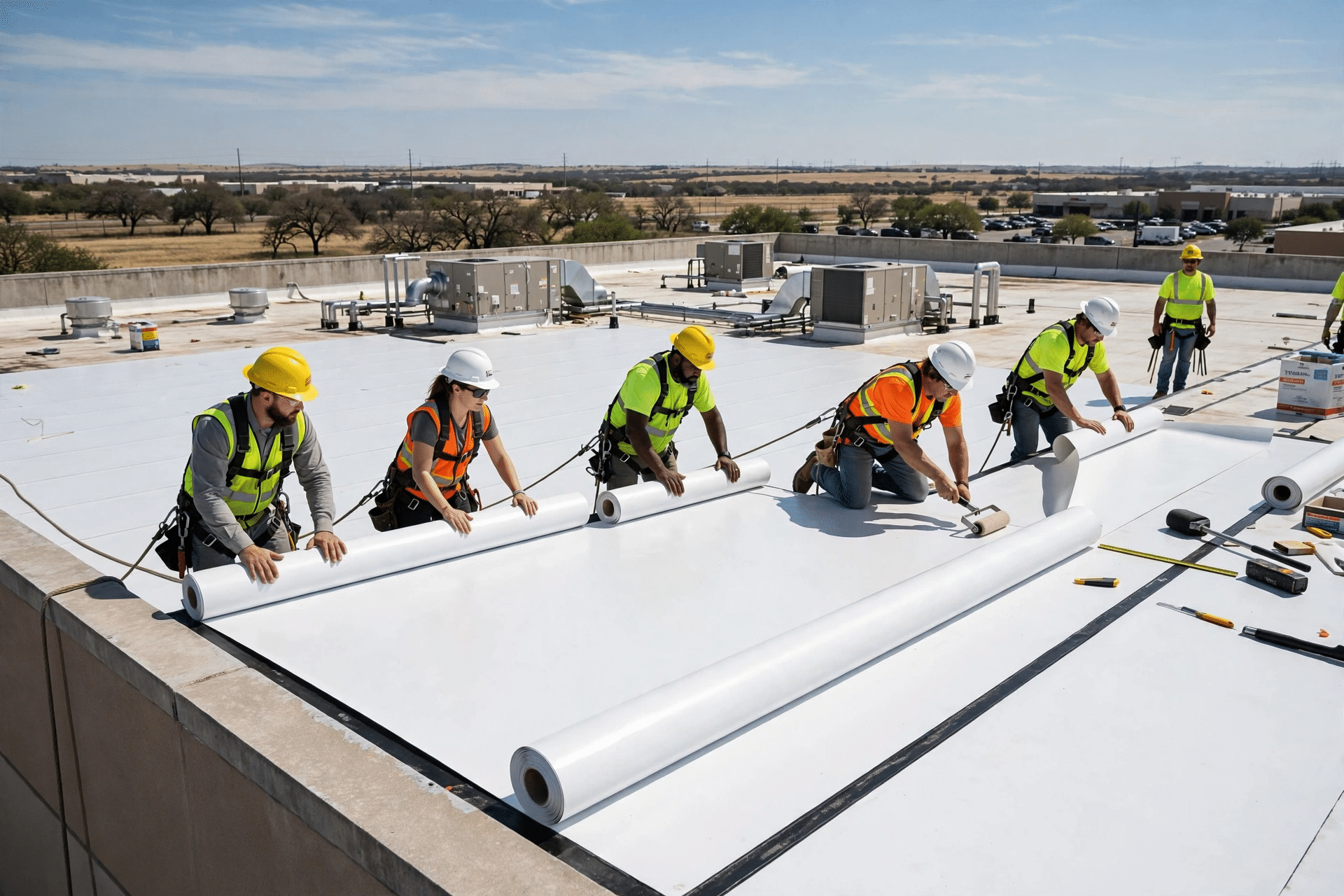
These are wide sheets of white membrane that are rolled out across the roof and heat welded at the seams, and the white surface reflects summer sun, which matters a great deal in Texas heat. Seams are the whole game on these systems: welded right, they hold for years; welded sloppy, they open.
EPDM rubber roofing
EPDM is a black rubber membrane that has covered flat roofs for decades, and it handles sun and building movement well. Its weak point is the seams, which are glued or taped instead of welded, so seam care matters more and more as these roofs age.
Standing seam metal roofing
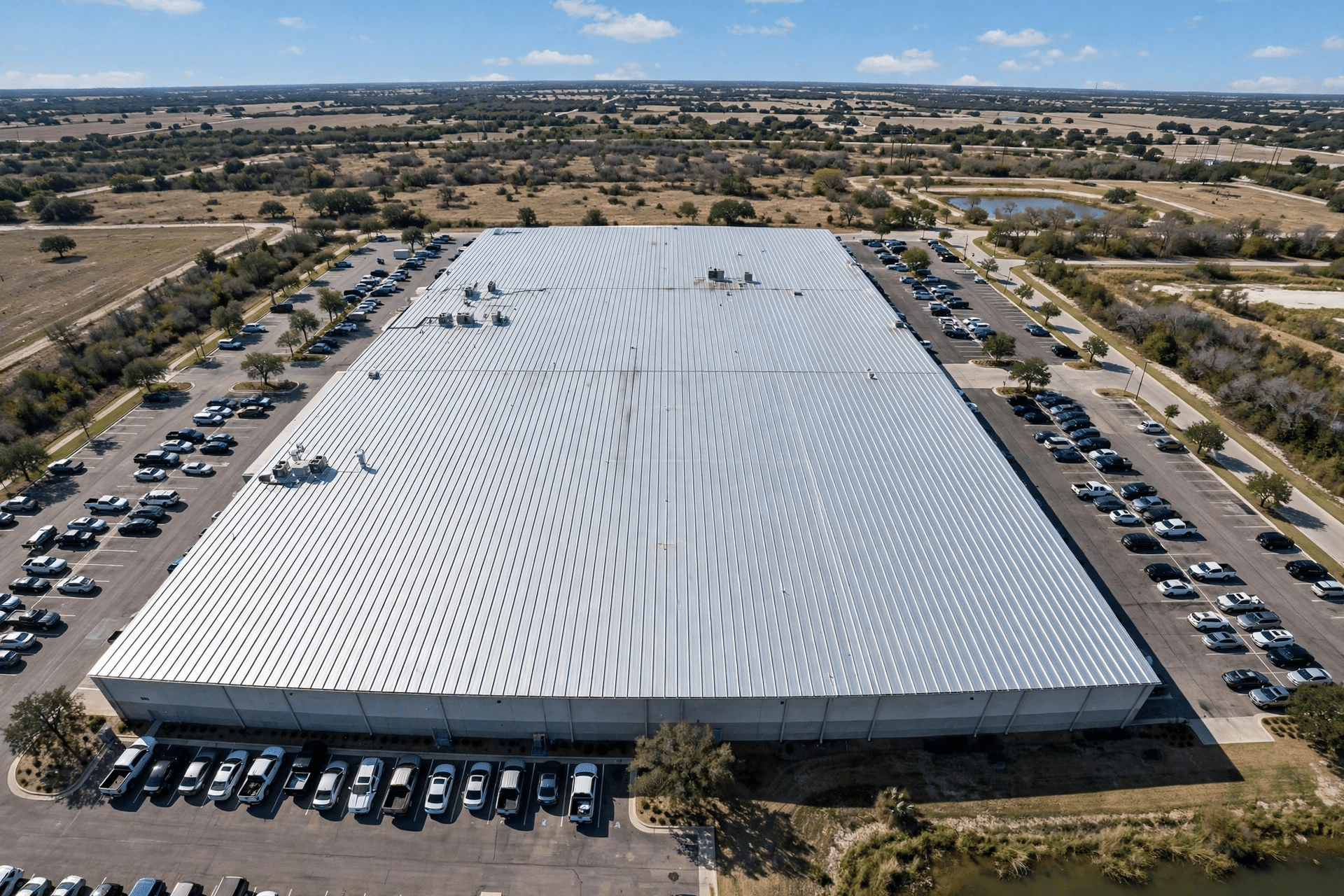
Metal panels with raised seams suit low slope roofs on shops, plants, and newer warehouses. Metal shrugs off hail better than most membranes and needs little care beyond checks on fasteners and sealant. Our metal roofing page covers how these systems are built.
Modified bitumen and built up roofing
Older industrial buildings often carry layered asphalt systems that are tough and take foot traffic well. They are also heavy, and years of patch on patch repairs keep adding weight while hiding the true condition of the roof underneath.
Roof coatings
A coating is a liquid applied membrane rolled over a sound existing roof. It seals seams and adds a fresh wear layer. Coatings only work when the roof under them is dry and solid. Over a wet or failing roof, a coating just traps the problem.
Spray foam roofing
Spray polyurethane foam goes down as a liquid that expands into a seamless foam layer, then gets sealed under a protective coating. Because there are no seams, foam handles ponding areas and odd roof shapes well, and it adds insulation in the same pass. It still needs that coating maintained, because raw foam does not stand up to Texas sun on its own.
Signs Your Commercial Roof Needs Attention
Flat roofs rarely fail all at once, because they send signals first, and most of those signals are easy to spot on a simple walk of the roof:
- Water still standing 48 hours after a rain
- Seams pulling open or patches lifting at the edges
- Blisters, cracks, or soft spots that give under your boot
- Stains on ceiling tiles or drips that show up after storms
- Flashing pulling loose around vents, pipes, and roof edges
- Gravel, screws, or debris collecting around the drains
Any one of these is worth a closer look, and two or three of them together mean the roof is asking for real work rather than another patch.
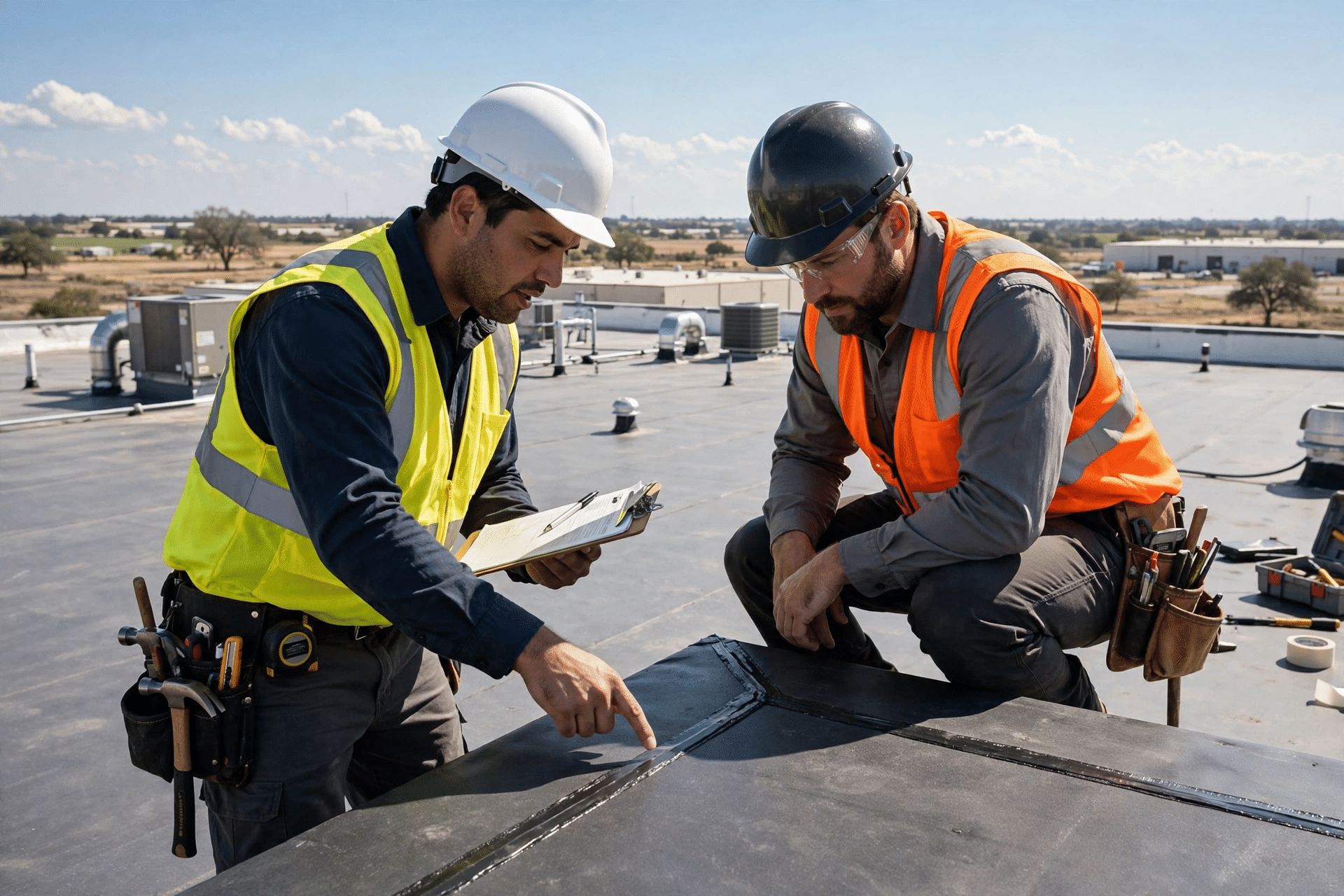
Repair, Restore, or Replace: How the Call Gets Made
Owners usually ask one question first: can this roof be saved, or is it time to replace it? The honest answer comes from the condition of the deck and the insulation underneath, not from the surface alone.
If leaks trace back to a few seams or one bad flashing run, a targeted repair is the right spend. If the surface is worn but the insulation is dry, a coating can restore the roof and buy it a second life.
Replacement is the call when water has soaked the insulation in large areas, the deck has rust or rot, or patches cover so much ground that no one can say what is under them. At that point, new money over a bad base is wasted money.
Good industrial roofing services start with that judgment, in writing, with photos. You should never have to take a roof verdict on faith.
What a Real Roof Inspection Covers
A proper inspection is more than a walk and a wave, because the crew checks seams, flashing, drains, and every penetration, looks for ponding water, probes soft spots, and examines the edges where wind does most of its damage.
Core samples sometimes come out as part of the inspection, because one small cut tells the truth about how many roof layers sit on the deck and whether the insulation underneath is wet. That one sample can save an owner from coating a roof that should have come off.
You get the findings in plain words: what is sound, what is failing, what can wait, and what cannot. Then the options are priced in writing, repair against restore against replace, so the decision is yours with real numbers in hand.
Maintenance Beats Emergency Work
The cheapest commercial roof is the one that never fails early, and scheduled service is how that happens. A maintenance visit clears the drains, reseals small seam and flashing openings, and removes the screws, pallets, and debris that other trades leave behind.
Those small items cause an outsized share of leaks. A drain blocked by leaves ponds water after every storm, and ponded water sits there working on every weak seam in the area. Catching it on a calm Tuesday costs a fraction of the emergency call during a storm.
What Happens During a Replacement Project
A replacement starts with tear off. The old membrane and any wet insulation come up so the crew can see the deck plainly, and rust, rot, or damage found there gets repaired before anything new goes down over it.
New insulation goes in next, followed by the membrane or panels of the new system. Seams are welded or bonded as the work crosses the roof, and the flashing around every vent, pipe, curb, and edge is rebuilt rather than reused, because old flashing on a new roof is an invitation to the first leak.
The job closes with a full walk of the finished roof: seams probed, drains checked, edges inspected, and photos taken for the building file. You get the documentation, the warranty paperwork, and care instructions in writing, so the next inspector knows exactly what is up there.
How Industrial Roofing Services Work at The JBN Group
Roofing at The JBN Group is handled by our roofing division, JBN Roofing. It is the same family company, family-owned since 1996, fully insured, and rated 5.0 stars across 23 Google reviews.
That structure matters to you. The division crews do roofing every day, and the parent company stands behind the work. You can meet the division on our JBN Roofing page, and see the wider service list on our commercial roofing page.
The process is simple: we inspect the roof, we show you the photos, and we put the options in writing before any work is sold. The work itself gets scheduled around your operation, because a plant that cannot stop needs a crew that plans like it matters.
Need a straight answer on a commercial roof?
Call for an inspection and a written estimate.
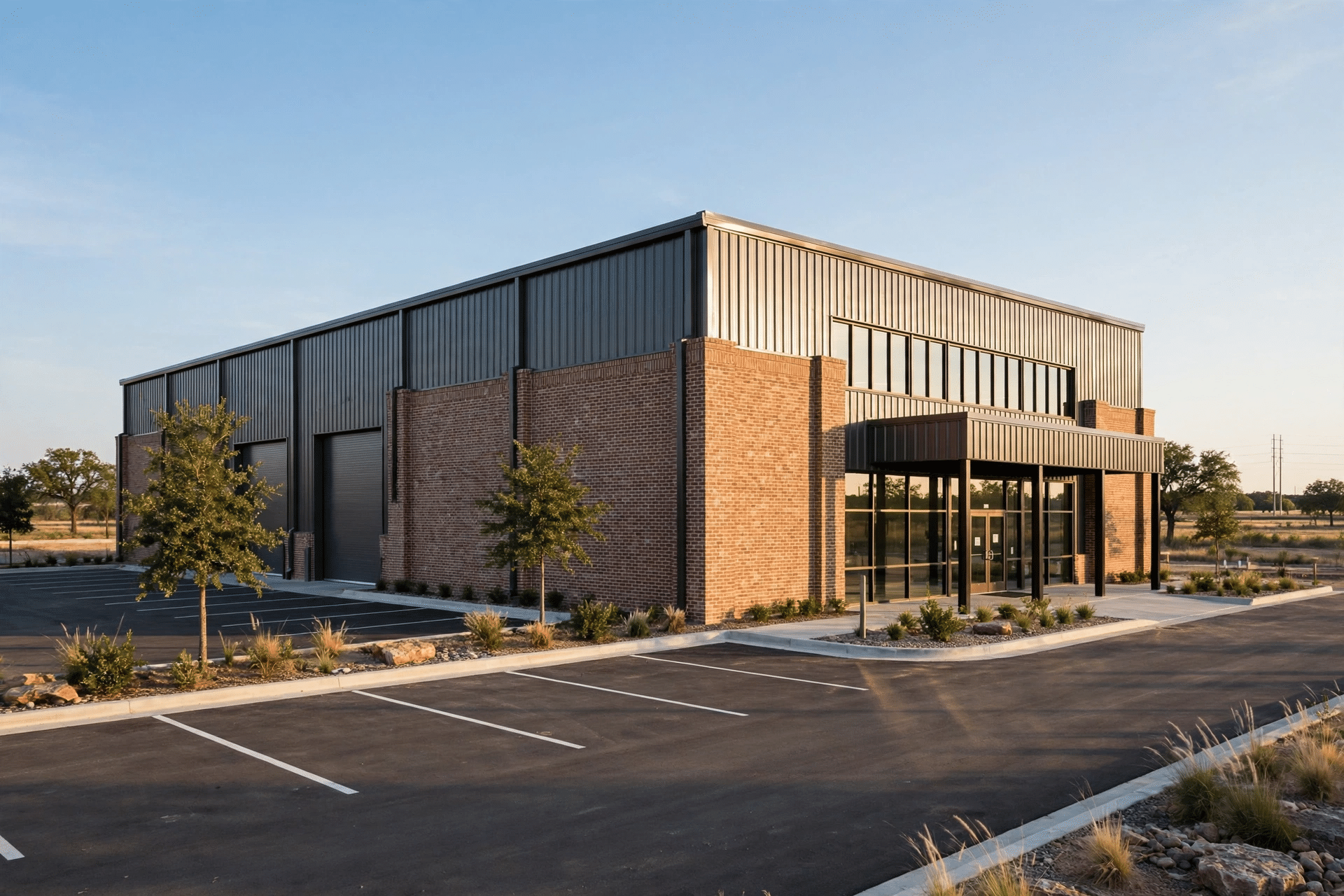
Roofing for North Texas Warehouses, Plants, and Retail Centers
The JBN Group is based in Denton, and the division serves building owners across North Texas. The I-35 corridor runs thick with warehouses, machine shops, and distribution space, and every one of those buildings lives or dies by its roof.
Texas weather writes the maintenance schedule here, because hail, hard summer heat, and storms that drop inches of rain in an hour all test seams, flashing, and drains at the same time. A roof checked on a calm schedule beats a roof checked by a leak in the middle of a shift.
That is the whole point of steady service work: catch the seam in spring, and it never becomes the soaked ceiling, the shut line, and the emergency call in August.
Industrial Roofing Questions, Answered
How much do industrial roofing services cost?
It depends on the roof: its size, its system, and how much of it is wet or worn. Anyone quoting a flat price without walking your roof is guessing, so we inspect first and then give you a written estimate with the options priced side by side.
Can a coating really save my roof?
Yes, when the roof under it is dry and solid, because a coating seals seams and adds a fresh wear surface over a base that can support it. If the insulation is soaked, a coating traps that water inside and the roof keeps failing from underneath. The inspection tells you which case you have.
How often should a commercial roof be inspected?
Twice a year is a sound habit, spring and fall, plus a check after any major hailstorm, because most costly roof failures start as small seam and flashing problems that a scheduled visit would have caught while they were still cheap to fix.
Will roof work shut my building down?
Rarely. Most repairs, coatings, and replacements are planned around operations, section by section, so the building stays open. The schedule is part of the written plan. Call 469-312-0990 and tell us what your building cannot pause, and the work gets planned around it.
What should I look for in a commercial roofing contractor?
Ask for three things before you sign anything: proof of insurance, a written estimate that prices your options side by side, and photos of your own roof that back up the recommendation. A contractor who will not show you the problem areas is asking you to buy on trust alone, and roofing is too expensive for that.
Your roof protects everything under it.
Get it inspected before a small seam becomes a big bill.