

A permit can protect your budget, property, and future sale. Understanding North Texas remodeling permits before construction starts helps you avoid failed inspections, stop-work orders, and expensive corrections.
Permit rules vary by city, county, project type, and property location. A bathroom update in Denton may follow different steps than an addition in unincorporated Denton County. Your remodeling contractor should confirm the requirements before demolition begins.
Key Takeaways
- Structural changes, additions, pools, and new buildings usually require permits.
- Unincorporated Denton County requires a Development Permit for any property improvement.
- Cities such as Denton, Lewisville, and Flower Mound manage their own permit processes.
- Your contractor should handle drawings, applications, inspections, and permit records.
- Permit costs and timelines depend on the project scope and local jurisdiction.
Why North Texas Remodeling Permits Matter
Permits give your local authority a chance to review safety, structural, electrical, plumbing, and property-line concerns. They also create a record that inspectors completed the required checks.
Skipping a permit can create problems when you sell, refinance, insure, or expand your home. A future buyer may ask for proof that an addition, converted garage, or major electrical upgrade received approval.
North Texas weather adds another reason to follow the rules. High winds, heavy rain, hail, expansive clay soil, and intense summer heat affect foundations, roof structures, drainage, windows, and exterior materials. A permit review can identify details that matter in Denton County homes.
The local process depends on where your property sits. A home in the City of Denton follows city rules. A property outside city limits may fall under Denton County Development Services. Other communities, including Argyle, Corinth, Highland Village, Lewisville, Northlake, Bartonville, Double Oak, Copper Canyon, Trophy Club, Roanoke, Southlake, Grapevine, Keller, Frisco, Little Elm, and Carrollton, may have separate requirements.
The City of Denton residential permit information is a useful starting point for homeowners inside Denton city limits. However, you should confirm current rules with the authority that has jurisdiction over your address.
When Do You Need a Remodeling Permit?
Most jurisdictions require permits when work changes a building’s structure, systems, footprint, or use. Common examples include:
- Room additions and new living areas
- Garage conversions
- Structural wall removal
- Foundation repairs or new foundations
- New or relocated plumbing
- Major electrical work
- HVAC changes
- New pools and detached structures
- Exterior work that changes setbacks or lot coverage
Cosmetic work often has fewer requirements. Painting, replacing cabinet doors, installing trim, and changing flooring may not need a building permit. Still, electrical, plumbing, or structural work hidden behind those finishes may require separate approvals.
Replacement windows can fall into a gray area. A simple window replacement in the same opening may receive different treatment than enlarging an opening, changing an exterior wall, or altering a required egress window. Ask before ordering materials.
Bathroom remodeling also depends on the scope. Replacing tile and fixtures in the same locations may be minor. Moving a toilet, adding a shower drain, changing wiring, or removing a load-bearing wall can trigger permits and inspections.
A city may also regulate fences, retaining walls, irrigation, solar panels, and historic properties separately. In Denton, exterior work on a designated historic landmark or property inside a local historic or conservation district requires a Certificate of Appropriateness in addition to any building permit.

Denton County Development Permits and Site Plans
If your property is in unincorporated Denton County, the county requires a Development Permit for any improvement to the property. The county specifically includes additions, pools, and other new improvements in its guidance.
A Development Permit is different from a building permit. In many cases, you need the development approval before the building permit can be issued. The application generally requires property information, a site plan, and details about existing and proposed improvements.
Your site plan may need to show:
- Property lines and easements
- Existing and proposed structures
- Building footprint
- Setbacks from property lines
- Streets, driveways, and sidewalks
- Proposed finish-floor elevations
- Final grading and drainage information
Denton County also requires a current 911 address for new site development and structures. County guidance lists Development Services at 3900 Morse Street in Denton, with residential permitting questions handled at 940-349-2990.
Building permit packages may require three sets of architectural drawings and three copies of the site plan. Foundation plans and certain post-tension designs may need review and signatures from a Texas-licensed professional engineer.
The county also requires inspections during key construction stages. These can include foundation work before concrete, framing and mechanical work before walls are covered, and final completion. Covering work before inspection can lead to costly demolition and repairs.
For projects disturbing more than one acre, stormwater rules may also apply. Sites over five acres require a TCEQ permit and Storm Water Pollution Prevention Plan. Your North Texas contractor should review the site conditions before work begins.
Who Handles the Permit Application?
You can apply yourself, but complex remodeling usually benefits from an experienced home improvement contractor. A professional can identify permit triggers, prepare documents, coordinate trades, and schedule inspections.
The JBN Group manages remodeling projects through planning, permitting, material sourcing, trade coordination, and final walkthroughs. That matters when one project includes flooring installation, plumbing, electrical work, framing, and exterior construction.
A qualified remodeling contractor should give you clear answers about:
- Which permits the project needs
- Which agency will issue them
- Who will submit each application
- Which inspections are required
- What happens if plans change
- How permit fees appear in your contract
Before signing, confirm that the company carries appropriate licensing and insurance for its work. Ask for a written scope and a permit plan. A trusted contractor won’t tell you to avoid permits to save time.
For a company handling several related upgrades, The JBN Group’s home improvement services can help you discuss the project scope before construction starts. The company is a family owned contractor serving homeowners across Denton County and the Dallas-Fort Worth area.
Outdoor Projects, Windows, and Interior Renovations
Outdoor living spaces often involve more than selecting attractive materials. A cedar patio cover, pergola, outdoor kitchen, fire feature, or detached structure may affect setbacks, drainage, electrical service, gas lines, and structural loads.
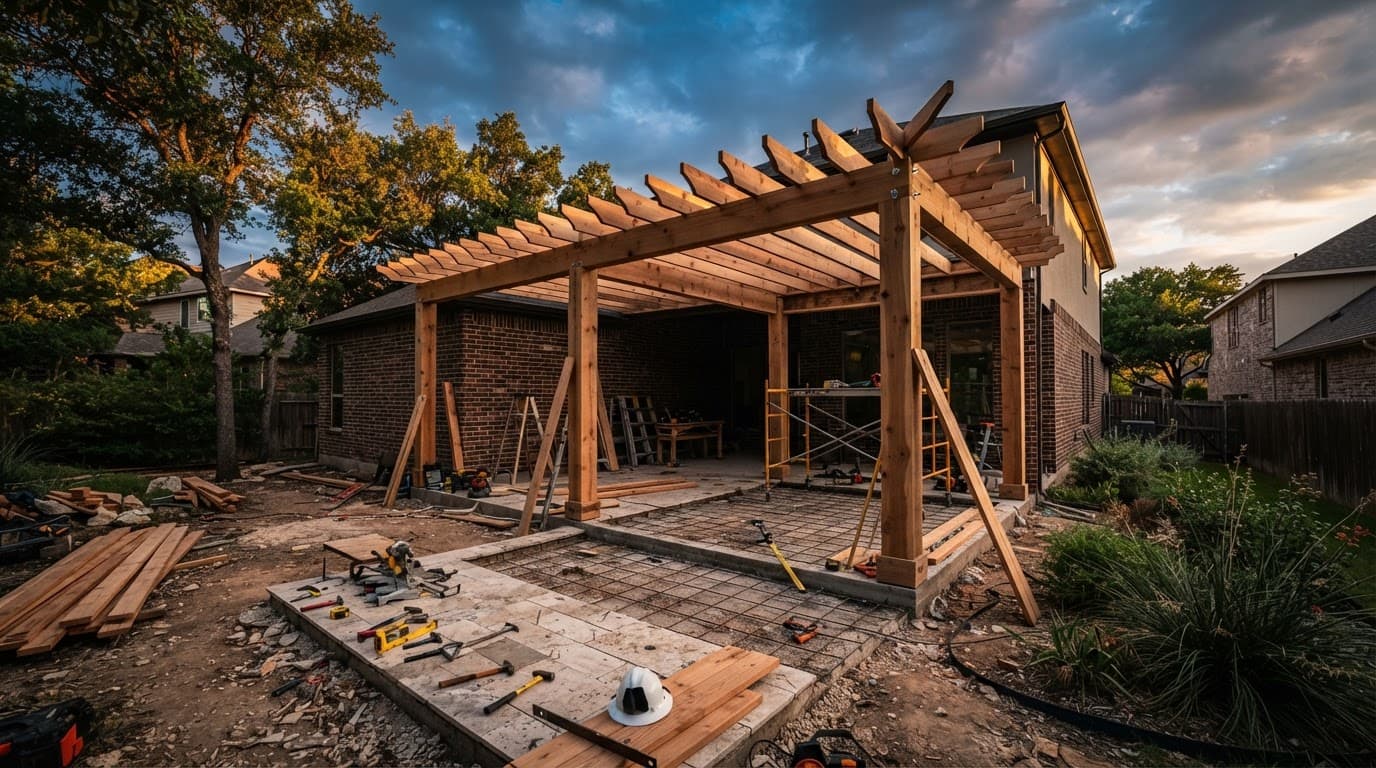
A patio cover attached to your home may require structural drawings. A freestanding cover may still need a permit, especially if it exceeds local size limits or sits near a property line. Wind exposure matters across open areas near Argyle, Northlake, and Little Elm.
If you are planning cedar patio covers or pergolas, ask about footing depth, roof attachment, drainage, and finish maintenance. Cedar needs regular inspection and proper sealing to handle sun, moisture, and insects.
Interior projects also deserve a permit review. Flooring installation usually stays cosmetic, but subfloor repairs can reveal structural or moisture problems. Bathroom remodeling may require plumbing and electrical inspections. Replacement windows may require approval when openings change or emergency escape requirements apply.
A renovation company that coordinates the full scope can reduce conflicts between trades. For example, an electrician needs to know where cabinets will sit, and a plumber needs final fixture locations before walls close.
How Permit Delays Affect Your Project
Permit timing depends on the authority, application quality, project size, and plan revisions. Incomplete drawings create delays because reviewers must request missing information.
You can reduce delays by preparing accurate plans before submitting. Confirm the legal property description, lot coverage, setbacks, utility locations, and existing conditions. If your home sits in a planned development, review HOA rules separately. HOA approval doesn’t replace a government permit.
Your contract should explain what happens when the scope changes. Moving a wall, adding a window, relocating plumbing, or expanding a patio can require revised drawings and additional inspections.
Keep copies of approved plans, permit cards, inspection reports, and final approvals. These records can help during resale and future repairs.
A permit is only useful when the work matches the approved plans. Changing the project after approval may require a revision or new permit.
Choosing the Right North Texas Contractor
Look for a contractor who explains the process in plain language. Your contractor should also visit the property, check access and drainage, and identify possible code issues before pricing the work.
Whether you need a Denton TX contractor, Argyle TX contractor, Flower Mound contractor, or Corinth contractor, local experience matters. The company should understand area home styles, subdivision restrictions, soil movement, weather exposure, and inspection expectations.
The JBN Group handles residential remodeling projects that may include bathroom remodeling, replacement windows, flooring, outdoor structures, roofing, and room additions. Its service model gives you one point of contact instead of separate vendors for every trade.
A good home remodeling company also documents changes and communicates schedule updates. Clear communication helps you make decisions before a permit revision becomes necessary.
When you compare bids, look beyond the lowest price. Check whether the proposal includes design work, engineering, permit fees, inspections, debris removal, professional installation, and finish repairs. Quality craftsmanship includes the work behind the walls, not only the final appearance.
Frequently Asked Questions About Remodeling Permits
1. Do I need a permit for a home renovation in North Texas?
You may need one if the project changes structure, plumbing, electrical systems, HVAC, the building footprint, or property use. Confirm with your city or county before work begins.
2. Does Denton County require a permit for an addition?
Yes. In unincorporated Denton County, additions require a Development Permit and may also require a building permit.
3. Is a permit required for bathroom remodeling?
It depends on the work. Moving plumbing, changing wiring, removing structural walls, or altering ventilation commonly requires permits.
4. Do replacement windows need permits?
A same-size replacement may have limited requirements. Enlarged openings, structural changes, and egress windows need closer review.
5. Can I build a pergola without a permit?
Some small structures may qualify for an exemption, but size, attachment, setbacks, and local rules determine the answer. Verify before construction.
6. Who applies for a Denton County Development Permit?
The property owner or an authorized agent may apply through Denton County Development Services.
7. What documents might Denton County request?
You may need an application, site plan, architectural drawings, contractor registrations, property details, and engineering documents.
8. What happens if you remodel without a permit?
You could face failed inspections, correction costs, penalties, insurance issues, or resale delays. The authority may require concealed work to be opened for inspection.
9. Does an HOA permit replace a city permit?
No. HOA approval and government permits are separate requirements.
10. Are flooring projects subject to permits?
Basic flooring installation usually doesn’t require a building permit. Subfloor repairs or structural work may change that answer.
11. How do permits affect project cost?
Permit fees, engineering, plan preparation, and inspection coordination add to the budget. Your written proposal should identify those costs.
12. Should you hire a contractor to manage permits?
For a complex project, an experienced contractor can manage applications, documents, trade registrations, inspections, and revisions.
Conclusion
Permits protect your North Texas home remodeling project when the work affects safety, structure, systems, or property layout. Rules differ between Denton County and cities such as Denton, so verify requirements before demolition or material orders.
A professional remodeling contractor should handle permit planning as part of the job, communicate changes clearly, and keep inspection records. When you’re ready to discuss your project, Request Your Free Consultation or Call The JBN Group Today. Proper planning gives you a safer project and fewer surprises after construction starts.
Frequently Asked Questions About The JBN Group
1. Does The JBN Group manage permits?
Yes. The company coordinates project planning, permitting, trade scheduling, and inspections for applicable remodeling work.
2. What services can The JBN Group coordinate?
Services include residential remodeling, bathroom remodeling, replacement windows, flooring installation, roofing, room additions, patio covers, and outdoor living spaces.
3. Does The JBN Group serve Denton County?
Yes. The company serves Denton and surrounding North Texas communities.
4. How do you start a project discussion?
You can Contact The JBN Group to discuss the property, project scope, and next steps.