
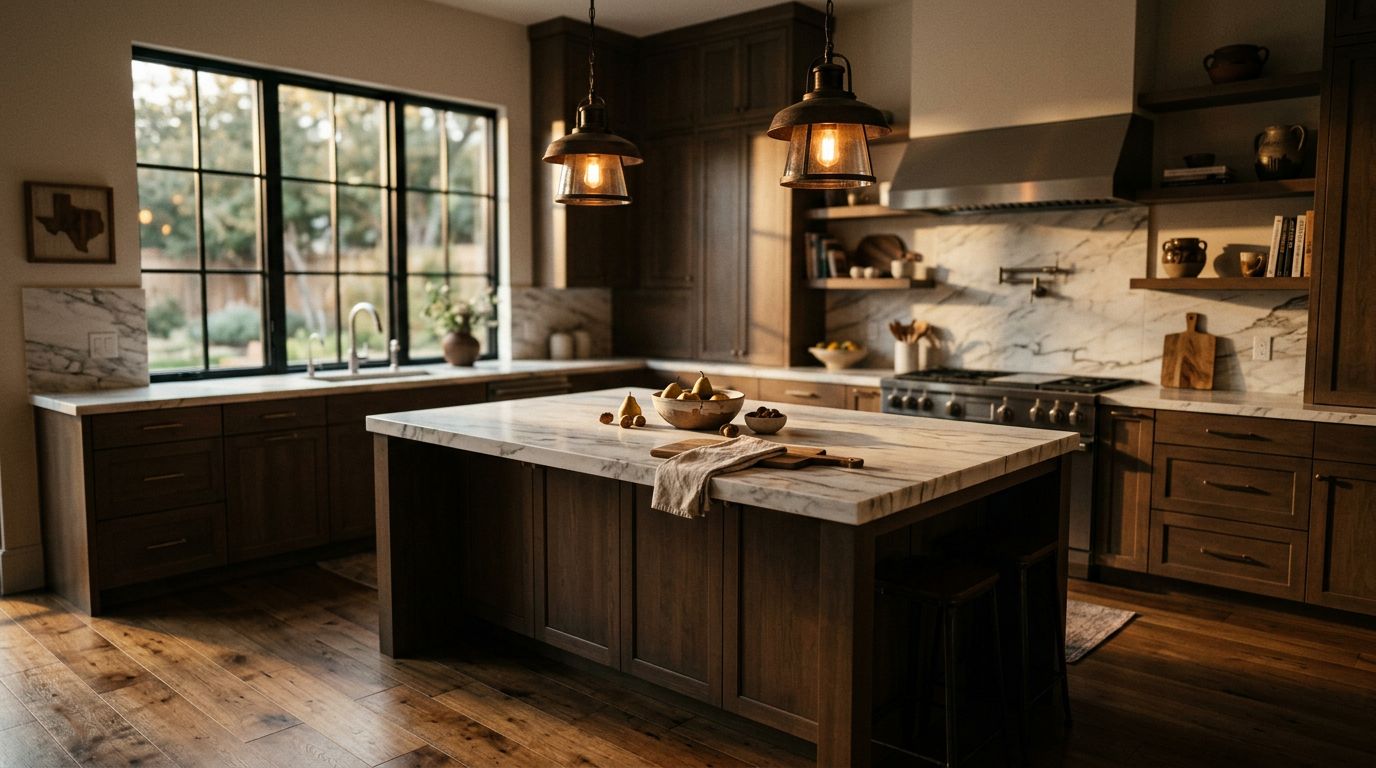
For most Denton County homes, the best kitchen island sizes are the ones that protect aisle space first. A useful island is often 24 to 48 inches deep and 48 to 84 inches long, but the right fit depends on traffic flow, seating, and appliance clearance. In North Texas kitchens, a slightly smaller island often works better than a large one that makes the room feel tight.
That balance matters in home remodeling Denton TX projects, because an island should improve the kitchen, not block it. The best layouts start with walkways, then match the way the household cooks, gathers, and moves through the room.
How big should a kitchen island be for the room?
A kitchen island should match the room’s footprint, not the homeowner’s wish list. In many Denton County homes, the sweet spot is a medium island with enough prep space and storage, but without crowding the sink, range, or refrigerator.
A small but functional island often starts at 24 by 48 inches. That size can hold base cabinets and a work surface, although seating is limited. A more comfortable everyday size is 36 by 60 inches or 42 by 72 inches. In larger open kitchens, islands may grow to 48 by 84 inches or more, as long as the walkways still feel open.
This quick guide shows common starting points:
| Kitchen size | Common island size | Seating | Best use |
|---|---|---|---|
| Small kitchen | 24 x 48 to 30 x 60 | 0 to 2 stools | Prep, storage, simple dining |
| Mid-size kitchen | 36 x 60 to 42 x 72 | 2 to 4 stools | Prep, serving, family seating |
| Large open kitchen | 48 x 84 to 54 x 96 | 4 to 5 stools | Prep, storage, entertaining |
Those numbers are not hard rules. They are a planning range. Older Denton homes often have tighter kitchen footprints, so a narrow island or peninsula may work better. By contrast, newer North Texas homes with open layouts can often handle wider islands and longer seating runs.
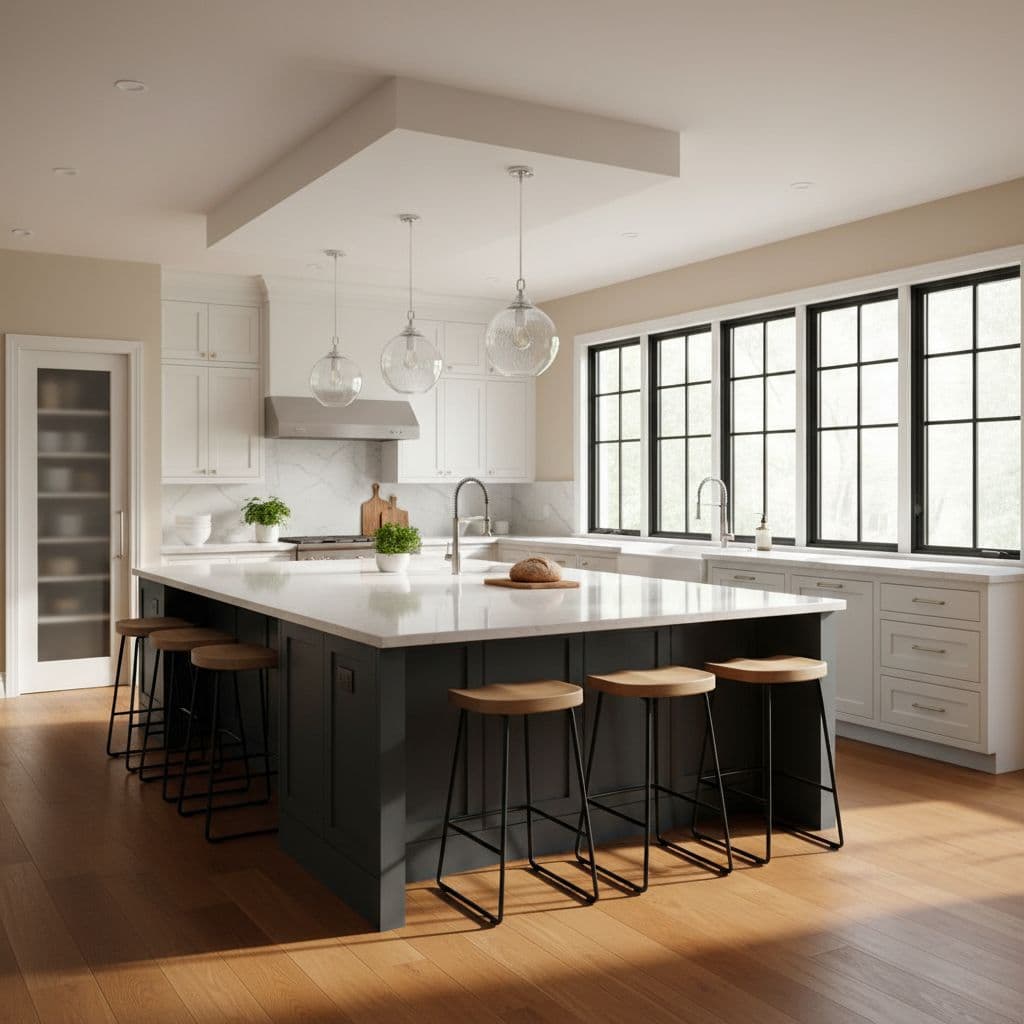
One more point matters early. A single-level island is easier to size than a two-tier design. It gives more usable counter space, looks cleaner, and usually fits today’s remodel style better. For most households, that simple choice frees up inches where they matter most.
What clearances matter more than the island itself?
The island size gets the attention, but the clearance around it decides whether the kitchen works. A beautiful island becomes a daily headache if cabinet doors collide, stools block a walkway, or the dishwasher traps the cook.
In most kitchens, 42 inches of walkway is a comfortable target. Some low-traffic areas can work at 36 inches, but that is closer to the minimum. If two cooks often share the kitchen, or if the aisle sits between the island and a busy appliance wall, 48 inches usually feels better.
The island should fit the room, not win a contest for the most countertop.
Appliance swings also matter. The refrigerator door needs room to open wide. The dishwasher needs clearance when its door is down. Stools need pull-back space. A prep sink or cooktop on the island also adds code, plumbing, and vent concerns that can change the layout fast.
That is why layout changes need more than a tape measure. When the project includes moving plumbing, adding outlets, or opening walls, a trusted general contractor Denton TX can spot problems before cabinet orders lock in the wrong size.
For a soft first step, homeowners can compare appliance dimensions, stool depth, and walking paths before they compare countertop samples. That simple order saves money and avoids the common mistake of choosing an island that looks good on paper but feels cramped in real life.
In Denton County, this matters even more because kitchens often carry more than one job. They are cooking spaces, homework stations, buffet lines during holidays, and landing zones after school. So the room needs breathing space, not only storage.
Which kitchen island sizes fit small, medium, and large layouts?
The best way to judge kitchen island sizes is to group them by layout type. That gives a clearer answer than chasing one “perfect” measurement.
Smaller kitchens
Smaller kitchens usually do better with restraint. A 24-by-48-inch or 30-by-60-inch island can add storage and prep space without turning every trip to the fridge into a sidestep. In many older Denton neighborhoods, that compact footprint is the smart choice.
If the kitchen feels dark, making the island larger will not fix it. Better natural light often has a bigger payoff, which is why some remodels pair the kitchen update with window replacement Denton TX. More daylight can make a modest island feel right-sized.
Mid-size kitchens
Mid-size kitchens have the most flexibility. A 36-by-60-inch island works well for many families. If the room allows it, 42 by 72 inches often gives enough room for prep, storage, and seating for three or four people.
This is also the range where overbuilding happens. Many households try to stretch from a practical six-foot island to a seven-foot island for status, not function. Often, the extra foot steals useful aisle space and creates traffic jams near the cook zone.
Larger open kitchens
Large open-plan homes in North Texas can support longer and deeper islands. A 48-by-84-inch island, or even larger, may work when there is enough room on every side. These layouts often support seating, a prep sink, deep drawers, and wider landing space near the range.
Still, bigger is not always better for entertaining. If the real goal is to spread guests out, a kitchen island has limits. Some homeowners get more value by keeping the island sensible and adding outdoor gathering space with patio covers Denton TX. That choice can reduce crowding inside and make the whole home work better.
How do seating, storage, and other remodel plans change the size?
Seating changes island dimensions more than many homeowners expect. Bar stools need knee room, overhang, and pull-back space. A seating side usually needs about 12 to 15 inches of counter overhang, and each seated person needs enough width to avoid elbow bumps. In practice, that means about 24 inches per stool is a comfortable target.
Storage changes depth. Deep drawers for pots and pans can make an island more useful than a wider slab of countertop. In many kitchens, smart drawer planning does more than adding another 6 inches of length.
Project scope matters too. If the kitchen is part of a broader remodel, the island should be sized after the full plan is set. A family that is also planning bathroom remodeling Denton TX may want one schedule for cabinets, counters, flooring, and plumbing trades. That reduces disruption and helps the kitchen plan stay tied to the real budget.
North Texas remodels also need practical thinking about resale. Most buyers want an island, but they do not want one that blocks the room. A balanced layout usually ages better than a trend-driven showpiece. For that reason, the best island size is often the one that looks almost obvious once it is installed.
A good rule helps here. If the household must choose between a larger island and easier movement, movement should win. People notice cramped circulation every day. They stop noticing an extra 10 inches of countertop after the first week.
Conclusion
The best kitchen island sizes for Denton County homes come down to one rule: the island must leave the room easy to use. For many homes, that means a moderate island with strong clearance, practical seating, and enough storage to earn its footprint.
A well-sized island supports the kitchen’s daily rhythm. An oversized one interrupts it. That difference is often only a few inches, which is why layout planning matters so much before construction starts.
When a homeowner is comparing options, the smartest next step is to get a free home improvement estimate before cabinets, flooring, and utility locations lock the wrong size into place.