
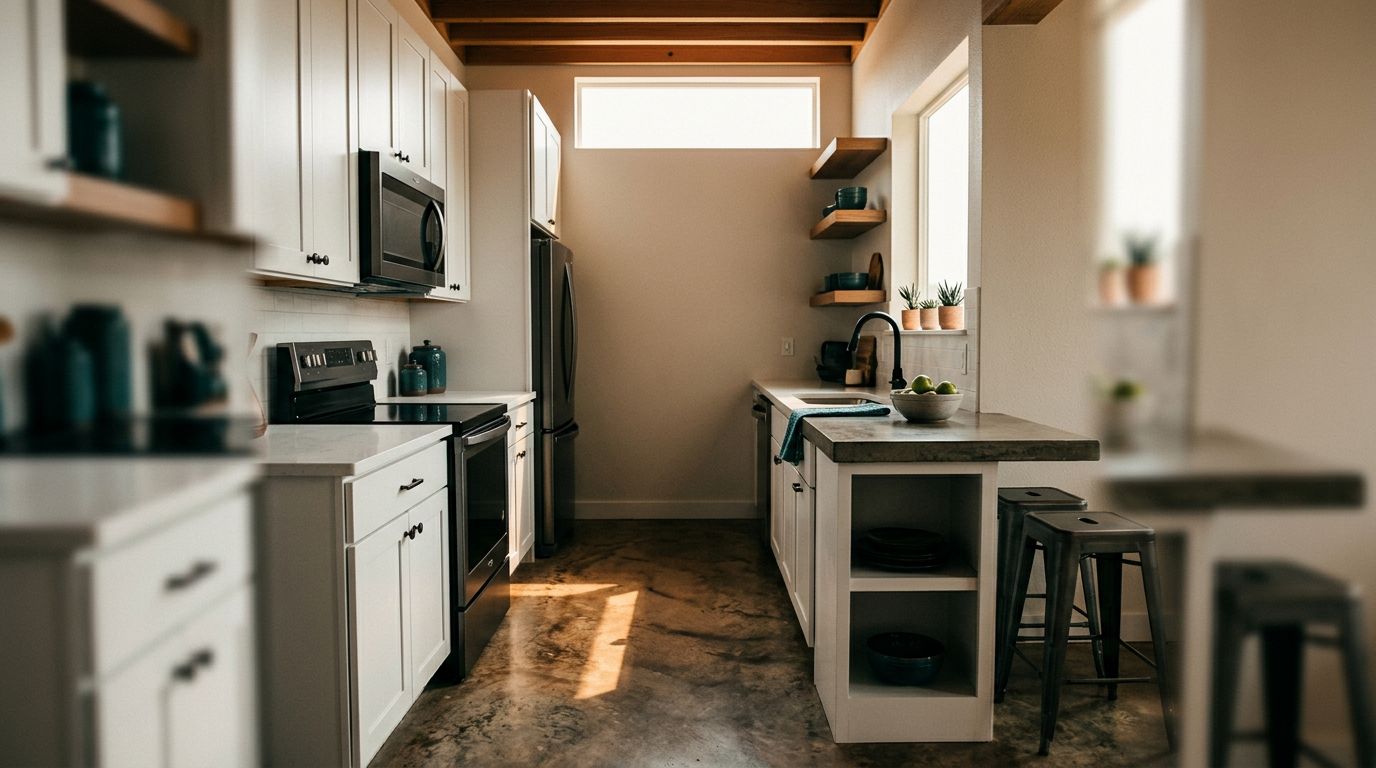
Galley, L-shaped, one-wall, and compact U-shaped kitchens are usually the best layouts for small Denton County homes. They keep the work zone tight, protect aisle space, and make storage easier to add. In older ranch homes and modest new builds alike, the winning plan is the one that fits the room, not the trend.
That is why many owners start with a home remodeling Denton TX team that can measure the shell before picking cabinets, appliances, or finishes. A smart layout fixes crowding first, then style has room to matter.
What makes a small kitchen layout work?
Small kitchens fail for simple reasons. Doors hit each other, the fridge blocks traffic, and prep space ends up too far from the sink.
The best small kitchen layouts solve those problems before a single finish is chosen. In practical terms, that means clear paths, enough landing space near the range and fridge, and storage that rises up the wall instead of spreading across the floor. A small room has no room for wasted motion.
A lot of homeowners still hear about the “work triangle.” That idea still helps, but it is not a strict rule. In a tight kitchen, a short line between sink, range, and fridge can work just as well. What matters more is whether people can move without bumping into open doors or each other.
Aisle width is where many plans go wrong. A helpful DFW small kitchen layout guide points out that work aisles often need about 42 inches for one cook and 48 inches for two. That matters in North Texas homes where kitchens often carry traffic to the garage, patio, or breakfast nook.
Storage also needs discipline. Deep corner cabinets, tall pantry units, and drawers for pots usually beat more upper cabinets alone. Small kitchens feel larger when the room has fewer breaks, fewer dead corners, and fewer oversized pieces.
In a compact kitchen, clearance matters as much as square footage.
Which layout fits a small home best?
Most compact kitchens land in four layout families. This quick comparison makes the tradeoffs easier to see.
| Layout | Best fit | Main tradeoff |
|---|---|---|
| Galley | Narrow rooms and older closed kitchens | Can feel tight for two cooks |
| L-shaped | Corner-based kitchens that open to dining or living space | Less cabinet run than a U-shape |
| One-wall | Open-concept homes and very small footprints | Needs strong storage planning |
| Compact U-shaped | Small rooms with three usable walls | Aisle can get cramped fast |
The best option depends on room width, traffic, and how the kitchen connects to the rest of the house.
Galley kitchens often win in narrow homes
A galley layout places two runs of cabinets across from each other. For small homes in Denton County, that is often the most efficient plan because everything stays within a few steps.
It works especially well in older homes with long, narrow kitchen shells. A local Denton kitchen planning guide notes that galley kitchens can improve function without moving walls. That is a big deal when the budget is better spent on cabinets, counters, and lighting.
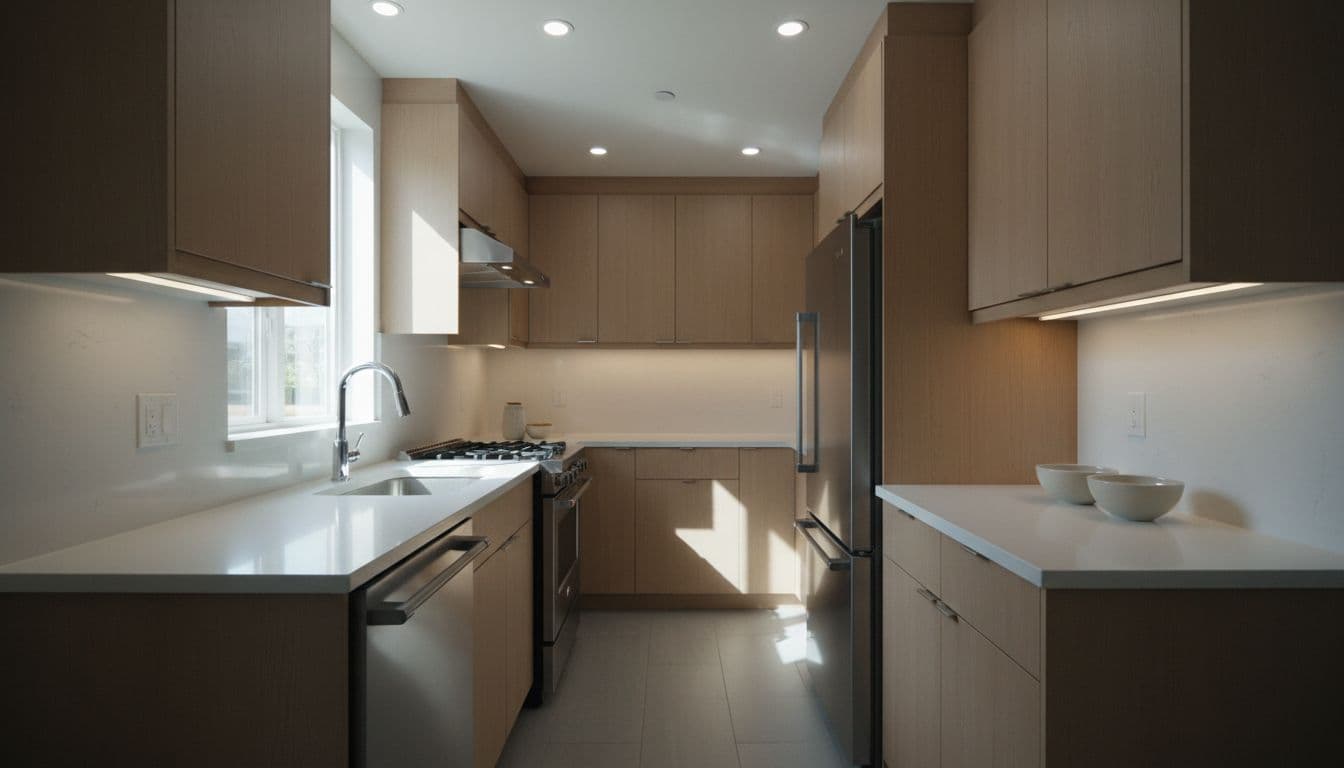
The risk is crowding. If both sides are too deep, the room feels pinched. Galley kitchens work best when one wall carries the heavier storage and the other stays lighter, with fewer tall units and better sightlines.
L-shaped kitchens suit small homes that feel more open
An L-shaped plan uses two connected walls, usually with one corner doing most of the work. This layout is one of the strongest choices when the kitchen opens to a breakfast area, family room, or dining space.
It gives the room breathing space because two sides stay open. That makes the kitchen feel larger, even when the footprint is modest. In many Denton-area homes, an L-shape also allows a small peninsula later, if the room can handle it.
To make it work, the corner has to be planned well. Blind corners waste storage fast. A lazy Susan, pull-out corner unit, or sink placement that keeps the corner active can solve that problem. Among the best layouts for a small kitchen, the L-shape often offers the best balance of openness and function.
One-wall kitchens keep the footprint lean
A one-wall kitchen places cabinets, appliances, and counters on a single run. It is common in compact homes, townhomes, and open-concept spaces where the kitchen shares air and light with the living room.
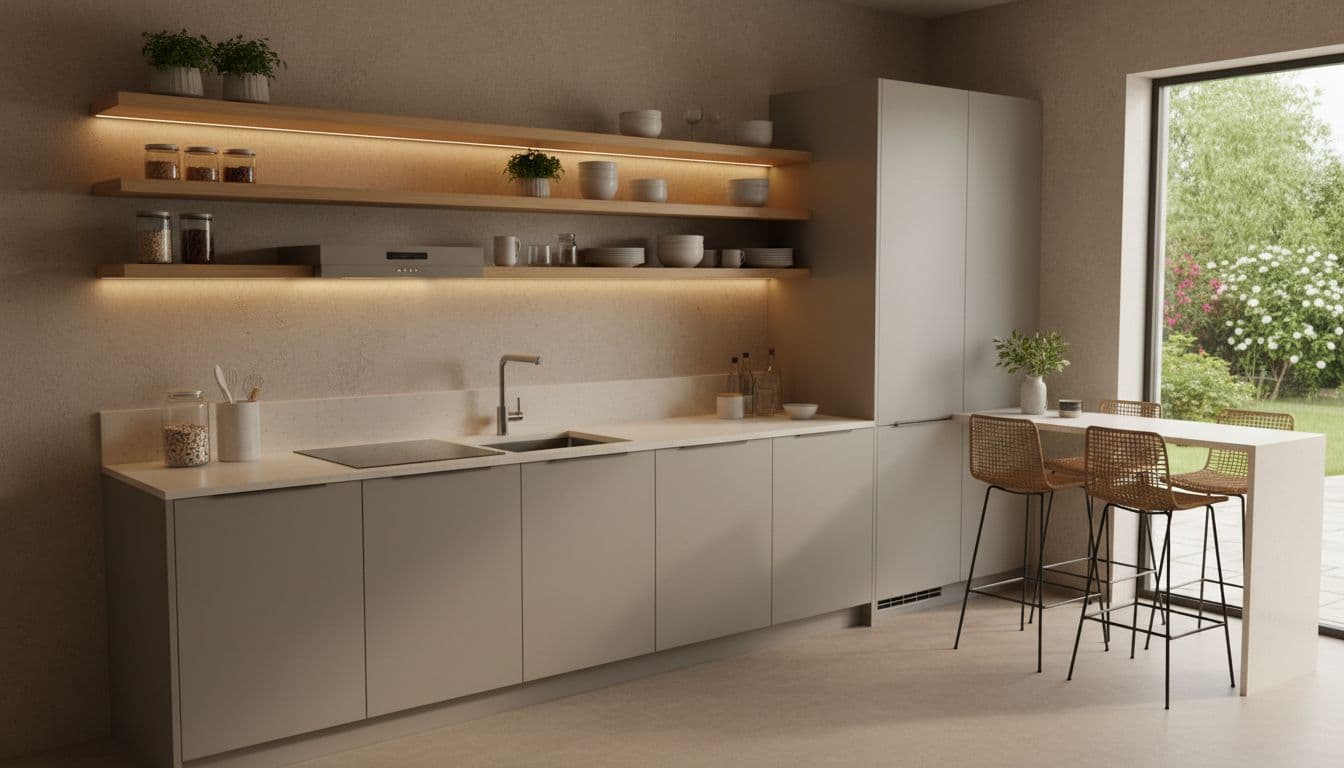
This plan works because it saves floor area. It also keeps the room visually calm. The catch is storage. Without a second wall of cabinets, every inch has to count. Tall pantry cabinets, drawers instead of lower shelves, and upper cabinets to the ceiling make a big difference.
For homeowners comparing these options in a real floor plan, a local kitchen remodeling Denton TX consultation often saves money before demolition starts.
Compact U-shaped kitchens add storage, if the aisle stays open
A U-shaped kitchen wraps three sides with cabinets and counters. In a truly small room, that can be excellent or terrible. The difference comes down to aisle width.
When the aisle stays comfortable, a compact U-shape gives strong storage, solid prep space, and easy access to every zone. It is often a good fit for homeowners who cook often and want more base cabinets than an L-shape can offer.
However, this layout should not force a tight aisle just to gain more cabinets. If the room is too small, the U can feel boxed in. In that case, removing one leg and shifting to an L-shape usually improves the room more than adding another cabinet ever will.
How does Denton County change the layout decision?
Denton County homes come in many shapes, but small kitchens often share a few traits. Many sit inside older ranch-style plans, modest suburban homes, or open living layouts where the kitchen is also a pass-through. That changes what works.
In slab-on-grade homes, moving plumbing can push costs up quickly. So, the smartest remodel is often not the one that moves everything. It is the one that keeps the sink and dishwasher near their current location, improves storage, and fixes traffic flow. That is where an experienced general contractor Denton TX team earns its keep.
North Texas weather matters too. Strong sun can overheat a small kitchen, while dim back walls make the room feel tighter. When layout changes expose a weak window setup, pairing the project with window replacement Denton TX can improve light, comfort, and energy use at the same time.
Local life patterns matter as well. Homes that open to a backyard usually benefit from one-wall or L-shaped kitchens because those plans keep the path to the outside clear. That is useful in a region where family meals, sports nights, and weekend gatherings often spill into outdoor space.
What upgrades make a small kitchen feel larger?
Layout does the heavy lifting, but a few design choices can make a compact room feel calmer and easier to use. The first is vertical storage. Cabinets that run to the ceiling create a cleaner look and give small homes a place for seasonal or less-used items.
The second is visual control. Fewer materials usually make a small kitchen read as larger. When cabinet color, counters, backsplash, and flooring compete for attention, the room feels chopped up. A smaller kitchen benefits from restraint.

Photo by Matheus Bertelli
Appliance scale matters, too. Counter-depth refrigerators, slimmer islands, and drawer-based base cabinets can free more movement than homeowners expect. In many small kitchens, a peninsula beats a fixed island because it adds seating without blocking the center aisle.
Small-home owners often plan more than one project at a time. When the kitchen is part of a broader update, coordinating finishes and schedules with bathroom remodeling Denton TX can reduce disruption and create a more consistent feel across the house.
Outdoor living can also change the kitchen equation. In homes where meals and guests move outside for much of the year, patio covers Denton TX can take pressure off the kitchen by shifting dining, serving, and gathering space beyond the back door. That often makes it easier to choose a leaner indoor layout that works better every day.
Conclusion
The best small kitchen layout is the one that respects the room’s shape, traffic, and storage needs. In Denton County homes, that usually means a galley for narrow spaces, an L-shape for open corners, a one-wall plan for the smallest footprints, or a compact U when the aisle can stay clear.
Square footage matters less than fit. A well-planned small kitchen can cook better, store more, and feel bigger without adding a single room.
Homeowners who want a plan built around their actual space can get a free home improvement estimate.